

Maddy summaryHRES 1139 is a non-binding House resolution that formally acknowledges April 17, 2024, as the 500th anniversary of Giovanni da Verrazzano’s 1524 discovery of New York Bay. It recognizes Verrazzano’s role as the first European to map the East Coast of North America, which contributed to the later establishment of New York City and its development as a major economic hub. The resolution highlights historical connections, including Verrazzano’s influence on New York Bay’s exploration and existing commemorations like the Verrazzano-Narrows Bridge. It does not create new laws, allocate funds, or affect any specific group or policy. This is purely a ceremonial acknowledgment by the U.S. House of Representatives.
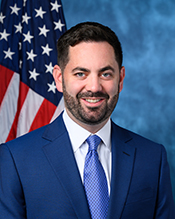
Rep. Michael Lawler
Sponsored bills
Maddy summaryHRES 1136 is a non-binding House resolution expressing support for designating April 2024 as "Parkinson’s Awareness Month." It highlights that Parkinson’s disease affects over 1 million people in the U.S. annually, causes significant health impacts, and requires increased research and support. The resolution urges continued funding for Parkinson’s research, recognizes individuals participating in clinical trials, and commends organizations aiding those living with the disease and their caregivers. This resolution has no legal effect but aims to raise public awareness and support for Parkinson’s advocacy efforts.
Maddy summaryThis resolution (HRES 1117) is a formal statement by the U.S. House of Representatives opposing efforts to pressure Israel regarding Gaza. It specifically criticizes calls for an immediate ceasefire, including President Biden's April 4, 2024, statement and UN Security Council Resolution 2728, which the resolution claims was adopted due to the U.S. not vetoing it. The resolution affirms Israel’s right to self-defense following the October 7 Hamas attacks and emphasizes the U.S.-Israel relationship as a major strategic partnership. As a non-binding resolution, it does not change laws or policies but expresses the House’s position on diplomatic pressure related to Gaza.
Maddy summaryThis bill establishes the Financial Stability Oversight Council's Advisory Committee on Economic Fallout From Chinese Military Aggression Towards Taiwan. The committee, composed of financial regulators, market participants, and geopolitical experts, will study market vulnerabilities related to potential Chinese military action against Taiwan. It must annually produce reports analyzing risks to U.S. banking systems, market volatility, economic costs, and recommendations for improving market resilience. These reports will include specific assessments of impacts on U.S. markets, Treasury holdings, and potential responses to disruptions like a Taiwan invasion or blockade. The committee's work aims to prepare U.S. financial systems for economic shocks without making direct policy changes.
Maddy summaryThis bill requires U.S. federal agencies and courts to use the International Holocaust Remembrance Alliance (IHRA) definition of antisemitism in specific contexts. It mandates that federal departments include this definition in anti-discrimination training (Section 3), directs courts to provide it in jury instructions for cases involving antisemitism (Section 4), and requires agencies to consider antisemitism as a motivating factor in civil rights investigations involving Jewish identity (Section 5). The law applies to existing civil rights enforcement under laws like the Civil Rights Act of 1964 and the Voting Rights Act. It does not create new penalties or alter existing protections but standardizes how antisemitism is recognized in federal processes.
Maddy summaryHR 7959, the SHIELD Act, adds trespass convictions to grounds for denying immigration entry or ordering deportation. It directly affects immigrants convicted of trespass under any state, local, tribal, or federal law, regardless of whether the trespass is classified as a misdemeanor or felony. The bill amends existing immigration law to make anyone convicted of trespass (or who admits to acts constituting trespass) inadmissible upon entry or deportable after entry. These provisions apply based on the jurisdiction where the trespass occurred, without considering the offense's classification under local law.
Maddy summaryThis resolution (HRES 1131) is a symbolic House measure celebrating Hindu Americans and condemning anti-Hindu hate. It recognizes Hinduism’s global significance and Hindu Americans’ contributions to U.S. society, including cultural, economic, and spiritual impacts like yoga and Ayurveda. The resolution specifically condemns Hinduphobia, anti-Hindu bigotry, hate crimes targeting places of worship (mandirs), and discrimination faced by Hindu Americans, referencing rising FBI-reported hate crimes. As a non-binding resolution, it does not create new laws or allocate funds but aims to affirm support for Hindu Americans through public declaration.
Maddy summaryHRES 1127 is a symbolic House resolution commemorating the 45th anniversary of the Taiwan Relations Act (TRA) and reaffirming U.S. policy toward Taiwan. It does not create new law but formally reiterates the U.S. commitment to Taiwan under the TRA framework, including regular defense transfers to support Taiwan's self-defense and advocacy for Taiwan's meaningful participation in international organizations. The resolution highlights longstanding U.S.-Taiwan cooperation on trade, security, education, and global challenges like public health and cybersecurity. It specifically calls on the Secretary of State to advance Taiwan's international engagement and supports existing programs like the Taiwan Fellowship Program and the American Institute in Taiwan. As a procedural resolution, it expresses congressional support for current policy without altering legal obligations.
Maddy summaryThis bill establishes a Principal Quantum Advisor within the Department of Defense to accelerate the adoption of quantum information science (QIS) technologies across military operations. The advisor will identify defense-specific QIS applications, develop transition plans from research to operational use, and coordinate with military branches, allies (including AUKUS partners), and industry. It requires a 5-year strategic plan for QIS technology development and implementation, with specific focus on quantum sensing, computing, communications, and navigation systems. The bill also creates a national defense quantum center of excellence to facilitate technology transition, workforce development, and collaboration with research institutions, with $20 million authorized annually for fiscal years 2025-2029.
Maddy summaryHR 7921, the Countering Antisemitism Act, establishes a National Coordinator to Counter Antisemitism within the Executive Office of the President and creates an Interagency Task Force to coordinate federal efforts against antisemitism across multiple agencies. The bill requires federal agencies to report on implementing the U.S. National Strategy to Counter Antisemitism, mandates annual threat assessments of antisemitic violent extremism from the FBI, DHS, and National Counterterrorism Center, and addresses antisemitic discrimination in higher education through a designated Office for Civil Rights Designee. It also includes provisions for a study on Holocaust education by the U.S. Holocaust Memorial Museum, a study on online antisemitism with recommendations for Congress, and amendments to the Nonprofit Security Grant Program to require public reporting on grant applications and awards.