

Maddy summaryHR 1803, the CURD Act, defines "natural cheese" in federal law to clarify labeling standards for consumers. It specifies that natural cheese must be made by curdling milk (or milk derivatives) through traditional methods without certain processed additives, while explicitly excluding pasteurized process cheeses, cheese spreads, and similar products. The bill requires that products labeled as "natural cheese" meet this new definition, updating FDA labeling rules under the Federal Food, Drug, and Cosmetic Act. This directly affects cheese manufacturers (who must comply with the definition) and consumers (who gain clearer product distinctions on labels). The change replaces vague industry terms with a consistent, science-based standard to improve transparency.
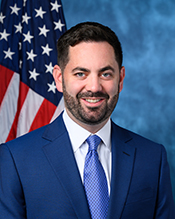
Rep. Michael Lawler
Sponsored bills
Maddy summaryHR 8141, the Azerbaijan Sanctions Review Act of 2024, requires the President to review whether 44 specific Azerbaijani officials meet criteria for U.S. sanctions under the Global Magnitsky Act and related laws. The bill targets military commanders, judges, prosecutors, and security officials linked to alleged human rights violations, including torture of prisoners of war and suppression of political dissent. Within 180 days of enactment, the President must submit a detailed determination to Congress on whether sanctions should be imposed on these individuals. The review is based on findings of Azerbaijan’s alleged war crimes, arbitrary detentions, and failures to uphold international legal obligations. This bill focuses on procedural review, not immediate sanctions.
Maddy summaryHR 4389, the Migratory Birds of the Americas Conservation Enhancements Act of 2023, amends the Neotropical Migratory Bird Conservation Act to increase federal funding for conservation projects from 25% to 33.3% of eligible costs. It extends the authorization period for funding through 2028 and requires the Secretary to submit a report to Congress on collaboration efforts with partners. This bill directly affects conservation organizations, state governments, and local groups that receive federal funds to protect migratory birds traveling between the U.S. and the Neotropics (Central and South America, Caribbean). The changes provide more stable financial support and accountability for existing bird conservation programs.
Maddy summaryThis emergency supplemental appropriations bill provides additional funding for fiscal year 2024 to support U.S. security and foreign policy initiatives across multiple regions and domestic priorities. The legislation allocates billions of dollars for military assistance to Israel, Ukraine, and the Indo-Pacific region, including procurement of defense systems, ammunition, and humanitarian aid. It also establishes new sanctions regimes targeting fentanyl trafficking, Iranian petroleum exports, and terrorist financing, while creating mechanisms to repurpose Russian sovereign assets for Ukraine's reconstruction. The bill includes provisions for enhanced oversight of foreign assistance programs, reporting requirements on drug trafficking routes, and restrictions on data transfers to foreign adversaries.
Maddy summaryHR 8120, the "Motorist Tax Abuse Act," prohibits the federal government from implementing congestion pricing in New York City's Central Business District. It amends a 1991 transportation law to specifically block the Secretary of Transportation from establishing or maintaining a tolling program for downtown Manhattan under the existing value pricing pilot program. The bill directly affects New York City drivers who would have faced tolls in the central business district and the federal agency managing transportation programs. This is a procedural change that prevents a specific tolling initiative from moving forward, without altering broader tax policies.
Maddy summary# Summary of U.S. Legislative Acts Document This document presents a comprehensive compilation of proposed or enacted U.S. legislative acts focused on international sanctions, counterterrorism measures, and foreign policy actions. The key themes and provisions include: ## Major Legislative Acts 1. **Iran Sanctions & Accountability Measures**: - Comprehensive sanctions targeting Iran's Supreme Leader, President, IRGC leadership, and security apparatus - Requirements for the President to report on financial institutions and assets connected to Iranian officials - Restrictions on financial institutions providing services to Iranian officials - Sanctions on Chinese financial institutions involved in transactions with Iran 2. **Terrorism Financing & Counterterrorism**: - Sanctions against Hamas, Palestinian Islamic Jihad, and other designated terrorist groups - Measures to disrupt global fundraising and financing networks for terrorist organizations - Sanctions against entities using human shields in conflict zones - Enhanced measures against cyber-enabled threats to U.S. security 3. **Illicit Trafficking & Drug Control**: - Specific sanctions targeting the illicit Captagon (amphetamine) trafficking network - Measures to disrupt production and trafficking of stimulants from Syria 4. **Financial & Economic Measures**: - Application of foreign direct product rules to Iran - Restrictions on financial transactions involving Iran - Requirements for reporting on terrorist financing networks ## Common Elements Across Acts - Multiple reporting requirements to Congress with specific deadlines - Detailed definitions of key terms (e.g., "foreign person," "knowingly," "material support") - Waiver provisions for national security interests - Sunset clauses (typically 4-7 years after enactment) - Exemptions for humanitarian assistance and intelligence activities - Congressional oversight requirements This legislative package represents a broad U.S. strategy to counter terrorism, hold accountable state sponsors of terrorism, disrupt terrorist financing networks, and address specific security threats including Iranian malign activities and illicit drug trafficking. The acts collectively form a comprehensive framework for international sanctions and counterterrorism measures.
Maddy summaryThis bill extends the reporting requirement under the 2018 Elie Wiesel Genocide and Atrocities Prevention Act from every six years to every twelve years. It directly affects U.S. government agencies responsible for producing these reports on global genocide and atrocities prevention efforts. The key change is a simple amendment to Section 5(a) of the 2018 Act, altering the frequency of mandatory government reporting. This is a procedural extension of existing obligations, not a new policy. The bill does not create new programs or affect specific groups.
Maddy summaryThis bill creates new federal criminal penalties for actions that hinder border enforcement. It prohibits sharing locations or movements of border law enforcement (called "illicit spotting") to aid immigration-related crimes, and bans damaging or circumventing border infrastructure like fences or sensors. Violations carry up to 10 years in prison, increasing to 20 years if a firearm is involved. The bill also clarifies that alien smuggling crimes trigger enhanced penalties under existing firearm laws, defining key terms like "alien smuggling crime" and "brandish" for enforcement.
Maddy summaryThis bill requires the EPA to establish new water quality standards and discharge limits for PFAS chemicals (like "forever chemicals") within strict deadlines. It mandates the EPA to publish human health criteria by 2027 and set industry-specific discharge limits for targeted sectors (e.g., chemical manufacturing, electroplating, landfills) by 2025-2027. The bill also requires immediate monitoring of PFAS discharges from these industries and wastewater treatment facilities, and allocates $200 million annually (2024-2028) to help treatment works address PFAS contamination. These changes directly affect regulated industries, wastewater systems, and communities near water sources contaminated by PFAS.
Maddy summaryHR 8061, the Crime Victims Fund Stabilization Act of 2024, ensures stable funding for the Crime Victims Fund by directing certain False Claims Act collections into it from 2024 through 2029. Specifically, it adds a provision requiring that amounts collected under the False Claims Act (excluding whistleblower rewards and government reimbursement for damages) be deposited into the fund during this period. This directly affects crime victims who rely on the fund for services like counseling and emergency aid, as it prevents potential shortfalls in funding. The bill makes a concrete policy change by redirecting specific federal civil penalties into the fund, rather than altering the fund's existing purposes or eligibility rules.