

Maddy summaryThe Railroad Safety Enhancement Act of 2024 establishes new safety requirements for high-hazard trains carrying hazardous materials, including speed limits of 50 mph (40 mph in urban areas) for trains with 20 or more flammable liquid tank cars. The bill requires rail carriers to provide real-time electronic train consist information to emergency responders and State emergency commissions, including details about hazardous materials being transported, routes, and emergency response contacts. It mandates railroads to develop and regularly update hazardous materials emergency response plans, with triennial reviews by the Federal Railroad Administration. The act also phases out older tank cars by December 2027, requiring all tank cars to meet DOT-117 specifications for flammable liquids, and increases civil penalties for rail safety violations up to $5 million.
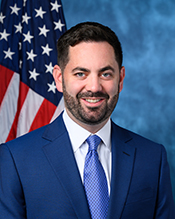
Rep. Michael Lawler
Sponsored bills
Maddy summaryHR 4581, the Maternal and Child Health Stillbirth Prevention Act of 2024, amends Title V of the Social Security Act to explicitly allow federal funds to support stillbirth prevention efforts. The bill directs states receiving Title V maternal and child health funds to use these resources for evidence-based programs and research aimed at reducing stillbirths, including tracking fetal movements, screening for growth issues, smoking cessation, and community support. It directly affects state maternal health programs by clarifying that existing funding can now cover specific stillbirth prevention activities previously not explicitly permitted. The law changes how Title V funds may be spent, adding clear provisions for research and programs targeting stillbirth reduction. This is a policy change that updates funding guidelines without creating new programs or mandates.
Maddy summaryHRES 1358 is a resolution passed by the U.S. House of Representatives calling for accountability for Cuba's violations of internationally recognized human rights and its support for activities harming U.S. interests and democratic nations. It urges the U.S. government to maintain sanctions on Cuba until a democratic transition begins, seek Cuba's expulsion from the UN Human Rights Council, and retain Cuba on the State Sponsors of Terrorism list. The resolution also requires the State Department to submit biannual reports to Congress on efforts to promote democracy in Cuba and calls for action against the trafficking of Cuban medical personnel abroad. This resolution expresses congressional policy but does not create binding law.
Maddy summaryHRES 1356 is a symbolic resolution designating October 9-16, 2024, as "National Dyspraxia/Developmental Coordination Disorder (DCD) Awareness Week" in the U.S. It expresses the House’s support for raising public awareness about dyspraxia/DCD, a condition affecting motor skills (like coordination and balance) that impacts roughly 5-6% of Americans (about 20 million people). The resolution emphasizes the need to improve diagnosis, treatment access, and understanding of dyspraxia/DCD, which is often underdiagnosed and linked to challenges in school, work, and mental health. It does not create new laws or funding but encourages federal, state, and local efforts to support those affected.
Maddy summaryHRES 1323 is a House resolution rejecting a United Nations report that listed the Israel Defense Forces (IDF) as failing to protect children in conflict. It condemns the UN for what the resolution describes as "longstanding bias against Israel" and reaffirms U.S. support for Israel's right to defend itself. The resolution does not alter any laws or policies but expresses congressional opposition to the UN's decision. This procedural resolution has no binding effect and focuses solely on symbolic congressional stance.
Maddy summaryThis bill authorizes the award of a single Congressional Gold Medal to Jens Stoltenberg, former Secretary General of NATO, recognizing his leadership of the Alliance. The medal, to be struck by the U.S. Mint, commemorates his role in strengthening NATO's defense capabilities, promoting burden sharing among members, overseeing NATO expansion (including Finland and Sweden), and coordinating support for Ukraine after Russia's 2022 invasion. It does not create new policy or funding but formally honors Stoltenberg's service through a ceremonial medal. The bill specifies the medal's design, allows for bronze duplicates to be sold to cover costs, and directs proceeds to the U.S. Mint's fund.
Maddy summaryThe Revitalizing Downtowns and Main Streets Act creates a 20% tax credit for converting non-residential buildings into affordable housing. To qualify, buildings must be at least 20 years old and nonresidential, with conversion costs exceeding 50% of the building's adjusted basis or $100,000. The converted housing must be rent-restricted for 30 years for residents earning 80% or less of area median income (60% in certain designated areas), with a $12 billion national credit limit. Special provisions apply for economically distressed areas and rural historic preservation projects, primarily affecting developers who convert vacant commercial buildings in downtown or main street areas into affordable housing.
Maddy summaryThe Rohingya GAP Act establishes a U.S. Special Coordinator for Rohingya Atrocities Prevention and Response to coordinate U.S. government efforts on Rohingya issues. It authorizes $10 million annually for atrocity investigations and $8 million for a Burma-focused conflict observatory to document human rights violations. The bill directs U.S. agencies to support Rohingya refugees' protection, education, and livelihoods in Bangladesh while promoting durable solutions including safe return to Myanmar with full citizenship rights when conditions allow. It requires annual reporting on U.S. efforts to address atrocity risks, protect Rohingya, and advance accountability for crimes against them. The legislation aims to address root causes of violence against Rohingya through empowerment, inclusion in decision-making, and support for transitional justice mechanisms.
Maddy summaryThe Sanction Sea Pirates Act of 2024 requires the U.S. President to impose sanctions on foreign individuals or entities that knowingly engage in piracy, as defined by U.S. law. Key mechanisms include blocking their assets within U.S. jurisdiction and denying visas or entry to the United States. Exceptions apply for humanitarian aid, compliance with international agreements, and national security operations. The bill targets the recent surge in piracy off Somalia and in the Gulf of Aden, which Congress links to heightened Houthi attacks in the Red Sea.
Maddy summaryThe PAID Act of 2024 requires the U.S. government to publicly list foreign entities from designated adversary countries (including China, Russia, Iran, and others) that are using American patents or trade secrets related to critical technologies without authorization. U.S. owners of such intellectual property can petition the government to investigate and identify an entity, with a 90-day deadline for a decision. The government must publish the list in the Federal Register, and entities can be removed if they secure a license or agreement with the IP owner. This law increases transparency about foreign use of U.S. technology without permission, focusing on critical and emerging fields.