

Maddy summaryHR 7208 reauthorizes three existing programs under the Public Health Service Act through 2029, extending current funding periods that previously expired after 2024. It updates the authorization periods for (1) traumatic brain injury prevention efforts, (2) state grants for TBI-related projects, and (3) state grants supporting protection and advocacy services for people with disabilities. The bill directly affects states receiving federal grants under these programs by allowing continued funding for services like TBI care coordination, community support, and legal advocacy. No new policies or funding levels are created - only the timeline for existing programs is extended. This is a procedural reauthorization, not a policy change.
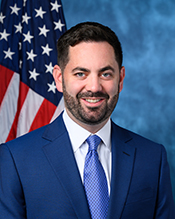
Rep. Michael Lawler
Sponsored bills
Maddy summaryThis bill directs the Joint Committee on the Library to procure a statue of Benjamin Franklin and place it in the U.S. Capitol. The committee must secure the statue within two years of the bill's enactment and install it in a public-accessible location by January 1, 2026, for viewing during Capitol Visitor Center guided tours. It is a procedural measure with no policy changes or direct impact on constituents or legislation.
Maddy summaryHR 6160 reauthorizes the existing Lifespan Respite Care Program under the Public Health Service Act, extending its funding period from fiscal years 2020-2024 to 2024-2028. This program provides temporary relief for family caregivers of individuals with chronic illnesses or disabilities, directly benefiting caregivers and the people they support. The bill makes no changes to program eligibility or benefits - only extends the current funding authorization. It affects caregivers and care recipients who rely on this support, ensuring continued access to respite services through 2028.
Maddy summaryHR 6033, the SPEAK Act of 2024, creates a task force within the Department of Health and Human Services to address telehealth barriers for patients with limited English proficiency (LEP). The task force - comprising healthcare providers, tech vendors, language services, and patient advocates - will assess current obstacles and develop best practices for improving access to telehealth platforms, video interpretation, and digital patient portals. Within 90 days of each annual report, the Secretary must publish a public website sharing these best practices, including guidance on integrating interpreters and making telehealth instructions accessible. The bill directly affects LEP patients and healthcare providers who serve them, aiming to make digital health tools more usable through concrete, evidence-based recommendations.
Maddy summaryHR 5613, the Sanctions Lists Harmonization Act, requires U.S. agencies managing federal sanctions lists to coordinate with each other. Specifically, agencies must notify other agencies within 30 days when adding an individual or entity to one sanctions list, and then review within 60 days whether that person or entity should also be added to other designated lists. If an agency decides not to add someone to another list, it must explain the decision to Congress within 7 days and conduct a yearly review for potential future inclusion. The bill applies to eight specific sanctions lists, including Treasury's OFAC lists, the Commerce Department's Entity List, and Defense Department lists, aiming to streamline federal sanction coordination.
Maddy summaryThis bill modifies Medicaid and CHIP rules to let eligible out-of-state healthcare providers enroll without extra state screening. It applies to providers already in Medicare or their home state program, with low fraud risk, serving children under 21 with complex medical conditions. Providers would receive 5 years of enrollment under this streamlined process, eliminating state-level barriers. The change directly affects children seeking specialized care across state lines and the providers who serve them.
Maddy summaryHR 4424, the Vietnam Veterans Liver Fluke Cancer Study Act, directs the Department of Veterans Affairs to study the rate of cholangiocarcinoma (a type of bile duct cancer) among veterans who served in the Vietnam theater during the Vietnam era. The bill requires the VA, working with the CDC, to analyze existing cancer registry data to compare cancer rates between these veterans and the general U.S. population, breaking down results by age, gender, race, ethnicity, and location. The VA must report its findings and recommendations to Congress within one year of completing the study, with ongoing periodic updates. This study aims to identify patterns and inform potential future actions for affected veterans, without changing current benefits or eligibility.
Maddy summaryHRES 1456 is a symbolic resolution designating September 17, 2024, as "Constitution Day" to honor the signing of the U.S. Constitution on September 17, 1787. It calls for the people of the United States to observe the day with ceremonies and activities, recognizing the Constitution's historical significance and foundational role in American governance. This resolution does not create new laws or affect any individuals or policies; it is purely a non-binding expression of support by the House of Representatives.
Maddy summaryThe JUDGES Act of 2024 authorizes new federal district court judgeships across multiple states to address rising case backlogs in the federal judiciary. It specifies new permanent judgeships for districts including California (multiple districts), Florida, Texas, Delaware, Indiana, Iowa, New Jersey, and New York, with implementation phased through 2035, and creates temporary judgeships for Oklahoma districts with specific vacancy rules. The bill authorizes funding for these positions and requires reports on judicial caseloads and detention space needs, while mandating public access to the Judicial Conference's judgeship recommendations. The bill directly affects federal district courts in the specified locations by increasing judicial staffing to handle growing case volumes.
Maddy summaryThe RELIEVE Act changes eligibility rules for veterans seeking reimbursement for emergency medical treatment. It removes a requirement that veterans must have received prior VA care before the emergency, specifically for the first 60 days after enrolling in VA health care. This means veterans newly enrolled in VA health services will not need to prove prior treatment was received during their initial 60-day enrollment period to qualify for emergency reimbursement. The change applies to emergency care provided one year after the bill becomes law.