

Maddy summaryThis bill updates U.S. trade and immigration policies to strengthen economic ties with Uruguay. It adds Uruguay to the list of beneficiary countries under the Caribbean Basin Economic Recovery Act, allowing U.S. businesses to benefit from preferential trade terms. The bill also requires the U.S. government to review Uruguay’s eligibility for the Visa Waiver Program within 90 days, assessing whether Uruguayan citizens could travel to the U.S. without visas and outlining steps Uruguay might need to take to qualify. These provisions directly affect U.S. businesses engaged with Uruguay and Uruguayan citizens seeking business visas or visa-free travel to the U.S.
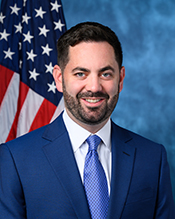
Rep. Michael Lawler
Sponsored bills
Maddy summaryHR 6790 establishes National Institutes of Health centers to advance research, early detection, and public awareness of rare kidney diseases, with a focus on rural and underserved communities. It mandates a federal study on genetic testing barriers, treatment patterns, and public awareness for rare kidney diseases affecting disproportionately impacted populations, including barriers to insurance coverage and access to specialists. The bill also funds nephrology training programs to increase specialists serving these communities and requires experiments to delay or prevent the need for dialysis and transplants. Total funding of $7 million is authorized for fiscal years 2024-2028 to support these research, education, and early intervention efforts.
Maddy summaryThis bill adds Ecuador to the list of countries eligible for trade benefits under the Caribbean Basin Economic Recovery Act (CBERA), specifically designating it as a "CBTPA beneficiary country" for preferential tariff treatment. It requires the President to issue a formal proclamation designating Ecuador as such within 90 days of the bill's enactment. The change would allow Ecuadorian goods to enter the U.S. with reduced or eliminated tariffs under the CBERA framework, directly affecting Ecuador's exporters and U.S. importers of Ecuadorian products. This is a procedural adjustment to existing trade law, not a new policy.
Maddy summaryThis bill directs the Architect of the Capitol to create a time capsule for the U.S. Semiquincentennial (250th anniversary of independence). Congressional leadership will determine its contents, including representative materials about the Semiquincentennial, copies of key legislative milestones, and a message to future Congress. The capsule will be sealed on the Capitol's West Lawn by July 4, 2026, and remain unopened until July 4, 2276, when it will be presented to the 244th Congress for their consideration. The bill is procedural and does not affect citizens or change existing laws.
Maddy summaryHR 6283, the DRUG Act, regulates pharmacy benefit managers (PBMs) to prevent practices that may increase prescription drug costs for consumers. The bill prohibits PBMs from earning revenue based on drug prices or discounts, requiring them to charge flat dollar service fees instead of fees tied to drug costs. It bans PBMs from steering patients to pharmacies they own or control, mandates equal reimbursement for affiliated and non-affiliated pharmacies, and prohibits charging different fees for the same drug. These provisions apply to group health plans, health insurance issuers, and PBMs, with enforcement beginning for plan years starting January 1, 2026. Violations would result in $10,000 daily penalties and require disgorgement of improperly received payments.
Maddy summaryThe Maximum Pressure Act (HR 6114) is a legislative proposal that would maintain and expand U.S. sanctions against Iran. The bill would codify existing sanctions, require Iran to meet 12 specific conditions before sanctions could be lifted (including ending support for terrorism, releasing hostages, and ending nuclear enrichment), and expand sanctions on Iran's Revolutionary Guard Corps and missile programs. It also establishes new reporting requirements for the U.S. government to monitor Iran's activities and the impact of sanctions. The legislation would require congressional review before any sanctions could be lifted or modified, preventing the executive branch from unilaterally easing restrictions.
Maddy summaryThis bill revokes a specific waiver determination related to Iran sanctions that the State Department submitted to Congress on September 11, 2023. It directly affects the application of certain sanctions under two 2012 laws: the National Defense Authorization Act (Section 1245(d)(5)) and the Iran Freedom and Counter-Proliferation Act (Sections 1244(i) and 1247(f)). The bill’s key provision is to nullify the September 11 waiver, meaning the underlying sanctions must now be enforced without exception. This is a procedural change that reinstates the original sanctions requirements, not a new policy.
Maddy summaryThe Revoke Iranian Funding Act of 2023 would cancel all existing U.S. licenses and exemptions allowing funds to be released to Iran for humanitarian purposes, including a $6 billion transfer from South Korea. It also rescinds a specific waiver issued in September 2023 that permitted such transfers. The bill requires the Treasury to submit a 30-day report to Congress detailing Iranian assets blocked by the U.S. and current sanctions exemptions related to Iran. This legislation directly restricts U.S. financial access for Iran and its designated entities, aiming to prevent funds from being diverted to support terrorism.
Maddy summaryHR 5840, the Transportation Security Screening Modernization Act of 2024, simplifies the process for transportation workers to obtain multiple TSA security credentials. It requires the TSA to allow individuals to apply for and renew programs like the TWIC (Transportation Worker Identification Credential) and HAZMAT Endorsement through a single enrollment at any TSA center, with a combined fee lower than separate applications. The bill mandates coordinated expiration dates for all credentials and ensures state-issued commercial driver's licenses reflect the correct HAZMAT endorsement validity. These changes aim to reduce duplication and costs for workers needing multiple security clearances. The TSA must implement these changes within two years and publish details online.
Maddy summaryHR 5819, the COMPLETE Care Act, incentivizes Medicare primary care providers to integrate behavioral health services by increasing payments for specific services (like mental health and substance use disorder support) during 2025-2027. Providers using designated HCPCS codes for integrated care would receive 125-175% of standard payment rates, with the percentage declining annually. The bill also requires these providers to report on integration quality measures and mandates technical assistance for practices adopting integrated models, funded through new appropriations for 2024-2027. It directly affects Medicare-participating primary care practices serving beneficiaries needing mental health or substance use services.