

Real Emergency Access for Aging and Disability Inclusion for Disasters Act or the REAADI for Disasters Act This bill establishes programs and requirements to assist individuals with disabilities and older adults (age 50 or older) with disaster preparedness. Among other provisions, the bill requires the establishment of an advisory committee that includes disabled individuals and older adults to oversee the use of funds made available by this bill; allows states to contract with Centers for Independent Living to provide services and support to disabled individuals in preparing for hazards; requires the Department of Health and Human Services to award grants to carry out projects of national significance that, among other things, create opportunities for disabled individuals and older adults to directly contribute to disaster preparedness, recovery, and mitigation; modifies and expands the membership of the National Advisory Committee on Individuals with Disabilities and Disasters to ensure that it represents the diversity of the disabled and older adult communities; and establishes the Disability and Disaster Preparedness Advisory Commission to review settlement agreements involving potential violations of the Rehabilitation Act of 1973 and the Americans with Disabilities Act of 1990. The Government Accountability Office must study the compliance of federal agencies with such enactments in expending funds to support disabled individuals and older adults in responding to, recovering from, and mitigating disasters.
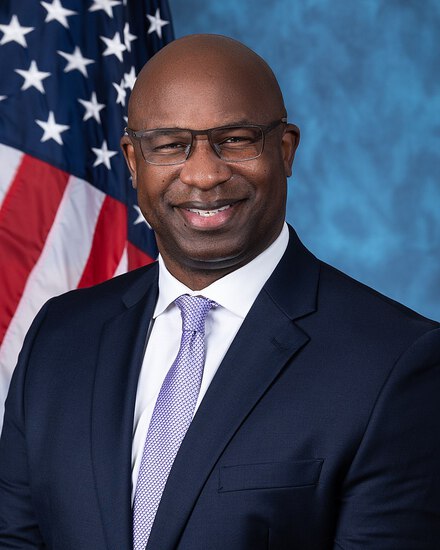
Rep. Jamaal Bowman
Sponsored bills
This resolution supports the designation of Hip Hop Celebration Day, Hip Hop Recognition Month, and Hip Hop History Month. The resolution recognizes the contributions of Hip Hop to art and culture. Finally, the resolution encourages local governments to build partnerships with local Hip Hop entities and other members of the creative arts and music communities.
Maintaining Access to Essential Services Act of 2021 This bill establishes several loan programs to assist households with paying utility bills for drinking water, wastewater, stormwater management, energy (e.g., electricity, natural gas, or propane), and internet services during the COVID-19 public health emergency. Under the programs, the utilities may apply for loans that are equal to the amount of the payment shortfall from their customers during the emergency.
Healthier and Greener Schools Act of 2021 This bill establishes a program under which the Department of Energy must award grants for energy improvements (e.g., renovations to install energy efficiency or renewable energy technologies, repairs to improve indoor air quality, or purchases of zero-emission vehicles) at public school facilities.
This bill requires airports to broadcast in terminals automated announcements about the penalty for interfering with cabin or flight crews.
Equal Pay for Equal Work Act This bill establishes the National Equal Pay Enforcement Task Force to improve enforcement of equal pay laws.
Sending Unconditional Payments to People Overcoming Resistances to Triumph Act of 2021 or the SUPPORT Act of 2021 This bill establishes a guaranteed income pilot program and tax credit and provides for bank accounts supported by Federal Reserve banks. The bill establishes the Office of Guaranteed Income Programs to carry out a five-year guaranteed income pilot program. The pilot program must provide grants through local governments and community development financial institutions for periodic cash payments to eligible individuals. An eligible program must provide cash payments that are not less than $50 per individual and are made on a biweekly, monthly, or quarterly basis. Additionally, the bill establishes the Guaranteed Income Tax Credit, a refundable income tax credit for individual taxpayers equal to $14,400 plus $600 for each dependent. The amount is reduced for individuals whose adjusted gross income exceeds specified levels. A taxpayer may elect to receive this credit in advance in equal amounts throughout the year. The bill also requires Federal Reserve member banks to provide bank accounts ( FedAccounts ) to residents and to businesses domiciled in the United States for purposes of holding digital dollar balances. These accounts must provide specified banking services, including debit cards, online banking, automatic bill pay, and automatic teller machines at U.S. postal facilities. These accounts may not charge fees or have balance requirements and must provide a specified interest rate.
Genuine Progress Indicator Act of 2021 or the GPI Act of 2021 This bill requires the Department of Commerce to establish the genuine progress indicator as a metric to measure the economic well-being of households. The indicator shall be calculated through adjustments to gross domestic product that account for positive and negative economic, environmental, and social factors that contribute to economic activity. It shall also include the total annual economic value and cost of such factors. The head of each federal agency, the President, the Federal Reserve, and Congress must use both the indicator and gross domestic product for budgetary reporting and economic forecasting that measures the net benefits of economic activity.
Acupuncture for Our Seniors Act of 2021 This bill provides for Medicare coverage of acupuncturist services.
Domestic Workers Bill of Rights Act This bill provides rights and protections for domestic workers (e.g., housekeepers, nannies, caretakers, personal assistants, and chauffeurs), including pay and leave rights, and health and safety protections. Specifically, the bill repeals the exemption of domestic live-in employees from certain minimum wage and maximum hour requirements. Employers must provide written notice of termination and provide at least 30 days of lodging and two weeks of severance pay to terminated live-in employees. Live-in employees also must be provided with reasonable access to telephone and internet service during their employment. The bill requires employers to provide domestic workers with a written agreement covering wages, sick leave, benefits, and other matters. Further, domestic workers may request and be granted changes to work schedules due to personal events. The bill also provides domestic workers with certain privacy rights, extends to domestic workers protections against discrimination in employment, and increases the federal medical assistance percentage (FMAP) for certain Medicaid-funded medical services provided by domestic workers. The Department of Labor must (1) award grants for a domestic worker national hotline for reporting emergencies, training on hazards facing domestic workers, and workforce investment activities for domestic workers; and (2) establish a Domestic Worker Wage and Standards Board to investigate standards in the domestic workers industry. Labor must publish online a document that describes the rights and protections for domestic workers under this bill.