

Maddy summaryThe CREATE AI Act of 2023 establishes a National Artificial Intelligence Research Resource (NAIRR) to improve access to AI research tools, computational resources, data, and educational materials for researchers and students across the United States. The NAIRR will provide computational resources, curated datasets, educational tools, and access to AI testbeds, with special emphasis on supporting groups historically underrepresented in STEM fields. Governed by a Steering Subcommittee chaired by the Director of the Office of Science and Technology Policy and managed by a Program Management Office within the National Science Foundation, the NAIRR includes specific requirements for ethical AI development, privacy protections, and security measures. The resource will be accessible to researchers at U.S. institutions of higher education, nonprofits, government agencies, and certain businesses, with priority given to projects addressing privacy, ethics, civil rights, and AI safety.
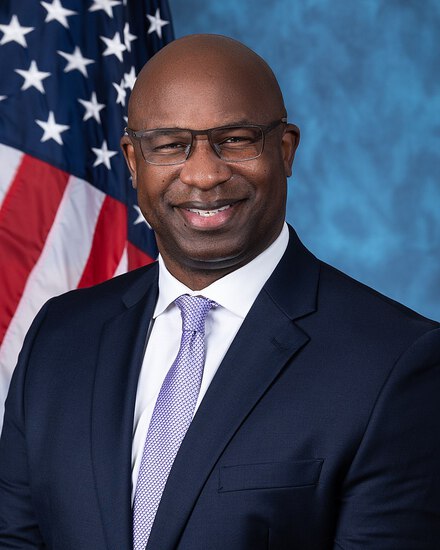
Rep. Jamaal Bowman
Sponsored bills
Maddy summaryHR 8096, the Future of Water Act of 2024, amends the Commodity Exchange Act and related law to prohibit the trading of water, water rights, or water-related financial products (like indices or data) as commodities for future delivery. This change directly affects commodity markets, futures traders, and entities seeking to create financial instruments based on water resources. The bill adds specific language to existing statutes to explicitly exclude water and water rights from being traded as future commodities, preventing their inclusion in futures contracts or related financial products. It does not alter water management, rights, or usage rules, only restricting their financial speculation in commodity markets.
Maddy summaryHR 9337, the "Don’t STEAL Act," requires employers to pay employees the full wage rate specified in their employment contracts (including collective bargaining agreements) if it exceeds the minimum rate under the Fair Labor Standards Act (FLSA). This directly affects workers engaged in commerce or production for commerce, ensuring they receive agreed-upon higher wages. The bill adds criminal penalties for willful wage theft, including fines and up to 5 years in prison for violations exceeding $1,000, with penalties based on severity and business size. It also directs fines collected from violations to fund the Department of Labor’s Wage and Hour Division enforcement efforts. The law applies to unpaid wages or overtime violations occurring 90 days after enactment.
Maddy summaryThe Shrinkflation Reduction Act requires manufacturers to label consumer products when they reduce product size without proportionally lowering the price (shrinkflation). This directly affects manufacturers of consumer goods (defined under federal law) and informs consumers about size reductions. The bill mandates the Federal Trade Commission (FTC) to create labeling rules within one year, treating non-compliance as an unfair business practice under existing FTC enforcement. Violations would face penalties under the FTC Act, with $1 million authorized to implement these rules.
Maddy summaryThis bill (HR 9255) is a simple naming resolution that renames a specific U.S. Postal Service facility. It designates the post office at 114 John Street in New York, New York, as the "Jack Greenberg Post Office." The bill requires all federal references to the building (in laws, maps, documents, etc.) to use the new name. This is a procedural change affecting only the official name of that single post office location.
Maddy summaryHR 9253, the National Gun Violence Research Act, repeals longstanding restrictions that blocked federal funding for gun violence research, including the 1996 Dickey Amendment. It establishes a National Gun Violence Research Program to support scientific studies on gun-related injury and death, with $200 million authorized over six years (2025-2030). The program directs agencies like the CDC, NIH, and National Institute of Justice to fund research, train researchers, develop safety standards, and share gun trace data with researchers through new protocols. This bill directly affects federal research institutions and public health agencies by enabling evidence-based study of gun violence causes and prevention strategies.
Maddy summaryThe National Quantum Initiative Reauthorization Act (HR 6213) reauthorizes and expands federal efforts to advance quantum information science, engineering, and technology in the United States. It establishes new programs including National Quantum Centers, Quantum Testbeds, and a Quantum Reskilling and Workforce Coordination Hub to develop domestic talent and infrastructure. The bill creates an International Quantum Cooperation Strategy to build partnerships with allies while restricting collaboration with "foreign countries of concern" as defined in the legislation. It provides funding for research, workforce development, and commercialization of quantum technologies across government agencies, universities, and industry. The act aims to strengthen U.S. leadership in quantum technology through coordinated federal investment and international collaboration.
Maddy summaryH.J. Res. 193 proposes a constitutional amendment to eliminate legal immunity for federal officials, including the President, from criminal prosecution for actions taken while performing official duties. It also prohibits the President from granting a pardon to themselves. The amendment would apply to all federal officers (such as the President, Vice President, and members of Congress) except for Congress members acting in their legislative role as defined in the Constitution. If ratified by 38 states, this change would become part of the U.S. Constitution, requiring no further congressional action.
Maddy summaryThe 9/11 Responder and Survivor Health Funding Correction Act of 2024 makes several key changes to the World Trade Center Health Program that serves 9/11 responders and survivors. It allows licensed mental health providers (not just physicians) to conduct mental health evaluations for program participants and extends the time period for adding new health conditions from 90 to 180 days. The bill also adjusts enrollment calculations by removing deceased individuals from program counts and provides $2.97 billion in new funding for fiscal year 2024 with a minimum annual funding level of $20 million for 2025. These changes aim to improve access to care while ensuring stable, long-term funding for the program that provides medical services to those affected by the 9/11 attacks.
Maddy summaryThe Environmental Health in Prisons Act requires federal, state, local, and tribal carceral facilities to monitor and publicly report on environmental conditions including air quality, water quality, noise levels, and exposure to hazards like mold, pests, and extreme temperatures. It mandates that facilities provide clear, accessible information about environmental health risks to both incarcerated people and staff, and establishes a grant program to help state and tribal facilities improve environmental conditions through infrastructure upgrades and health-focused programs. The bill also creates an advisory panel including public health experts and formerly incarcerated people, and prohibits retaliation against individuals who report environmental health concerns or participate in monitoring efforts.