

Wage Theft Prevention and Wage Recovery Act of 2022 This bill requires employers to make initial and modified disclosures to employees of the terms of their employment, provide such employees with regular paystubs, and make a final payment to an employee for uncompensated work hours within 14 days of the employee's termination. Employers must also allow employees access to wage records. An employer must compensate an employee at the rate specified in an employment contract, including a collective bargaining agreement, that specifies a rate of pay higher than the minimum wage rate. The bill makes all of such unpaid wages recoverable through civil enforcement. The bill establishes new and increased civil and criminal penalties for violations of overtime or minimum wage requirements, including referral to the Department of Justice for criminal prosecution of employers who engage in wage theft, falsification of wage records, or retaliation against employees. The Wage and Hour Division of the Department of Labor must provide grants to specified organizations, including nonprofits and educational institutions, to support efforts to prevent and reduce violations of wage and hour laws.
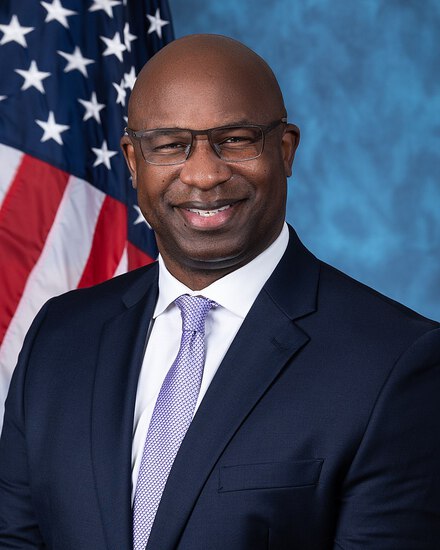
Rep. Jamaal Bowman
Sponsored bills
Campus Accountability and Safety Act This bill addresses sexual harassment, sexual assault, and other violence and harassment on the campuses of institutions of higher education (IHEs). Among other provisions, the bill (1) requires additional information to be included in the annual campus security report provided to current and prospective students and employees, (2) requires each IHE to establish a campus security policy that meets certain requirements, and (3) authorizes grants to address these issues.
This bill designates the facility of the United States Postal Service located at 3900 Crown Road Southwest in Atlanta, Georgia, as the John R. Lewis Post Office Building.
Expanding Representation at HHS Act of 2022 This bill requires certain agencies and offices within the Department of Health and Human Services to address diversity in their procurement activities and workforce. The bill specifically covers offices and agencies that are authorized to award grants or other financial assistance, such as the Centers for Medicare & Medicaid Services and the Centers for Disease Control and Prevention. Each covered entity must establish an Office of Minority and Women Inclusion that is responsible for managing diversity within the entity and with respect to the entity's activities. This new office is not, however, responsible for enforcing civil rights statutes, regulations, or executive orders. In addition, an entity subject to the bill's requirements must modify its evaluation, award, and termination of grants and contracts to ensure, to the maximum extent feasible, the inclusion of minorities; women; and minority-led and women-led grantees, contractors, subgrantees, and subcontractors. Each entity must also undertake actions to increase diversity in its workforce, including by recruiting at institutions of higher education where the majority of the students are members of minority populations.
Reproductive Health Care Accessibility Act This bill establishes various grants and related programs that address sexual and reproductive health care for individuals with disabilities. Specifically, the Health Resources and Services Administration must support training for health care providers who offer sexual and reproductive health care to individuals with disabilities, and educating individuals with disabilities about sexual and reproductive health care. The Administration for Community Living must establish a national center to provide recommendations, technical assistance, and other resources related to the provision of sexual and reproductive health care for individuals with disabilities. The bill also authorizes support for medical schools, nursing schools, and other educational institutions that offer obstetrics and gynecology training programs to expand the number of individuals with disabilities entering the reproductive health care workforce. Additionally, the Department of Health and Human Services must study the effectiveness and other aspects of reproductive health care services and programs for individuals with disabilities.
National Museum of American LGBTQ+ History and Culture Act This bill establishes within the Smithsonian Institution the National Museum of American LGBTQ+ History and Culture. The museum (1) may carry out educational and liaison programs in support of its goals, and (2) shall establish specified grant and scholarship programs.
Commission To Study the Potential Creation of a National Museum of American LGBTQ+ History and Culture Act This bill establishes the Commission to Study the Potential Creation of a National Museum of American LGBTQ+ History and Culture. The commission shall submit reports that address the feasibility of establishing and maintaining such a museum, the availability and cost of collections to be acquired and housed in the museum, the impact of the museum on existing American LGBTQ+ history-related museums, development of criteria for evaluating possible locations for the museum, and the feasibility of the museum becoming part of the Smithsonian Institution. The commission shall develop a fundraising plan that will address the support of the museum through contributions from the public. No federal funds may be obligated to carry out this bill.
Longshore and Harbor Workers' COVID-19 Compensation Act of 2022 This bill establishes a conclusive presumption that certain workers diagnosed with COVID-19 are entitled to workers' compensation benefits under the Longshore and Harbor Workers' Compensation Act (LHWCA). It also provides funding to reimburse employers for costs associated with LHWCA benefits related to COVID-19. The LHWCA provides for medical, disability, and survivor benefits for specified private-sector maritime workers. The presumption applies to workers who were diagnosed with COVID-19 between January 27, 2020, and January 27, 2024, and who, during the incubation period, faced a risk of COVID-19 exposure while carrying out job duties. In addition, the bill establishes and provides funding for the Longshore COVID-19 Fund to reimburse employers for costs related to such COVID-19 claims. To be reimbursed, employers must comply with applicable safety and health guidance to prevent occupational exposure to COVID-19.
This concurrent resolution expresses the sense of the House of Representatives that Congress and the President should examine and support ways to expand access to contraceptives.
Nonprofit Security Grant Program Improvement Act of 2022 This bill modifies the Nonprofit Security Grant Program of the Department of Homeland Security and reauthorizes appropriations for such program through FY2028. The Federal Emergency Management Agency (FEMA) must establish an office, headed by a senior FEMA official, to administer the program. Office responsibilities include those related to outreach, engagement, education, and technical assistance. FEMA must also publish grant guidelines and may prohibit states from closing application processes before the publication of the guidelines. FEMA must seek to enter into a contract or other agreement with an independent research organization for the conduct of a study that analyzes and reports on (1) the effectiveness of the program for preparedness against terrorism and other threats; (2) the risk-based formula and allocations under the program; and (3) the risk profile of and any identifiable factors leading to the low participation of traditionally underrepresented groups and states under the program.