

9/11 Immigrant Worker Freedom Act This bill provides lawful permanent resident status to qualifying aliens who performed rescue, debris cleanup, or related services following the September 11, 2001, attacks. This bill shall apply to an alien who (1) performed a certain number of hours of such services in New York, New York, after the attack; (2) was exposed to debris from the former World Trade Center and airborne toxins while performing vehicle maintenance services after the attack; or (3) performed rescue, cleanup, or related services following the attack on the Pentagon or the aircraft crash in Shanksville, Pennsylvania. An individual who has applied for lawful permanent resident status under this bill shall receive work authorization while the application is pending. An individual who willfully makes a material misrepresentation or material omission related to the performance of these services may not receive lawful permanent resident status under this bill.
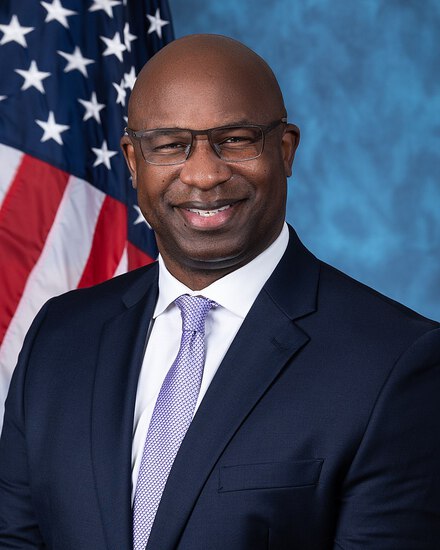
Rep. Jamaal Bowman
Sponsored bills
Lifting Immigrant Families Through Benefits Access Restoration Act of 2021 or the LIFT the BAR Act of 2021 This bill repeals certain limits on the eligibility of noncitizens who lawfully reside in the United States for federal means-tested programs, including Medicaid, the Children's Health Insurance Program (CHIP), programs funded through Temporary Assistance for Needy Families (TANF) grants, Supplemental Security Income (SSI), and certain nutrition and housing programs.
Restoring Justice for Workers Act This bill prohibits predispute arbitration agreements that require arbitration of an employment dispute. It allows a postdispute arbitration agreement if the employee enters into it voluntarily without coercion and is informed in writing of rights and protections under such agreement. An employer may not retaliate against an employee for refusing to enter into an agreement for arbitrating an employment dispute.
Improving Access for Afghan Refugees Act This bill requires the Department of State to provide priority refugee status to eligible habitual residents of Afghanistan. To be eligible for such priority status, a habitual resident of Afghanistan must also be a national of Afghanistan or stateless. Such an individual shall receive priority refugee status if the individual (1) has suffered persecution or has a well-founded fear of persecution and worked in a specified field that makes the individual a target of persecution on account of race, religion, or other characteristics; (2) was employed for at least one year in Afghanistan by U.S.-based media or nongovernmental entities or an entity that received a contract or grant from the U.S. government; or (3) is the beneficiary of a visa petition sponsored by a relative who is a U.S. citizen or permanent resident. The State Department may also provide priority status to other groups of individuals who are nationals and residents of Afghanistan. Certain annual numerical limits on refugee admissions shall not apply to individuals who receive priority status under this bill. For refugee applications under this bill, the State Department and the Department of Homeland Security shall ensure that all steps in the approval process in the U.S. government's control are completed within six months of an application's submission, with exceptions for cases that need more time to address national security concerns.
Ending Homelessness Act of 2021 This bill expands the housing choice voucher program and provides assistance to homeless individuals and families. Specifically, the bill provides FY2022-2025 funding for the expansion of the housing choice voucher program for certain extremely low income families. Furthermore, beginning in FY2026, the bill creates and funds an entitlement to housing choice vouchers for certain extremely low income families. Eligibility for the entitlement expands annually, extending to low-income families by FY2030. The bill also reduces the geographic area used to calculate an area's fair market rent for purposes of voucher payment standards and prohibits the use of criminal history in determining eligibility for certain housing assistance. Additionally, the bill prohibits housing discrimination on the basis of a renter's source of income or a renter's veteran status. The bill also provides additional FY2022-FY2026 funding for the Department of Housing and Urban Development (HUD) to assist the homeless, including to award emergency relief grants in jurisdictions with the highest need and award grants to provide outreach and coordinate services. Furthermore, the bill provides additional FY2022-FY2026 funding for the Housing Trust Fund, which provides affordable housing for extremely low-income and very low-income families. While this additional funding is available, HUD must ensure that priority for occupancy in assisted units is given to individuals and families who are homeless. Finally, the bill permanently reauthorizes certain homeless assistance grants and makes permanent the U.S. Interagency Council on Homelessness.
Housing is Infrastructure Act of 2021 This bill generally addresses housing affordability and infrastructure. The bill authorizes the Department of Housing and Urban Development (HUD) to provide grants, programs, and other support related to public housing, affordable housing preservation and construction, and mortgage access. The bill also establishes and funds the National Investment Authority (NIA) which must design, finance, and implement a strategy of long-term national economic growth and development. The NIA must select projects that coordinate investment of public and private capital in equitable, inclusive, and sustainable growth of the economy. Furthermore, the bill establishes the National Infrastructure Bank (NIB) to implement the strategy by engaging in credit market activities that support public and private investment in critical public infrastructure projects. The bill gives the NIA bond issuing authority and authorizes the Board of Governors of the Federal Reserve System to purchase these bonds. The Federal Reserve must lend funds on a short-term basis upon the request of the NIB and other subsidiaries. Additionally, the Department of the Treasury must provide for a line of credit not to exceed 100% of the NIA's total assets. Finally, the bill (1) authorizes HUD to provide support for fair housing organizations, and (2) requires consultation with a fair housing enforcement organization as part of an application for certain housing grants or funds.
The People's Response Act This bill establishes multiple grant programs and requirements to promote qualified approaches to community safety. These are programs or services that are disconnected from carceral institutions (e.g., law enforcement, child welfare services, and immigration enforcement). Specifically, the bill establishes the Division of Community Safety within the Department of Health and Human Services (HHS) to administer the grants and carry out related activities. These include grants for community-based organizations to support qualified approaches to community safety, such as unarmed first responder agencies and 9-1-1 diversion programs; neighborhood-level interventions, including safe passage to school and violence interruption programs; behavioral health treatment, nutrition support, and other public health programs; housing security programs; and programs for youth and families, survivors of violence, and individuals exiting incarceration or criminal supervision. Additionally, the division must administer grants pertaining to qualified approaches for community safety for state and local governments and hiring and training first responders. The bill also establishes an advisory board to oversee the division's activities. Membership on the board must reflect the racial, ethnic, and other demographic diversities of the United States. The board must also include members who have personal experience with the criminal justice system. Furthermore, HHS must set up (1) a federal health response unit to respond to any public health emergency, assist with qualified approaches to community safety, and provide resources for safe and inclusive schools; and (2) an interagency task force to promote qualified approaches to community safety across federal programs.
Drug Policy Reform Act of 2021 or the DPR Act of 2021 This bill transfers federal regulatory authority over controlled substances, eliminates federal penalties for some drug-related offenses, and removes some collateral consequences for certain criminal convictions. A collateral consequence is a penalty (e.g., a restriction on access to a program or service) imposed on an individual in addition to the penalty associated with the sentence. Specifically, the bill transfers regulatory authority over controlled substances from the Department of Justice to the Department of Health and Human Services (HHS). Additionally, the bill directs HHS to establish a commission to determine a benchmark amount of a controlled substance for personal use supply. The bill eliminates federal criminal and civil penalties for simple possession of a controlled substance in an amount equal to or less than the benchmark. Finally, the bill removes the collateral consequences of certain convictions. For example, the bill removes some restrictions on eligibility for federal assistance and benefits for individuals who are convicted of certain drug-related offenses, reinstates the right to vote in federal elections for persons convicted of criminal offenses, and repeals the requirement for states to revoke or suspend driver's licenses of individuals who are convicted of drug offenses as a condition of receiving a full allocation of certain federal grant funds.
Counseling Not Criminalization in Schools Act This bill prohibits the use of federal funds for law enforcement officers in schools. It also establishes a grant program to replace law enforcement officers in schools with personnel and services that support mental health and trauma-informed services. Specifically, the bill prohibits the use of federal funds to hire, maintain, or train law enforcement officers in elementary or secondary schools. Further, it prohibits the use of public safety and community policing grants for law enforcement officers in schools. Additionally, the bill directs the Department of Education to award grants to local educational agencies to (1) replace law enforcement officers in elementary and secondary schools with personnel and services that support mental health and trauma-informed services, and (2) reform school safety and disciplinary policies to reflect evidence-based practices that do not rely on the criminal justice system. A recipient must use grants funds to hire or train specified staff. The bill prohibits the use of grant funds for (1) establishing or enforcing zero-tolerance school discipline policies, (2) purchasing or installing surveillance equipment (e.g., metal detectors), or (3) arming teachers or other school personnel.
Housing is a Human Right Act of 2021 This bill establishes and expands programs to assist homeless and housing-unstable individuals and establishes new real property-related taxes to fund specified Department of Housing and Urban Development (HUD) programs. HUD must establish the Community Development Block Grant Plus Program for state and local governments to assist homeless and housing-unstable individuals as well as cost-burdened households. These funds may be used only for certain activities that assist these populations, including the construction of new affordable housing. The bill also establishes other grant programs to assist these individuals, such as by facilitating access to voting and libraries. Governmental entities may not receive assistance under the bill unless they have, or are working to implement, policies that (1) do not criminally punish homeless individuals for sleeping outside or on public property, and (2) comply with constitutional protections for these individuals' property. In addition, the bill establishes taxes on (1) the sale or exchange of real property of at least $10 million, (2) the sale or exchange of real property involving an anonymous entity, and (3) rent received by landlords that own large amounts of dwelling units. The revenue from these taxes must be credited to various HUD programs in specified percentages. The Government Accountability Office must study (1) the allocation formula for Emergency Food and Shelter grants, (2) recipient compliance with various grant program guidelines, and (3) barriers related to access to essential documents that homeless and housing-unstable individuals face.