

Maddy summaryHR 1247 would award a Congressional Gold Medal to the Freedom Riders collectively, honoring their pivotal role in challenging segregation in interstate travel during the Civil Rights movement. The medal, to be struck by the U.S. Mint and displayed at the Smithsonian Institution, recognizes their nonviolent protests that led to the 1961 federal ban on segregation in interstate public facilities. This is a symbolic tribute with no legal effect, as the bill does not create new policies or alter existing laws.
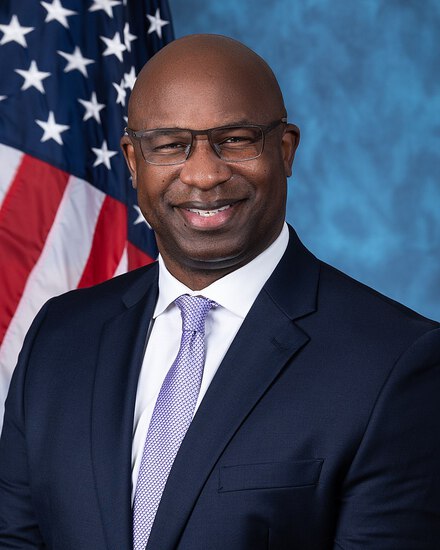
Rep. Jamaal Bowman
Sponsored bills
Maddy summaryHR 1244 authorizes Congress to award a gold medal collectively to Africans and their descendants who were enslaved in the U.S. from 1619 to 1865, recognizing their contributions to America's economic foundation. The bill directs the Treasury Secretary to design and strike the medal, which will be permanently displayed at the Smithsonian's National Museum of African American History & Culture. It also permits the sale of bronze duplicates to cover costs, with proceeds going to the U.S. Mint. This is a commemorative measure, not a policy change, focusing on symbolic recognition of historical contributions.
Maddy summaryThe Richard L. Trumka Protecting the Right to Organize Act of 2023 strengthens workers' rights to organize unions by making it harder for employers to interfere with organizing efforts. Key provisions include changing the definition of "employee" to make it more difficult to classify workers as independent contractors, prohibiting employers from threatening to permanently replace striking workers, and requiring employers to provide voter lists for union elections. The bill also creates a new electronic voting system for union elections, strengthens whistleblower protections for workers reporting labor violations, and increases penalties for unfair labor practices. These changes directly affect workers seeking to form unions, employers who may interfere with organizing, and labor organizations. The bill aims to make it easier for workers to exercise their right to collective bargaining under the National Labor Relations Act.
Maddy summaryThis is a non-binding resolution expressing the House of Representatives' symbolic support for designating February 27-March 3, 2023, as "Public Schools Week." It does not create new laws, allocate funding, or directly affect any individuals or institutions. The resolution highlights the importance of public schools to democracy, equity, and student success through a series of supporting statements. As a procedural resolution, it has no legal effect beyond acknowledging the significance of public education.
Maddy summaryHRES 160 is a non-binding House resolution recognizing Black History Month as a time to honor the contributions of LGBTQI+ Black Americans throughout U.S. history. It commemorates specific historical figures and advocates without creating new laws or policies. The resolution highlights the unique intersection of racial, LGBTQI+, and social justice contributions, including figures like Marsha P. Johnson, James Baldwin, and Alvin Ailey. As a symbolic gesture, it has no legislative effect but aims to raise awareness of underrepresented historical narratives.
Dr. Norman C. Francis Congressional Gold Medal Act This bill provides for the award of a Congressional Gold Medal to Dr. Norman Christopher Francis in recognition of his contributions to the United States through his lifelong dedication to education, justice, and public service.
Health Center Community Transformation Hub Act This bill permits the Health Resources and Services Administration (HRSA) to award supplemental funds to certain health centers that care for medically underserved populations for addressing primary social determinants of health (i.e., nonmedical factors that influence health outcomes, such as transportation, food security, and economic security). To receive the supplemental funding, health centers must be recipients of other HRSA grants that support health center operations and activities. Health centers must use the supplemental funds to implement a community-based network of organizations capable of addressing the social determinants of health. Additionally, HRSA and the Centers for Medicare & Medicaid Services must issue guidance on sustaining these networks after the supplemental funding terminates.
Maddy summaryHR 1134, the People Over Pentagon Act of 2023, would reduce the U.S. Department of Defense's 2024 budget by $100 billion. It directly affects the Pentagon's funding, though it specifically preserves spending for the Defense Health Program, military personnel, and civil service pay and benefits. The bill mandates this cut while directing the Secretary of Defense to consider a 2021 Congressional Budget Office report on managing a smaller defense budget. It does not specify where the savings would be redirected, only requiring reallocation to address non-military national security priorities.
Maddy summaryThe Department of Peacebuilding Act of 2023 would establish a new Cabinet-level Department of Peacebuilding within the executive branch of the U.S. government. The department would include multiple offices focused on domestic and international peacebuilding, violence prevention, peace education, and conflict resolution, with specific offices dedicated to areas like peace education, domestic activities, international activities, technology, arms control, and human rights. It would create a Secretary of Peacebuilding position and require the department to develop policies addressing root causes of violence, promote nonviolent conflict resolution, and collaborate with existing federal agencies. The bill would mandate annual reports on progress toward peace in the United States and require consultation with other departments on matters related to conflict prevention and peacebuilding.
Maddy summaryHR 724, the Arctic Refuge Protection Act, repeals the existing oil and gas program for the Arctic National Wildlife Refuge in Alaska and designates approximately 1.56 million acres of the refuge's coastal plain as federal wilderness. This bill directly affects the Arctic Refuge by permanently prohibiting oil and gas leasing and development in that specific area. The key mechanism is adding the designated land to the National Wilderness Preservation System under the Wilderness Act, requiring it to be managed for its natural conditions. This change legally protects the area from future fossil fuel extraction activities.