

Maddy summaryHR 6054, the Represent America Abroad Act of 2023, creates a 3-year pilot program to increase diversity in the U.S. Foreign Service by recruiting mid-career professionals from historically excluded groups - including racial/ethnic minorities, women, people with disabilities, and others - through a modified lateral entry pathway. The program requires participants to have 5-8 years of relevant experience, pass standard Foreign Service exams, and complete specialized training, with a goal of placing at least 50% of participants into mid-level Foreign Service roles annually. It mandates annual reporting to Congress on applicant demographics, advancement rates, retention, and recruitment efforts, targeting outreach to minority-serving institutions and community organizations. The bill directly affects the Department of State and USAID, aiming to address documented diversity gaps in leadership (currently 13-17% minority representation at executive levels) by expanding recruitment from underrepresented talent pools.
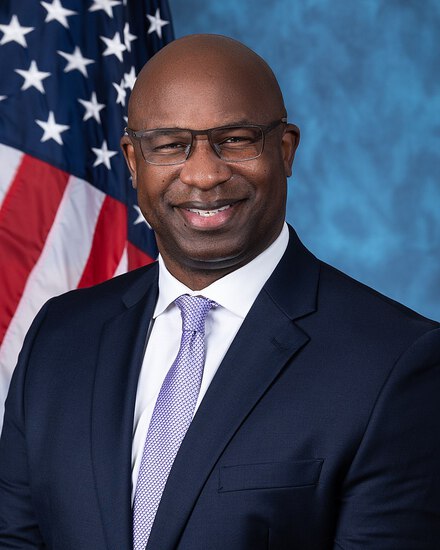
Rep. Jamaal Bowman
Sponsored bills
Maddy summaryThe Safe Schools Improvement Act (HR 6031) requires public elementary and secondary schools to implement comprehensive anti-bullying policies that specifically prohibit harassment based on protected characteristics like race, gender identity, disability, religion, and sexual orientation. It mandates schools to collect and publicly report annual data on bullying incidents while establishing clear grievance procedures for students and parents. The bill also requires states to submit biennial reports on school compliance and supports evidence-based interventions, such as restorative practices, to reduce exclusionary discipline. This legislation directly affects all public K-12 schools and students in the U.S., aiming to create safer learning environments through standardized policy requirements and data transparency.
Maddy summaryHR 5955, the Safe Return Act, amends the State Department's repatriation program to replace loans with grants for specific groups. It directly affects U.S. citizens, lawful permanent residents, and third-country nationals needing financial assistance to return to the U.S. The bill changes eligibility to include destitute lawful permanent residents and updates the program to use "grants" instead of "loans," requiring written grant agreements rather than loan terms. The Secretary of State must also update the Foreign Affairs Manual to reflect these changes.
Maddy summaryHR 5895 amends the Higher Education Act to allow historically Black colleges and universities (HBCUs) to use existing grant funds for specific arts-related activities. The bill adds new provisions enabling HBCUs to provide financial assistance to arts students, establish arts outreach programs, offer wraparound student services (like mentorship and career advising), maintain Black art collections, and create paid arts internships through partnerships. This directly affects HBCUs by expanding how they can allocate current funding to strengthen their arts programs and support Black artists. The key mechanism is modifying Section 323 of the Higher Education Act to include these new uses, with optional partnerships with the National Endowment for the Arts.
Maddy summaryHR 5827, the Tenants’ Right to Organize Act, grants tenants in federally assisted housing the right to form and join tenant organizations to address housing issues without fear of retaliation. It directly affects tenants receiving tenant-based rental assistance (like Section 8 vouchers) and tenants in low-income housing tax credit (LIHTC) properties. Key provisions require public housing agencies and property owners to recognize tenant organizations, allow protected activities (such as leafleting and door-to-door outreach), and prohibit retaliation - while establishing an enforcement protocol for complaints and quarterly reporting to Congress. The bill also mandates annual notifications to tenants about their organizing rights and includes specific protections for LIHTC properties through owner compliance requirements and fines for violations.
Maddy summaryThis bill replaces "Columbus Day" with "Indigenous Peoples’ Day" as the official federal holiday observed on the second Monday in October. It directly affects federal government operations and all federal documents, rules, or laws that previously referenced "Columbus Day" by automatically updating those references to "Indigenous Peoples’ Day" upon enactment. The key mechanism is a simple amendment to federal law (5 U.S.C. § 6103(a)) to change the holiday name and a provision ensuring all existing federal references to Columbus Day are legally treated as referring to Indigenous Peoples’ Day instead. This is a procedural change to federal holidays and references, not a new policy or program.
Maddy summaryHR 5783, the Blue Collar and Green Collar Jobs Development Act, establishes a federal program to improve training and education for workers in energy-related industries, directly affecting educational institutions, energy employers, and individuals seeking jobs in these sectors. The bill requires the Secretary of Energy to create a nationwide workforce development program that prioritizes disadvantaged communities and minority-serving institutions, provides grants to cover training costs for eligible workers, and establishes a public clearinghouse with regional workforce data on energy job needs. Key provisions include developing voluntary STEM education guidelines for energy careers, creating a grant program to cover up to 45% of training wages for small businesses, and requiring collaboration with state workforce boards and energy industries. The program authorizes $15 million annually for workforce development and $50 million for the grant program through 2028. This legislation aims to connect job seekers with training opportunities in sectors like renewable energy, energy efficiency, and advanced manufacturing without mandating adoption by states or schools.
Maddy summaryThis bill requires federal agencies to adjust contract prices to reimburse contractors for paying employees during government funding lapses (e.g., shutdowns). It covers costs for furloughed, laid-off, or reduced-hour workers, or for restoring paid leave used during the lapse, with a weekly cap of $1,442 per employee. Directly affecting federal contractors and their employees who experienced work disruptions due to funding gaps, it mandates agencies to make these adjustments promptly after enactment. Contractors must provide proof of costs, and the Office of Federal Procurement Policy must report on implementation to Congress within a year.
Maddy summaryHR 5784 would provide federal grants to public schools (including Bureau of Indian Education schools) to make them more environmentally sustainable and equitable. It prioritizes schools in the most vulnerable communities (based on CDC Social Vulnerability Index) for full funding to become "healthy zero-carbon schools" through energy-efficient retrofits and new construction, while offering reduced funding for less vulnerable schools. The grants require community engagement in planning, mandate hiring from local communities with specific diversity goals, fund social services and mental health support, and include strict energy efficiency standards for all projects. The bill also includes funding for educational equity planning and climate resiliency programs to help schools serve as community centers during disasters.
Maddy summaryHRES 733 is a non-binding resolution expressing concern about the rising number of book bans in U.S. schools and libraries. It cites data showing nearly 3,400 book removals affecting 1,557 titles from July 2022-June 2023, with disproportionate targeting of books featuring LGBTQ+ themes (36%) and racial justice content (37%). The resolution urges school districts to follow established best practices for handling book challenges and reaffirms the importance of protecting students' access to diverse materials. It does not create new laws but calls for local governments to support free expression as protected by the First Amendment.