

Affordable Housing Preservation Act of 2021 This bill directs the Department of Housing and Urban Development (HUD) to implement a demonstration program for the establishment or preservation of limited- or zero-equity resident-controlled housing. Limited- or zero-equity resident-controlled housing (e.g., a housing cooperative) restricts the initial and resale price of shares of stock or membership interests in a residence so that the shares or interests remain affordable to families of certain incomes. Specifically, HUD may assist nonprofit organizations to establish or preserve such housing through providing (1) mortgage insurance; and (2) grants for predevelopment costs, monitoring fees, technical assistance, gap funding, and intermediary financing. Housing receiving such assistance must be governed by a board of directors elected by members of a limited- or zero-equity resident-controlled housing corporation with voting structured equitably among all members. A limited- or zero-equity resident-controlled housing corporation may sell corporate shares in such housing to an eligible household for a purchase price that ensures dwelling units in the housing will remain affordable for at least 30 years to households earning less than a certain income.
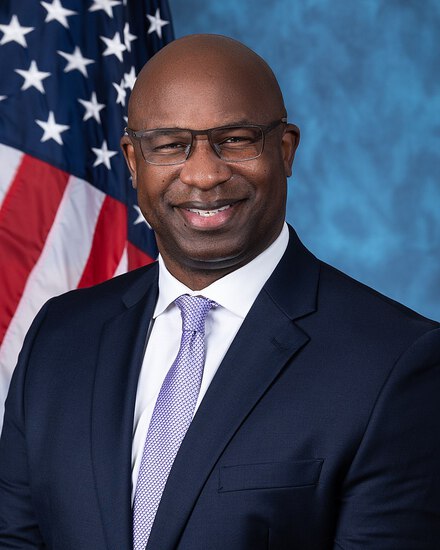
Rep. Jamaal Bowman
Sponsored bills
This joint resolution proposes a constitutional amendment to lower the minimum age for the right to vote from 18 to 16.
Black Maternal Health Momnibus Act of 2021 This bill directs multi-agency efforts to improve maternal health, particularly among racial and ethnic minority groups, veterans, and other vulnerable populations. It also addresses maternal health issues related to COVID-19 (i.e., coronavirus disease 2019). The Department of Health and Human Services (HHS) and other specified departments must address the social determinants of maternal health, which include child care, housing, food security, transportation, and environmental conditions. The bill also extends to 24 months postpartum eligibility for the Special Supplemental Nutrition Program for Woman, Infants, and Children. Additionally, HHS and other agencies must take actions to grow and diversify the maternal health workforce. To increase access to maternity care, HHS and other agencies must (1) award specified grants; (2) test an alternative payment model for perinatal care under Medicaid and the Children's Health Insurance Program (CHIP); and (3) support training, technology, and telehealth initiatives. The bill also increases research and data collection on maternal morbidity and mortality, particularly among tribal populations and minority groups. The Bureau of Prisons and the Department of Justice must establish programs to improve maternity care for incarcerated populations. The Medicaid and CHIP Payment and Access Commission must also report on the impact of Medicaid ineligibility for pregnant and postpartum prisoners. Additionally, as a condition for certain grants, states and territories must have laws limiting the use of restraints on pregnant individuals in prisons. The bill also directs activities to mitigate adverse maternal health outcomes associated with climate change and to improve maternal vaccination rates.
This concurrent resolution calls for renewed U.S. leadership in addressing the climate crisis that is disproportionately affecting the health, economic opportunity, and fundamental rights of children. It also recognizes the need for the departments and agencies of the executive branch with delegated authority over energy and climate policy to prepare a climate recovery plan that puts the United States on a trajectory consistent with reducing global atmospheric carbon dioxide to below 350 parts per million by the year 2100.
Child Care for Working Families Act This bill provides funds and otherwise revises certain child care and early learning programs for low- to moderate-income families. Specifically, the bill provides funds for the Child Care and Development Block Grant program and reestablishes it as a child care and development assistance program. The bill also allocates program funds for states to provide services and supports to infants, toddlers, and children with disabilities. Further, the bill revises the program to require each state to create a tiered and transparent system for measuring the quality of child care providers, which must include evidence-based standards and payment rates that are based on a certain cost estimation model; ensure that copayments are based on a sliding scale and that no family receiving assistance pays more than 7% of its household income on child care; and use quality child care amounts for certain activities, such as increasing the supply of child care providers. The bill also provides funds and establishes grants for states to create preschool programs for low- to moderate-income children between the ages of three and five years. The Department of Health and Human Services (HHS) must make grants to Head Start agencies to provide children with access to full-school-year and full-school-day services, provide access to additional service hours for migrant and seasonal agencies, or enhance the quality of existing services. Finally, the bill requires, and provides funds for, HHS to assist Head Start agencies with ensuring their teachers and staff are paid a living wage.
Endless Frontier Act This bill establishes a Directorate for Technology and Innovation in the National Science Foundation (NSF) and establishes various programs and activities. The goals of the directorate shall be, among other things, the strengthening of U.S. leadership in critical technologies through basic research in key technology focus areas, such as artificial intelligence, high performance computing, and advanced manufacturing, and the commercialization of those technologies to businesses in the United States. The bill gives the NSF the authority to provide for the widest practicable and appropriate dissemination of information within the United States concerning the NSF’s activities and the results of those activities. The Office of Science and Technology Policy shall annually develop a strategy for the federal government to improve national competitiveness in science, research, and innovation to support the national security strategy. The Department of Commerce shall (1) establish a supply chain resiliency and crisis response program to address supply chain gaps and vulnerabilities in critical industries, (2) designate regional technology hubs to facilitate activities that support regional economic development that diffuses innovation around the United States, and (3) award grants to facilitate development and implementation of comprehensive regional technology strategies. The bill extends through FY2026 the Manufacturing USA Program and expands such program to support innovation and growth in domestic manufacturing.
Washington, D.C. Admission Act This bill provides for admission into the United States of the state of Washington, Douglass Commonwealth, composed of most of the territory of the District of Columbia. The commonwealth shall be admitted to the Union on an equal footing with the other states. The Mayor of the District of Columbia shall issue a proclamation for the first elections to Congress of two Senators and one Representative of the commonwealth. The bill applies current District laws to the commonwealth and continues pending judicial proceedings. The commonwealth (1) shall consist of all District territory, with specified exclusions for federal buildings and monuments, including the principal federal monuments, the White House, the Capitol Building, the U.S. Supreme Court Building, and the federal executive, legislative, and judicial office buildings located adjacent to the Mall and the Capitol Building; and (2) may not impose taxes on federal property except as Congress permits. District territory excluded from the commonwealth shall be known as the Capital and shall be the seat of the federal government. The bill maintains the federal government's authority over military lands and specified other property. The bill provides for expedited consideration of a joint resolution repealing the Twenty-third Amendment to the Constitution, which provides for the appointment of electors of the President and Vice President. The bill continues certain federal authorities and responsibilities, including regarding employee benefits, agencies, courts, and college tuition assistance, until the commonwealth certifies that it is prepared to take over the authorities and responsibilities. The bill establishes the Statehood Transition Commission to advise the President, Congress, and District and commonwealth leaders on the transition.
Commission on United States Occupations Act or the La Comisión de las ocupaciones norteamericanas Act This bill establishes the Commission to Study and Develop Reconciliation Proposals for Dominican Republic. The commission must address specified U.S. actions related to the Dominican Republic (e.g., military occupations and efforts to annex the Dominican Republic) and make recommendations for appropriate remedies, including a formal apology and repair and reconciliation efforts.
Tax on Wall Street Speculation Act This bill imposes an excise tax on the transfer of ownership in certain securities (covered transaction), including any share of stock in a corporation; any partnership or beneficial interest in a partnership or trust; any note, bond, debenture, or other evidence of indebtedness (excluding tax-exempt municipal bonds); and derivative financial instruments. The bill includes exceptions for initial issues, certain traded short-term indebtedness, and securities lending arrangements. The bill also (1) imposes a penalty on taxpayers who fail to include a covered transaction on their tax return or information statement, and (2) allows an individual taxpayer whose modified adjusted gross income does not exceed $50,000 ($75,000 for married taxpayers filing joint returns) a tax credit for the amount of tax paid on covered transactions.
College for All Act of 2021 This bill establishes measures to expand access to higher education, including by eliminating tuition and required fees for eligible students, revising the Federal Pell Grant program, and reauthorizing certain programs to assist students from disadvantaged backgrounds. Specifically, the bill provides funding to eliminate tuition and required fees for (1) all students at community colleges and two-year tribal colleges and universities; (2) working- and middle-class students at four-year public institutions of higher education (IHEs) and tribal colleges and universities; and (3) eligible students at private, nonprofit historically Black colleges and universities (HBCUs) and minority-serving institutions. The bill permanently reauthorizes and otherwise revises the Federal Pell Grant program by providing funding to increase the maximum award for each eligible student, increasing the duration limit for the use of Pell Grants, and allowing students to use their awards to cover living and non-tuition expenses. Next, the bill makes Dreamer students (i.e., students who have been granted Deferred Action for Childhood Arrivals status) who entered the United States before the age of 16 and who meet certain educational criteria eligible for federal financial aid. Further, the bill requires the Department of Education to award grants to underfunded IHEs, HBCUs, and minority-serving institutions for investing in support programs to improve student outcomes (e.g., graduation rates). The bill also reauthorizes through FY2031 the Federal TRIO Programs and reauthorizes through FY2025 the Gaining Early Awareness and Readiness for Undergraduate Programs.