

Social Media Bank Run Act This bill requires the Financial Stability Oversight Council to (1) monitor social media platforms for indications of potential bank runs or financial panics that could threaten the financial stability of the United States, and (2) report its findings to Congress.
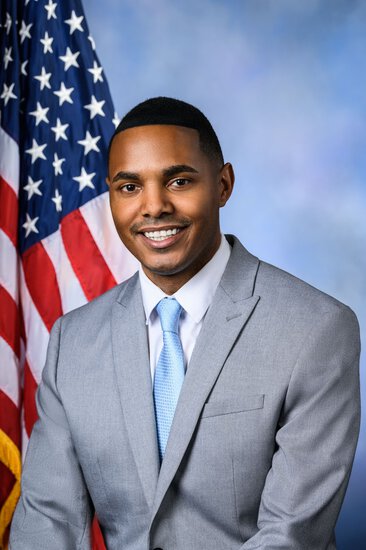
Rep. Ritchie Torres
Sponsored bills
Maddy summaryHR 1831 would award Billie Jean King a Congressional Gold Medal to honor her lifelong advocacy for equal rights in sports and society. The bill directs the Secretary of the Treasury to strike the medal and have it presented by congressional leaders, recognizing her pivotal role in advancing women's equality through tennis (including founding the Women’s Tennis Association and securing equal prize money) and her broader impact on society through initiatives like Title IX advocacy.
Maddy summaryHR 1777 establishes a $50 million annual fund (2024-2028) for collaborative defense research between the U.S. and Israel in emerging technologies like artificial intelligence, cybersecurity, directed energy, and automation. The bill directly supports U.S. and Israeli military forces by enabling joint development of new warfare capabilities to address current and future defense challenges. Key provisions include authorizing $50 million per year for collaborative projects, building on existing U.S.-Israel defense partnerships like counter-tunnel and counter-drone systems. This funding aims to strengthen bilateral defense innovation without altering existing military aid structures.
Maddy summaryThis bill restores access to VA housing loans and educational benefits for Black World War II veterans who were denied GI Bill benefits due to racial discrimination, as well as for their living spouses, children, grandchildren, or direct descendants. It defines eligibility by requiring applicants to certify that their veteran relative was denied GI Bill benefits on racial grounds, with a five-year application window starting from the bill's enactment date. The VA must process these applications within 90 days and report to Congress on the number of recipients and total benefit value within one year. This addresses historical discrimination by creating new pathways to benefits for affected individuals and their families.
Maddy summaryHR 1723, the Abortion is Health Care Everywhere Act of 2023, amends the Foreign Assistance Act to remove restrictions on using U.S. foreign aid funds for abortion services. It explicitly allows U.S. foreign assistance programs to fund comprehensive reproductive health care, including abortion services, training, and equipment. This change directly affects U.S. international health programs and recipient countries, enabling them to integrate safe abortion care into broader reproductive health services. The bill aims to align U.S. policy with global health guidelines by making abortion services a standard part of reproductive health care funded through foreign assistance.
Maddy summaryThe Food Deserts Act creates a federal grant program to help establish grocery stores in underserved communities by funding state revolving funds. States receive capitalization grants (up to $150 million for FY2022) to provide low-interest loans to grocery stores that meet specific criteria, such as selling unprocessed, affordable healthy foods and matching 20% of the loan with non-federal funds. Priority is given to stores hiring local workers, offering nutrition education, sourcing from local farms, and having established supply chains. The program directly supports grocery store operators in areas with limited access to fresh food, aiming to improve community health outcomes through increased access to nutritious options.
Maddy summaryThe Outdoors for All Act establishes a federal grant program to fund outdoor recreation projects in underserved communities. It authorizes the Secretary of the Interior to award grants to eligible entities (like states, cities, tribal organizations, or nonprofits) for acquiring land, developing parks, or renovating outdoor facilities in qualifying urban areas (population 25,000+ or tribal lands) or low-income communities (where 30%+ of residents have incomes at or below 80% of local median income or 200% of the federal poverty line). Grants require a 100% cash or in-kind match (with limited waivers), prohibit funding for indoor facilities or maintenance, and prioritize projects enhancing park access, engaging youth, creating jobs, or improving environmental benefits like reducing urban heat islands. The program mandates annual reporting and focuses on concrete community outcomes rather than speculative results.
Emergency Liquidity Act of 2023 This bill requires the Board of Governors of the Federal Reserve System to establish and maintain a permanent emergency lending program through which a Federal reserve bank may provide short-term liquidity to member banks or other depository institutions that pledge collateral eligible for purchase by the Federal reserve banks in open market operations.
Critical Bank Review Act This bill directs the Department of the Treasury to create a new designation ( sectorially critical ) for certain banks and credit unions that are systemically important to a critical sector of the U.S. economy. The appropriate federal banking agency must apply a higher level of regulatory supervision to institutions designated as sectorially critical .
Maddy summaryHR 1664, the Financial Stability Mandate Act, amends the Federal Reserve Act to require the Federal Reserve Board and Federal Open Market Committee to explicitly consider financial stability alongside inflation and employment when setting interest rates. This bill directly affects the Federal Reserve's decision-making process by adding financial stability as a formal, mandatory factor in its monetary policy deliberations. The key provision inserts a new subsection (b) into Section 2A of the Federal Reserve Act, mandating that these entities weigh financial stability concerns in their rate-setting decisions. The bill does not create new programs or alter existing regulations but changes the Fed's statutory mandate for how it evaluates economic conditions.