

Maddy summaryHR 2725, the "Do No Harm Act," amends the Religious Freedom Restoration Act (RFRA) to clarify that RFRA does not apply when federal laws protect against discrimination or promote equal opportunity. It specifically exempts protections under the Civil Rights Act, Americans with Disabilities Act, workplace benefits like leave, child labor safeguards, and healthcare access from RFRA challenges. The bill also clarifies that RFRA does not block private lawsuits between individuals, applying only to cases involving government entities. This amendment ensures that existing federal civil rights and workplace protections remain enforceable under RFRA.
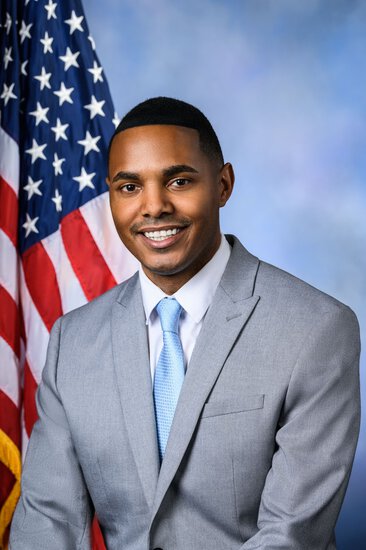
Rep. Ritchie Torres
Sponsored bills
Maddy summaryThe Latonya Reeves Freedom Act of 2023 strengthens the Americans with Disabilities Act's requirement that individuals with disabilities receive long-term services and supports in community settings rather than institutions. It defines "community-based" services to include specific housing options where individuals with disabilities can live independently with maximum control over their lives, including access to integrated housing, employment, and community participation. The bill requires states to develop transition plans to move people from institutional settings to community-based services within 12 years, with measurable annual targets for reducing institutionalization. It establishes enforcement mechanisms through the Department of Justice and Department of Health and Human Services to ensure compliance with these requirements.
Maddy summaryThe Puppy Protection Act of 2023 sets new standards for businesses that sell dogs (dealers), directly affecting pet stores and breeders operating under the Animal Welfare Act. It requires specific housing with space allowances based on dog size (e.g., 12-30 square feet per dog), temperature control (45-85°F), clean food twice daily, and daily exercise or socialization with humans/dogs for at least 30 minutes. The bill also mandates annual veterinary exams including dental care, strict breeding limits (e.g., age restrictions, maximum 2 litters in 18 months), and efforts to place retired breeding dogs in homes instead of selling them to other breeders. Regulations must be finalized within 18 months of enactment.
Maddy summaryHR 2665 delays Medicaid payment reductions for safety net hospitals by two years, changing the effective date from 2024 to 2026 under Section 1923(f)(7)(A) of the Social Security Act. This bill directly affects hospitals that serve high numbers of low-income and uninsured patients, providing them with additional time before facing reduced federal Medicaid payments. The key mechanism is a technical amendment to existing law, postponing an already scheduled payment adjustment without altering funding levels or eligibility. As a procedural bill, it does not create new programs or change hospital requirements.
Trigger Leads Abatement Act of 2023 This bill prohibits credit reporting agencies from providing a credit report not initiated by a consumer if the report is being provided on the basis that the consumer has had a credit inquiry regarding a home mortgage loan. This practice, known as producing a trigger lead, provides notice to other mortgage lenders that the consumer is seeking a mortgage loan.
Maddy summaryHR 2659, the Pardon Disclosure Act, requires Members of Congress (including Delegates and the Resident Commissioner) to disclose any request they make to the President for a pardon, or any request they receive from others about a pardon, to their chamber's ethics committee within 30 days. This applies to requests made on or after the bill's enactment date, and to requests made between January 1, 2021, and enactment date within 30 days of the law's passage. The bill imposes a civil penalty of up to $100,000 for failing to disclose such requests, and also amends House financial disclosure rules to require this information be included in annual reports. It directly affects congressional members and their staff handling pardon-related requests, aiming to increase transparency around pardon requests involving lawmakers.
Conspiracy to Obstruct the Electoral Count Act This bill prohibits the President from interfering with the determination of electoral votes and establishes penalties for violations. Specifically, the bill prohibits the President from obstructing the certification of electoral votes by Congress or pressuring the Vice President during such certification to discount a state-certified slate of electors or count an alternate slate of electors; a federal, state, or local official to substitute an alternate slate of electors; a federal, state, or local official to find votes; or a federal, state, or local official to make false claims about a presidential election.
Maddy summaryThis bill reclassifies the congressional counting of presidential electoral votes as a National Special Security Event under existing federal law (specifically, under the Homeland Security Act of 2002). It directly affects Congress, the Capitol Police, and federal security agencies responsible for planning and executing security during the joint session. The key mechanism is adopting the pre-existing definition of "National Special Security Event" to ensure standardized security protocols are applied to this specific constitutional process. This change does not alter voting procedures but mandates that security planning for the event aligns with the same protocols used for other high-risk national gatherings.
Maddy summaryHR 1702 amends PROMESA to add ethics rules for advisors to Puerto Rico's Financial Oversight and Management Board (FOMB). It disqualifies third-party advisory firms from advising the FOMB if they represent clients competing for or working on government contracts overseen by the Board. Firms must certify they have no such conflicts, and knowingly providing false information carries legal penalties. The Board must refer violations to federal prosecutors for further action. This directly affects consulting firms seeking to advise the FOMB on Puerto Rico's government contracts.
COVID-19 National Memorial Act This bill provides for the establishment of a memorial at a designated location in the Bronx, New York, to honor the lives lost and the heroes who helped the nation to recover from the COVID-19 pandemic. The bill also establishes the COVID-19 National Memorial Commission to (1) submit to the Department of the Interior and Congress a report containing recommendations for the planning, design, construction, and long-term management of a permanent memorial; (2) advise Interior on the boundaries of the memorial site; (3) advise Interior in the development of a management plan for the memorial site; and (4) provide significant opportunities for public participation in the planning and design of the memorial.