This resolution declares gun violence to be a public health crisis. It also urges the Centers for Disease Control and Prevention to expand research and data collection on preventing gun violence and the Surgeon General to report on firearm injuries and violence prevention.
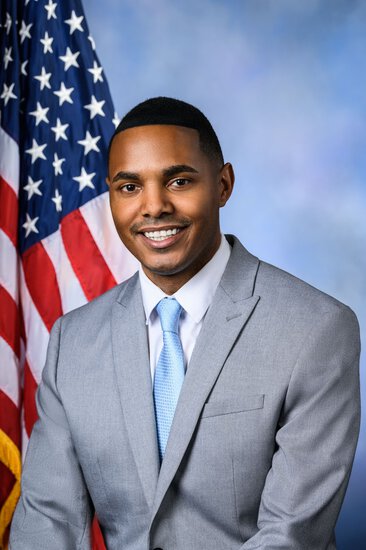
Rep. Ritchie Torres
Sponsored bills
This concurrent resolution expresses the sense of Congress that the individuals responsible for the July 1999 murders of U.S. citizens Ylli, Agron, and Mehmet Bytyqi in Serbia should be brought to justice and that the United States should devote sufficient resources to fully assist and monitor Serbia's efforts to investigate and prosecute such individuals.
Maddy summaryThis bill would create a pathway to permanent residency for non-citizens who worked in designated essential sectors during the pandemic. It would allow eligible workers in healthcare, emergency response, sanitation, food services, agriculture, construction, and other critical industries to apply for permanent residence if they've been physically present in the U.S. since January 1, 2023, after meeting background check requirements. The bill includes application fee exemptions for low-income applicants and protections against employer retaliation for workers seeking documents to support their applications. It also includes special provisions for those who have been ordered removed from the U.S. to apply for status under this program.
Maddy summaryHRES 344 is a non-binding resolution proposing that April be designated as "National Garifuna Immigrant Heritage Month" to recognize the contributions of Americans with Garifuna immigrant heritage. It specifically aims to celebrate their cultural traditions, historical roots in Central America, and role in enriching U.S. diversity. The resolution encourages the American public to observe this month through ceremonies and activities highlighting Garifuna history and culture, which includes UNESCO-recognized traditions. It does not create new programs or funding but serves as a symbolic acknowledgment of this community's heritage. The resolution was introduced in the House of Representatives on April 28, 2023.
Maddy summaryHRES 341 is a nonbinding resolution expressing the House's support for maintaining cash as a viable payment option. It highlights that 18.6% of U.S. households (nearly 6 million) rely solely on cash due to lack of bank access, privacy concerns, and risks associated with digital payments like data breaches. The resolution cites legal tender status under U.S. Code and Federal Reserve Chair Powell's testimony emphasizing cash's critical role for unbanked and low-income communities. It does not create new laws but urges businesses to accept cash to protect consumer privacy and financial security.
Maddy summaryThis bill protects living organ donors from insurance discrimination by prohibiting life, disability, and long-term care insurers from denying coverage, raising premiums, or altering policy terms solely because someone donated an organ while alive. It also updates the Family and Medical Leave Act to include recovery from organ donation surgery as a qualifying health condition, allowing donors to take protected leave for this purpose. Additionally, the bill requires the Health and Human Services Secretary to update public educational materials about living donation benefits, risks, and insurance protections within six months of enactment. These changes directly affect living organ donors, insurers, employers, and healthcare systems by ensuring fair access to insurance and workplace leave.
Maddy summaryHR 2904, the Anti-Racism in Public Health Act of 2023, establishes a National Center on Antiracism and Health within the CDC. The center will declare racism a public health crisis, conduct research on how structural racism affects health outcomes, and develop data systems to track health disparities across race, ethnicity, gender, and other factors. It will fund regional centers in minority communities, create public health interventions, and require CDC to report annually on antiracist efforts. This bill directly affects public health agencies, researchers, and communities of color by mandating systemic analysis of racial inequities in healthcare and public health policy.
This concurrent resolution calls upon Serbia to bring individuals who are responsible for the sexual war crimes against Vasfije Krasniqi Goodman in Kosovo during the 1999 war to justice and to cease the glorification and protection of individuals involved. The concurrent resolution also condemns the use of rape and other gender-based violence in war, calls upon Kosovo to prioritize and expedite prosecution of rape and sexual assault cases from the 1999 war, and calls on the United States to uphold and strengthen commitments to counter and prevent the practice of gender-based violence.
Maddy summaryThe Election Mail Act (HR 2987) establishes new requirements for handling mail-in ballots in federal elections to improve reliability and accessibility. It requires the Postal Service to process absentee ballots on the same day received, place postmarks indicating mailing dates on ballot envelopes, and treat election mail as first-class mail with free postage for completed ballots. The bill also mandates states to use intelligent mail barcodes on return envelopes, affix specific tags for ballot visibility, and adopt a uniform 7-day deadline for accepting mailed ballots postmarked on or before election day. These changes apply to federal elections, with most provisions taking effect for the 2024 election cycle. The bill includes additional provisions for the Postal Service to consult with Indian Tribes about voting barriers on tribal lands.

Maddy summaryHR 2918, the Fair Housing for Survivors Act of 2023, amends the Fair Housing Act to explicitly protect survivors of domestic violence, sexual assault, and sex trafficking from housing discrimination. It adds "survivor of domestic violence, sexual assault, or severe forms of trafficking" as a protected class under the law, prohibiting landlords and housing providers from refusing to rent, evicting, or charging more based on this status. The bill also clarifies that discrimination based on survivor status - including denial of housing due to protective orders, shelter stays, or prior incidents - is illegal. This directly affects survivors who face barriers like denied rentals, evictions, or higher costs when seeking safe housing, addressing documented discrimination reported by 67% of survivors in New York studies. The law preserves survivors' ability to pursue other discrimination claims under the Fair Housing Act.