

Maddy summaryThe College for All Act of 2023 would create a federal-state partnership to eliminate tuition and required fees for eligible students at public community colleges and 4-year institutions. It would provide federal funding to cover tuition costs for students from families earning up to $125,000 annually (or $250,000 for married couples) at public institutions, with states gradually increasing their financial contribution over time. The bill also includes provisions to support historically Black colleges and universities, minority-serving institutions, and expands Pell Grant eligibility to include Dreamers. States would be required to maintain funding levels for higher education and implement specific reforms to improve student outcomes, including transfer pathways and support services.
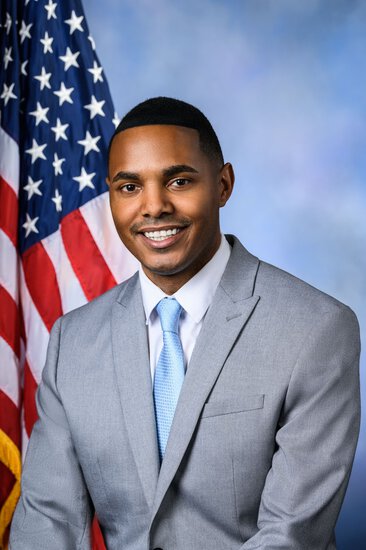
Rep. Ritchie Torres
Sponsored bills
Maddy summaryHR 3099 establishes a new Special Envoy for the Abraham Accords within the State Department, directly affecting U.S. diplomatic efforts and coordination. The envoy, appointed by the President with Senate confirmation, will coordinate U.S. government activities to expand diplomatic, economic, and security ties between Israel and Muslim-majority countries, including encouraging nations without formal relations with Israel to establish them. Key duties include strengthening existing Accords partnerships, fostering regional cooperation on issues like trade and water security, and providing diplomatic support for Israel’s regional engagement. The envoy must submit annual reports to Congress detailing specific diplomatic efforts and progress with partner countries.
Maddy summaryHR 4062, the Chief Risk Officer Enforcement and Accountability Act, requires large financial institutions (those with $50 billion or more in assets) to appoint a chief risk officer with specific risk management expertise. The bill mandates this officer to oversee enterprise-wide risk limits, implement risk-management systems, and report directly to both the company’s risk committee and CEO. It also requires companies to notify regulators within 24 hours of a vacancy, submit a hiring plan within 7 days, and publicly disclose if a vacancy persists beyond 60 days - during which time the company cannot grow its asset size. The law applies to both bank holding companies and large standalone banks without parent companies.
Maddy summaryThe GLOBE Act of 2023 requires the U.S. Department of State to document and report on violence and discrimination against LGBTQI people worldwide in annual country reports, with specific requirements to identify countries criminalizing LGBTQI status. It establishes a Special Envoy for LGBTQI Human Rights to coordinate U.S. government efforts internationally and creates targeted sanctions against foreign officials responsible for human rights violations against LGBTQI individuals, including denying visas and imposing financial penalties. The bill also includes provisions to improve U.S. foreign assistance programs to better support LGBTQI communities, reform immigration processes to better protect LGBTQI asylum seekers, and ensure inclusive policies in diplomatic and consular settings. These measures aim to advance LGBTQI rights globally through diplomatic, financial, and policy mechanisms.
Woman on the Twenty Act of 2023 This bill bars the printing of any $20 note after December 31, 2026, which does not prominently feature a portrait of Harriet Tubman on the front face of the note. The Department of the Treasury shall release to the public the preliminary design of the $20 note prominently featuring a portrait of Harriet Tubman no later than December 31, 2024.
This bill extends the tax credit for expenditures to provide access to disabled individuals to U.S. possessions and makes such credit refundable for bona fide residents of Puerto Rico. The bill permits Puerto Rican residents a refundable tax credit for 21% of amounts otherwise allowable as a tax deduction for expenditures to remove architectural and transportation barriers to the handicapped and elderly. It also requires payment to U.S. possessions for taxable years beginning after December 31, 2022, of an amount equal to the their losses due to the application of the credits and deductions by this bill.
This bill establishes a private right of action against a maker of any component of a ghost gun or any person who facilitated any sale of a ghost gun. A ghost gun is a firearm that lacks a unique serial number.
Maddy summaryThis bill requires federal agencies collecting demographic survey data to begin including questions on sexual orientation, gender identity, and variations in sex characteristics (intersex traits) within 360 days of enactment. Agencies must review existing surveys to identify gaps, develop privacy-protective methods for collecting this data (including anonymization and data destruction protocols), and incorporate it into relevant reports within three years. The law applies to all federal surveys that collect standard demographic data (like race, ethnicity, and age), such as the census or health surveys, but does not compel individuals to disclose their status. It emphasizes maintaining confidentiality, allows limited agency waivers if standards can't be met, and mandates a congressional report on implementation within two years.
Pets Belong With Families Act This bill prohibits public housing agencies from imposing breed restrictions on pets owned by residents of public housing units. The bill continues to allow public housing agencies to prohibit ownership of dangerous animals in public housing, but prohibits classification as dangerous by breed and requires that any such classification be based on specific behaviors or actions of the animal.
Maddy summaryHR 3892, the Improving Mental Health and Drug Treatment Act of 2023, permanently allows Medicaid coverage for individuals with serious mental illness or substance use disorders in certain residential facilities (previously limited to a temporary 2019-2023 period). It extends the maximum stay in these facilities from 30 to 45 days and requires states to establish standards for appropriate care placement and a review process for facility compliance. States must also conduct a one-time assessment within 12 months of approval to evaluate treatment availability across care levels and medication-assisted treatment services. This bill directly affects Medicaid programs, states administering them, and individuals receiving care in qualifying residential facilities for mental health and substance use disorders.