

Maddy summaryThis resolution censures Representative Andy Ogles for making racist and anti-Muslim remarks, including calling House Democratic Leader Hakeem Jeffries "Discount Dollar Store Obama" and referring to Muslim-American candidate Zohran Mamdani as "little Muhammad." It requires Ogles to appear in the House chamber for the public reading of the censure resolution. The resolution cites his statements as violating House standards by targeting individuals based on race, religion, and political beliefs. This action follows House ethics guidelines for conduct undermining democratic values.
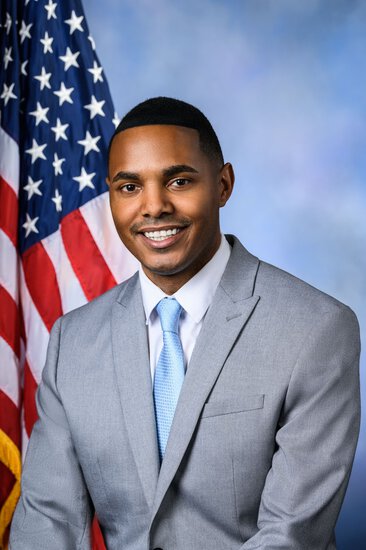
Rep. Ritchie Torres
Sponsored bills
Maddy summaryThis is a non-binding House resolution (HRES 568) that recognizes climate change as a critical public health threat in the U.S. It does not create new laws but expresses congressional support for coordinated action. The resolution specifically urges the Department of Health and Human Services (HHS) to improve climate resilience in healthcare systems, prioritize funding for underserved communities (including Tribal nations and rural hospitals), and reinstate climate-focused offices like the Office of Climate Change and Health Equity. It also recommends HHS develop better data tools on climate-health impacts and support worker protections against heat exposure. The resolution focuses on guiding federal agency actions, not mandating specific policy changes.
Maddy summaryHRES 575 is a symbolic resolution designating July 10th as "Journeyman Lineworkers Recognition Day." It honors lineworkers who face significant risks daily - working at heights near live wires and responding to disasters like hurricanes and wildfires. The resolution specifically references Henry Miller, an early leader of the International Brotherhood of Electrical Workers, who died on July 10, 1896, while troubleshooting an outage. It encourages the public to recognize these workers' contributions but does not create new laws or allocate funding.
Maddy summaryHR 4274, the Remittance Expense Minimization and Integrity for Transfers Act (REMIT Act of 2025), requires the Treasury Secretary to certify to Congress before imposing any excise tax or fee on money transmitting businesses. This applies to both licensed services and informal transfer systems (IVTS), such as those used by diaspora communities. The certification must confirm the tax/fee won’t increase money laundering risks or impose undue burdens on businesses. The bill responds to findings that current regulations have pushed users toward unregulated IVTS, which criminal groups exploit for money laundering and terrorist financing. It aims to prevent new fees from inadvertently worsening financial crime while protecting legitimate remittance flows.
Maddy summaryThe Expanding Access to Mental Health Services in Schools Act of 2025 creates a federal grant program to help high-need schools hire and retain mental health professionals like counselors, psychologists, and social workers. It targets schools in the top 15% of need (based on student poverty or counts) that lack required staff ratios, such as one counselor per 250 students. Grants fund recruitment incentives (e.g., student loan repayment), retention programs, and evidence-based mental health services, with recipients required to contribute 25% of costs from non-federal funds. Schools must report annually on staff numbers, student-to-staff ratios, and retention rates to track progress toward improved mental health access.
Maddy summaryThis bill expands the requirement for federal firearm licensees (FFLs) to report multiple firearm sales. It modifies existing law to require reporting on all firearms, not just handguns (pistols or revolvers), when a single transaction involves two or more firearms. This change directly affects FFLs who sell multiple firearms at once, such as in dealer-to-dealer transfers or large retail sales. The key mechanism is updating the legal definition in the statute to include every type of firearm, streamlining the reporting process under current federal law.
Maddy summaryHRES 550 is a non-binding House resolution recognizing June 2025 as LGBTQIA+ Pride Month. It formally encourages all U.S. citizens to celebrate Pride Month to learn about LGBTQIA+ history, including the Stonewall Inn and Compton's Cafeteria uprisings. The resolution affirms that LGBTQIA+ rights are human rights and emphasizes the ongoing struggle for equality. It has no legal effect but serves as a symbolic statement of support for the LGBTQIA+ community and its history.
Maddy summaryHR 4244 prohibits Medicaid from covering conversion therapy, defined as any paid practice attempting to change a person's sexual orientation or gender identity. This applies to all Medicaid enrollees and providers starting in the first quarter after the law takes effect. The bill explicitly excludes supportive services like gender transition assistance or counseling focused on acceptance and coping. It directly affects Medicaid-funded healthcare providers who offer conversion therapy and enrollees who might otherwise access such services through Medicaid.
Treat and Reduce Obesity Act of 2025 This bill expands Medicare coverage of intensive behavioral therapy for obesity. Specifically, the bill allows coverage for therapy that is provided by (1) a physician who is not a primary care physician; or (2) other health care providers (e.g., physician assistants and nurse practitioners) and approved counseling programs, if provided upon a referral from, and in coordination with, a physician or primary care practitioner. Currently, such therapy is covered only if provided by a primary care practitioner. The bill also allows coverage under Medicare's prescription drug benefit of drugs used for the treatment of obesity or for weight loss management for individuals who are overweight.
Maddy summaryThe AMMO Act (HR 4227) regulates ammunition sales by requiring background checks for all non-licensed buyers, limiting bulk purchases to 100 rounds of .50 caliber or 1,000 rounds of other calibers within a 5-day period, and mandating recordkeeping for dealers. It directly affects licensed ammunition dealers and individuals purchasing ammunition, requiring dealers to collect identification, written certifications, and maintain records for two years. The bill establishes penalties including fines up to $250,000 for dealers and up to 5 years in prison for false statements, and requires annual reporting on violations. Dealers must post signage about these restrictions and verify identities through government-issued photo IDs. The law will take effect 120 days after enactment.