

IDs for an Inclusive Democracy Act This bill directs the Social Security Administration (SSA) to produce and make available at no cost to certain individuals in the United States an identification (ID) for the purpose of allowing such individuals to satisfy ID requirements. Such ID must include a photograph and specified information, as well as security features. It shall be valid for a 10-year period. To receive an ID, an individual must be at least 14 years of age. The SSA must develop and implement a campaign to educate the public with respect to the ID, including how an individual can receive and use it. The U.S. Postal Service (USPS) must develop and implement a process that enables individuals to apply for the ID through the USPS, including a process for a first-time ID and renewal, modeled after the process for passport applications. The bill establishes a Task Force on Federal Identification Cards for the purpose of determining the requirements to produce and make available the ID. The task force shall (1) issue a report on the requirements, including a requirement that the SSA and the USPS establish procedures to prevent the unauthorized disclosure of any information obtained with respect to individuals who seek assistance in obtaining the ID; and (2) develop and publish recommendations for voluntary best practices for nonprofit organizations and entities that provide services to vulnerable populations with respect to how such organizations and entities can assist individuals to obtain the ID.
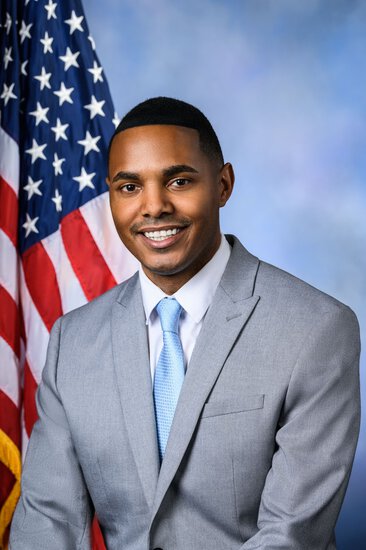
Rep. Ritchie Torres
Sponsored bills
This resolution expresses support for the people of Puerto Rico and the rebuilding of Puerto Rico's damaged electrical grid following recent hurricanes.
Maximizing Outcomes through Better Investments in Lifesaving Equipment for (MOBILE) Health Care Act This bill allows a health center that currently receives funding through a Health Resources & Services Administration Health Center Program grant to use a New Access Point grant to set up a mobile unit regardless of whether the health center also establishes a permanent health care delivery site. New Access Point grants help health centers establish new delivery sites to provide comprehensive primary care to medically underserved populations. Under current law, health centers may only use the grants to set up a mobile unit if they also establish a permanent site.
Nonprofit Security Grant Program Improvement Act of 2022 This bill modifies the Nonprofit Security Grant Program of the Department of Homeland Security and reauthorizes appropriations for such program through FY2028. The Federal Emergency Management Agency (FEMA) must establish an office, headed by a senior FEMA official, to administer the program. Office responsibilities include those related to outreach, engagement, education, and technical assistance. FEMA must also publish grant guidelines and may prohibit states from closing application processes before the publication of the guidelines. FEMA must seek to enter into a contract or other agreement with an independent research organization for the conduct of a study that analyzes and reports on (1) the effectiveness of the program for preparedness against terrorism and other threats; (2) the risk-based formula and allocations under the program; and (3) the risk profile of and any identifiable factors leading to the low participation of traditionally underrepresented groups and states under the program.
National Council on African American History and Culture Act of 2022 This bill establishes a National Council on African American History and Culture in the National Endowment for the Humanities (NEH). The duties of the council shall include gathering timely and authoritative information concerning historical developments and cultural trends in African-American history and culture; evaluating the various programs and activities of the NEH to determine the extent to which such programs and activities are contributing, or not contributing, to the successful preservation and celebration of African-American history and culture; and developing and recommending to the NEH national policies to foster and promote the understanding of African-American history, the preservation of African-American culture, and the celebration of African Americans as contributors to the country's economic, cultural, and political success.
Flint Registry Reauthorization Act This bill reauthorizes through FY2033 the Lead Exposure Registry administered by the Centers for Disease Control and Prevention.
Social Security Fairness Act of 2021 This bill repeals provisions that reduce Social Security benefits for individuals who receive other benefits, such as a pension from a state or local government. The bill eliminates the government pension offset , which in various instances reduces Social Security benefits for spouses, widows, and widowers who also receive government pensions of their own. The bill also eliminates the windfall elimination provision , which in some instances reduces Social Security benefits for individuals who also receive a pension or disability benefit from an employer that did not withhold Social Security taxes. These changes are effective for benefits payable after December 2021.
This resolution declares that the House of Representatives will not abandon the people of Puerto Rico and the U.S. Virgin Islands and the U.S. citizens who have relocated to the mainland in the aftermath of Hurricane Maria.
This resolution recognizes (1) the celebration of Hispanic Heritage Month; and (2) the integral role of Latinos and their manifold heritage in the economy, culture, and identity of the United States.
This resolution applauds and expresses support for the continued cooperation between the United States and the European Union in thwarting Hezbollah's terrorist activities. It also urges the European Union to designate Hezbollah in its entirety as a terrorist organization.