

Equal Citizenship for Children Act of 2023 This bill expands the application of automatic acquisition of citizenship for certain children born outside of the United States. Specifically, the bill provides citizenship retroactively to such a child who, while under the age of 18, (1) resided in the United States as a lawful permanent resident (or had a pending application for such status), and (2) was in the legal custody of the child's citizen parent. It also eliminates the physical custody requirement for the automatic acquisition of citizenship. The bill applies to a child meeting these requirements who was born after noon on January 9, 1941, but who turned 18 prior to February 27, 2001 (the effective date of the Child Citizenship Act of 2000).
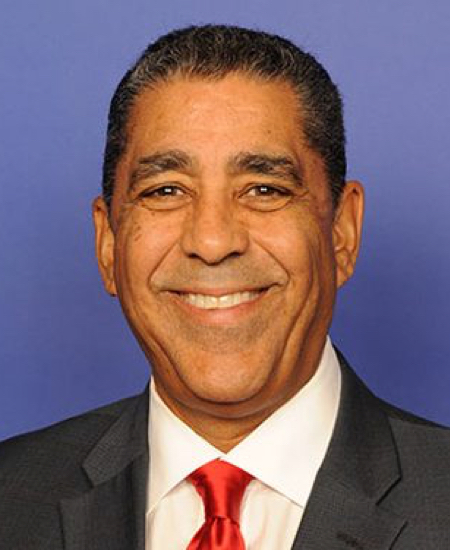
Rep. Adriano Espaillat
Sponsored bills
Maddy summaryHR 1404, the Facial Recognition and Biometric Technology Moratorium Act of 2023, bans U.S. federal agencies and officials from using facial recognition, voice recognition, or other remote biometric surveillance systems (like gait analysis) for law enforcement or surveillance in the United States. It directly affects federal law enforcement agencies and state/local governments receiving Byrne grant funding, which they would lose if they don’t adopt similar bans. Key provisions prohibit federal acquisition or use of these systems (except for narrowly defined congressional authorizations), ban federal funding for such systems, and make illegally obtained biometric data inadmissible in court. The bill also allows individuals to sue the federal government for violations and requires states receiving federal funds to implement comparable restrictions.
Maddy summaryHR 1387, the Civics Learning Act of 2023, amends the Elementary and Secondary Education Act to strengthen civics education in public schools. It requires states to prioritize innovative civics teaching - including lessons on the Constitution, civil rights history, and community engagement - and allocates $70 million for grants to schools, with specific funding targets (30% for elementary, 30% for middle, max 40% for high school). The bill directly affects public elementary, middle, and high schools, particularly those serving high-need communities, by mandating new curriculum activities like service learning, student governance participation, and after-school programs. Grants must include reporting on how schools meet civics education goals, with the Department of Education required to submit annual progress reports to Congress.
This resolution calls for the federal government to establish a national biodiversity strategy, which must include a goal of conserving at least 30% of U.S. lands and waters to protect biodiversity and address climate change by 2030 and other goals necessary to reduce the threats to biodiversity.
Maddy summaryHR 1369, the "Peace on the Korean Peninsula Act," directs the U.S. State Department to review restrictions on Americans traveling to North Korea, particularly for humanitarian reasons like family reunions (affecting approximately 100,000 Americans with relatives there). It also requires the State Department to create a diplomatic roadmap for ending the Korean War through formal negotiations with North and South Korea, including establishing liaison offices. The bill mandates reports to Congress within 180 days detailing these reviews and strategies, without changing existing military deployments or U.S. policy on North Korea's nuclear program. It focuses on diplomatic engagement to replace the 1953 armistice with a permanent peace agreement.
Maddy summaryThis bill requires airlines to train flight crews and maintenance staff on identifying and responding to cabin smoke/fume incidents, implement a standardized reporting system for such events, and install real-time air quality monitors to detect dangerous contaminants like carbon monoxide. It directly affects airline crews, maintenance technicians, and passengers by mandating new safety protocols and equipment on commercial flights. Key provisions include annual training on fume sources and health impacts, detailed incident reports covering flight details and symptoms, and public databases of reported events (with personal information redacted). The law also mandates aircraft manufacturers to include monitoring procedures in flight manuals and requires the FAA to investigate incidents involving health symptoms. These changes aim to improve cabin air safety through better detection, reporting, and response systems.
This resolution condemns the unlawful and indiscriminate violence against civilians by the Russian government and its allies. The resolution also (1) urges the global community to hold Vladimir Putin and the Russian government responsible for war crimes committed during the invasion of Ukraine, (2) urges the United States and its allies to continue providing defense security assistance and humanitarian aid to Ukraine, and (3) stands in solidarity with the people of Ukraine.
Maddy summaryThis bill allows asylum seekers not in detention to obtain work authorization 30 days after filing their asylum application, provided their application isn't deemed frivolous. It directly affects individuals seeking asylum in the U.S. who are awaiting a final decision on their case. The authorization remains valid until the asylum application receives a final denial, including any administrative or court appeals. This changes the prior system where many asylum seekers faced prolonged work restrictions while their cases were processed.
Maddy summaryHR 1302, the Gun Records Restoration and Preservation Act, repeals key restrictions known as the Tiahrt Amendments. It eliminates the requirement to destroy background check records within 24 hours, removes barriers to researchers accessing firearm trace data, and ends prohibitions on requiring gun dealers to conduct annual inventory audits. The bill directly affects law enforcement agencies (like the ATF), researchers studying gun violence, and federally licensed firearms dealers. These changes aim to improve access to data for tracking illegal gun trafficking and supporting evidence-based policy development.
Maddy summaryThe Military Spouse Hiring Act expands the Work Opportunity Tax Credit to include military spouses. Employers who hire a spouse of an active-duty military member - certified by a local agency as meeting eligibility requirements on the hiring date - can claim this tax credit. The credit reduces the employer's federal tax liability for hiring such individuals. This provision applies to new hires after the bill's enactment date.