

Maddy summaryThis bill would allow Venezuelans already living in the U.S. since before December 31, 2021, to apply for permanent residency. Eligible individuals must have lived continuously in the U.S. for at least one year (with limited absences) and cannot have certain serious criminal convictions. It waives some immigration barriers that would normally block permanent status and provides work permits while applications are processed. Family members (spouses, children, or unmarried adult children) of eligible applicants would also qualify. The bill does not change overall visa numbers or create new immigration pathways.
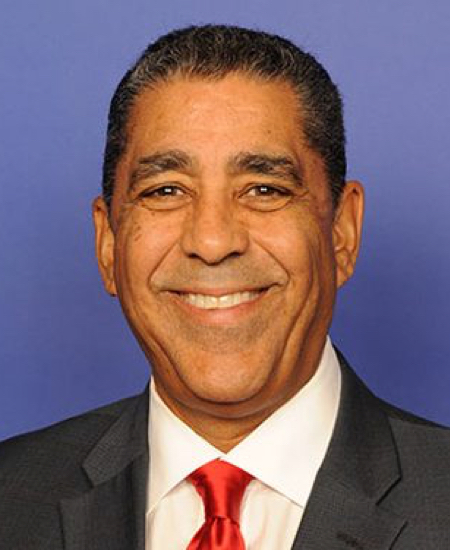
Rep. Adriano Espaillat
Sponsored bills
Maddy summaryHR 4015 updates the U.S. strategy for engagement with Caribbean nations by adding specific policy goals to the existing 2016 Act. It directs the U.S. government to reduce illicit firearm trafficking to the region, combat lottery scams targeting Americans, and support Caribbean security forces. The bill also requires enhanced cooperation on energy security (promoting renewable power), climate resilience, public health infrastructure, food security, and expanding internet access - especially for marginalized communities. The updated strategy must involve agencies like Defense, Justice, and Treasury, and will guide U.S. efforts to strengthen partnerships across these areas. This affects Caribbean nations partnering with the U.S. on security, climate, health, and economic initiatives.
Maddy summaryThis bill amends the Elementary and Secondary Education Act to expand student grant programs. It authorizes schools receiving Title IV funds to use grants for hands-on learning with hydroponic, aquaponic, and other agricultural technology systems. The key provision adds specific grant activities, including exposing students to vertical farming systems (like aeroponic towers) and soil-less plant growth methods that connect to STEM education. The bill directly affects K-12 schools participating in federal grant programs by defining eligible agricultural systems for these learning opportunities.
Maddy summaryThis bill prohibits children under 18 from having direct contact with tobacco plants or dried tobacco leaves on farms. It amends the Fair Labor Standards Act to explicitly add "tobacco-related agriculture" to the list of occupations where minors cannot work, alongside manufacturing and mining. The law directly affects young workers in tobacco farming by banning their hands-on involvement with crops and processed tobacco. This change updates existing labor protections to specifically cover tobacco farming operations. The policy would require farms to adjust employment practices to exclude minors from these tasks.
Maddy summaryThis resolution designates May 5, 2023, as the "National Day of Awareness for Missing and Murdered Indigenous Women and Girls" to honor victims and support families. It asks the public to commemorate affected individuals and demonstrates solidarity with impacted communities. The bill also recommends the Justice Department commission a new study to update statistics on violence against Indigenous women, referencing the 2016 DOJ study that found 84.3% experienced violence in their lifetime. This symbolic measure aims to raise awareness and encourage federal action, without changing laws or allocating new funding.
Maddy summaryThis bill requires federal agencies collecting demographic survey data to begin including questions on sexual orientation, gender identity, and variations in sex characteristics (intersex traits) within 360 days of enactment. Agencies must review existing surveys to identify gaps, develop privacy-protective methods for collecting this data (including anonymization and data destruction protocols), and incorporate it into relevant reports within three years. The law applies to all federal surveys that collect standard demographic data (like race, ethnicity, and age), such as the census or health surveys, but does not compel individuals to disclose their status. It emphasizes maintaining confidentiality, allows limited agency waivers if standards can't be met, and mandates a congressional report on implementation within two years.
Green Climate Fund Authorization Act of 2023 This bill authorizes $4 billion in both FY2024 and FY2025 for U.S. contributions to the Green Climate Fund (a fund established under the United Nations Framework Convention on Climate Change to finance projects that address climate change).
Maddy summaryHR 3973, the Judicial Ethics and Anti-Corruption Act of 2023, establishes new ethics rules for federal judges and justices. The bill prohibits judges from owning stocks, commercial real estate, business interests, and certain trusts, while creating a Federal Employee Investment Account for permitted investments. It requires judges to disclose potential conflicts of interest, restricts privately funded judicial education events, and creates a Supreme Court Complaints Review Committee to handle complaints against justices. The bill aims to increase transparency and reduce conflicts of interest for federal judges and justices.
Maddy summaryHR 3850, the Pride In Mental Health Act of 2023, establishes a federal grant program to improve mental health and substance abuse services for LGBTQ+ youth (including nonbinary, intersex, and Two Spirit individuals). The bill directs the Health and Human Services Secretary to fund eligible organizations to provide trauma-informed care, cultural competency training for caregivers, school bullying prevention guidelines, and family support resources. It explicitly prohibits grant funds from being used for conversion therapy or advertising related to such therapy. The bill also requires data collection on LGBTQ+ youth mental health and a federal survey to measure psychological distress.
Maddy summaryThe LISTOS Act (HR 3806) requires major online platforms with at least 10 million monthly U.S. users to ensure consistent content moderation across languages where they monetize. It mandates annual public reports on staffing, language proficiency, automated systems, and moderation outcomes for each supported language. Platforms must also make reporting tools and policies accessible in all languages they support. The Federal Trade Commission will enforce these requirements, with states able to bring enforcement actions as well.