

Maddy summaryHR 4973, the Community-Based Gang Intervention Act, creates a new federal grant program to fund nonprofit organizations with expertise in gang intervention. These agencies receive funding to directly reduce gang violence by providing street mediation, negotiating truces between rival gangs, offering 24/7 crisis intervention, and delivering mental health services, job training, and victim support to gang-involved youth, their families, and affected communities. The bill mandates that grant recipients must provide services without discrimination based on race, gender, or criminal history. It specifically targets reducing gang-related violence through community-level engagement and specialized support, rather than punitive measures. The program applies to all communities experiencing gang violence, with services designed for youth under 18 (or the maximum age for juvenile jurisdiction in their state).
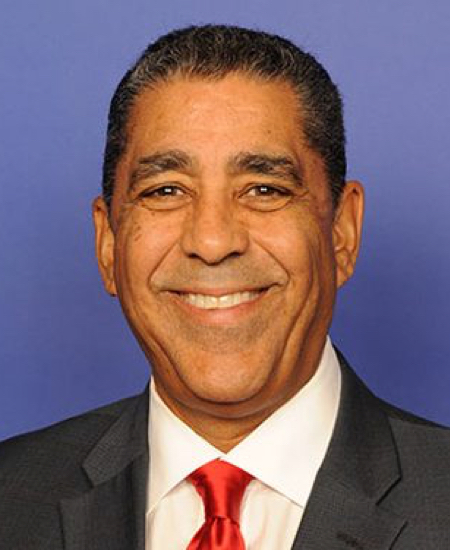
Rep. Adriano Espaillat
Sponsored bills
Maddy summaryThis federal bill (HR 4976) requires law enforcement to notify a minor’s parent, guardian, or legal custodian within 24 hours of arresting them for a crime and mandates that minors under 18 must consult with a lawyer in person before waiving their right to remain silent or request legal counsel during police questioning. It prohibits temporary substitute lawyers from representing minors during interrogation and makes any statement obtained in violation of these rules inadmissible in U.S. criminal prosecutions. An exception allows questioning without these protections only if police need immediate information to prevent an imminent threat to life. The law applies specifically to federal criminal cases involving minors under 18.
Maddy summaryThe Break the Cycle of Violence Act establishes federal grants to fund community-based violence intervention programs in areas disproportionately affected by gun violence, particularly communities of color. It authorizes $300 million for 2024, increasing to $700 million annually through 2031, for evidence-informed strategies including trauma-responsive care, violence interruption, and economic opportunities for opportunity youth (ages 16-25 not in school or employment). The bill requires grantees to implement culturally competent services targeting individuals at high risk of violence or victimization, with a focus on reducing gun violence without contributing to mass incarceration. It creates a National Community Violence Response Center to coordinate data collection, research, and best practices for community violence prevention. The legislation also includes provisions for job training and workforce development programs through the Department of Labor to connect opportunity youth with in-demand occupations.
Maddy summaryThis bill regulates "ghost guns" (unserialized firearms assembled from kits or parts) by requiring all firearms to have unique serial numbers for traceability. It makes it unlawful for unlicensed individuals to manufacture, sell, transfer, or possess ghost guns in interstate commerce, with limited exceptions for licensed dealers during a one-year transition period. The law defines ghost guns as firearms lacking a serial number from a licensed manufacturer and prohibits unlicensed people from engraving serial numbers or using machines to manufacture firearms. It directly affects individuals building or possessing untraceable firearms, including those using 3D-printed parts or unfinished frames. The bill aims to improve law enforcement's ability to track firearms used in crimes, referencing that 27.4% of traced firearms in 2021 were recovered across state lines.
Maddy summaryHR 4965, the Kimberly Vaughan Firearm Safe Storage Act, requires the Attorney General to create voluntary best practices for safe firearm storage in homes, businesses, vehicles, and other locations within 180 days of enactment, with public input. Starting January 1, 2025, firearm manufacturers must include a "SAFE STORAGE SAVES LIVES" notice with each new handgun, rifle, or shotgun, directing buyers to the public website with these guidelines. The bill also establishes a $10 million annual grant program for states and tribes to fund public programs distributing safe firearm storage devices (like locked containers) and requires grantees to use at least 75% of funds for these programs. It does not mandate storage for individuals but provides resources and information to promote safer practices.
Maddy summaryHR 5025 establishes the National Office of New Americans within the Executive Office of the President to coordinate federal efforts supporting immigrant and refugee integration. The Office, led by a presidentially appointed Director, aims to improve access to English language programs, workforce development, citizenship pathways, and education for immigrants, refugees, and their children. Key mechanisms include creating three Deputy Director roles (Citizenship, Workforce, Children's Integration), forming a Federal Initiative with cabinet secretaries to coordinate agency responses, and requiring biannual reports to Congress on integration progress and policy impacts. The bill directly affects federal agencies, state/local governments, and the immigrant/refugee communities they serve by standardizing and enhancing integration support across government programs.
Maddy summaryHRES 578 is a non-binding House resolution calling for the immediate release of Eyvin Hernandez, a U.S. citizen and Los Angeles County public defender wrongfully detained by Venezuela since March 2022. The resolution urges U.S. officials, including the President and Secretary of State, to press Venezuela for his release and condemns Venezuela’s practice of detaining U.S. citizens for political purposes. It specifically references Hernandez’s wrongful detention without evidence or fair trial, noting his status as a Department of State-designated wrongfully detained individual. The resolution expresses support for Hernandez and other Americans detained abroad, without creating new legal requirements or funding.
Maddy summaryHR 4947, the TRUST for Puerto Rico Act of 2023, amends Section 209 of the Puerto Rico Oversight, Management, and Economic Stability Act (PROMESA) to modify conditions for ending federal financial oversight. It shortens the required fiscal period from 4 years to 2 years for Puerto Rico to meet budget standards before oversight termination, adjusts the timeline for termination to occur within 90 days after meeting standards, and requires the transfer of the Oversight Board’s assets and records to Puerto Rico’s government upon certification. This directly affects Puerto Rico’s government and the federal Oversight Board, changing how financial oversight ends and transitions to local control. The bill focuses on procedural changes to PROMESA’s termination process without altering Puerto Rico’s debt or fiscal obligations.
Maddy summaryThis bill establishes new federal requirements for employers to prevent heat-related illness and injury among workers. It mandates that employers provide safe work environments by implementing specific measures, including access to cool water, scheduled rest breaks in shaded areas, employer-paid cooling equipment, and training for employees and supervisors on recognizing heat illness symptoms. The Secretary of Labor must create these standards within one year, requiring employers in high-heat occupations (like construction, agriculture, and outdoor labor) to adopt engineering controls, administrative schedules, and health protocols. Key provisions include ensuring hydration, rest, and language-accessible training, while preserving existing safety protections and allowing for updates as scientific evidence evolves.
Nonrestrictive Offshore Wind Act or the NOW Act This bill repeals certain requirements that the Department of the Interior must meet before issuing a lease for offshore wind development. Under the Inflation Reduction Act of 2022, Interior may not issue a lease unless (1) an offshore oil and gas lease sale has been held in the year prior to issuing the lease, and (2) Interior offers a specified minimum acreage for offshore lease sales in the previous year. The bill repeals those requirements.