

Maddy summaryHR 5467, the Gun Suicide Prevention Act, requires firearm manufacturers and retailers to attach a specific label to all firearms and their packaging. The label must be in both English and Spanish, display the National Suicide Prevention Lifeline phone number, and include a yellow triangle with an exclamation mark before the hotline message. This mandate applies to all firearms sold in the U.S. and takes effect two years after enactment. Violations would be enforced under the Consumer Product Safety Act, subjecting offenders to existing penalties for safety violations. The bill directly affects firearm sellers by requiring this standardized suicide prevention information on all products.
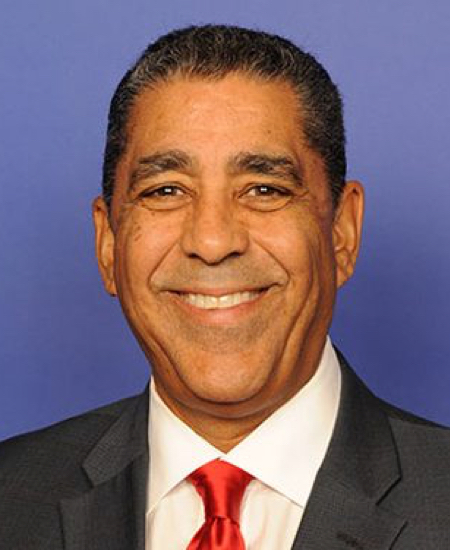
Rep. Adriano Espaillat
Sponsored bills
Maddy summaryHR 5455, the Collision Avoidance Systems Act of 2023, allows automakers to install pulsating light systems as rear-end collision avoidance technology on new vehicles. The bill requires the Secretary of Transportation to issue new regulations within 180 days updating Federal Safety Standard 108 to include performance-based rules for these systems. Specifically, it defines a "pulsating light system" as a high-mounted brake light that flashes rapidly (up to 4 times for no more than 1.2 seconds) before switching to steady light, with a 5-second lockout period after braking stops. This directly affects vehicle manufacturers who must comply with the updated safety standards for brake lights.
Maddy summaryThe Humane Cosmetics Act of 2023 bans cosmetic animal testing in the United States, prohibiting companies from conducting or contracting such testing after its enactment (effective 1 year later). It also bans selling or transporting cosmetics developed using animal testing conducted after that date within U.S. interstate commerce. The law directly affects cosmetic manufacturers, retailers, and suppliers operating in the U.S. market, requiring them to use non-animal testing methods for safety evaluations. Exceptions exist for foreign regulatory requirements or when no alternative testing methods are available for specific ingredients.
Maddy summaryThe No Tax Breaks for Union Busting Act would deny tax deductions for employers who attempt to influence employees' decisions about union activities, including unfair labor practices like firing workers for organizing or using captive audience meetings. It targets expenses related to union-busting tactics, such as consulting fees and other costs used to sway workers' opinions about collective bargaining. Employers would need to report these expenses on tax returns and would no longer be able to deduct them from taxable income. The bill aims to prevent employers from using tax-deductible expenses to influence union elections, aligning with existing rules that deny tax deductions for political spending. It would apply to expenses incurred in taxable years beginning 240 days after enactment.
Maddy summaryThe Jumpstart on College Act creates federal grant programs to expand early college high schools and dual enrollment programs, aiming to help more students earn postsecondary credentials within the normal timeframe. It authorizes $250 million annually for 6 years, with 40% of funds going directly to college-high school partnerships and 55% to states for statewide support. The grants require matching funds from recipients and mandate specific uses, such as creating college-aligned curricula, providing professional development for teachers, and ensuring students from underrepresented groups can access these programs without paying tuition for college courses. The bill also requires detailed reporting on student outcomes, including graduation rates and credential completion by demographic groups.
Maddy summaryHR 5436, the Expand Emergency Housing Act, modifies housing funding rules to expand emergency assistance. It waives a public service expenditure cap for fiscal year 2024 funds dedicated to preventing, preparing for, and responding to homelessness and emergency rental assistance. The bill also requires HUD to revise regulations so emergency grant payments (up to 6 consecutive months) provided to individuals or families do not count as "income payments" for eligibility purposes. This directly benefits people facing housing instability by making emergency aid easier to access without reducing their eligibility for other assistance programs.
Maddy summaryHR 5428, the No Tax Breaks for Union Busting (NTBUB) Act, prevents employers from deducting certain expenses related to influencing workers' decisions about union representation. It targets spending on tactics like anti-union meetings, workplace surveillance, or consultants during organizing campaigns, making these costs non-deductible for tax purposes. Employers must report such expenses on their tax returns, including details about the activities and amounts spent. The bill aims to remove tax incentives for employer interference in union elections, aligning with federal labor law protections for workers' collective bargaining rights.
Maddy summaryHR 3152, the "Fight CRIME Act," aims to maintain international restrictions on Iran's missile-related activities by requiring diplomatic efforts to extend these restrictions before they expire in October 2023. The bill mandates annual reports detailing U.S. diplomatic strategies, potential impacts of expiration, and measures to deter missile technology transfers to Iran. It establishes sanctions against foreign individuals or entities that knowingly support Iran's missile or drone programs, including asset freezes and visa restrictions. These sanctions apply regardless of whether UN restrictions remain in effect after their expiration, directly affecting foreign entities involved in these activities.
This bill requires the acquisition and installation of a statute in the Capitol or on the Capitol grounds to honor Roberto Clemente Walker, a humanitarian and athlete.
Maddy summaryThis bill helps disaster survivors without formal property deeds prove ownership for FEMA aid by expanding acceptable evidence to include mortgage statements, property tax receipts, wills, death certificates, or other documentation showing occupancy or ownership ties. It allows FEMA to consider "constructive ownership" when proof is lacking, prohibits requiring notarized statements, and updates eligibility language from "uninhabitable" to "damaged" by disasters. The law applies to disaster assistance funds appropriated after enactment, directly affecting households seeking housing aid after major disasters. It streamlines access to aid for those with incomplete documentation, such as survivors inheriting property without formal transfers.