

Maddy summaryHR 2974 amends the Supplemental Nutrition Assistance Program (SNAP) by adding a specific exclusion for income earned through certain employment and training programs. It directly affects SNAP households where members participate in programs like vocational rehabilitation (under the Rehabilitation Act of 1973), refugee employment initiatives (under immigration law), or other defined training programs. The key change removes the requirement to count income from allowances, earnings, or payments received in these specific programs when determining SNAP eligibility. This adjustment means participants in these programs will have that income excluded from their household's calculation, potentially increasing their SNAP benefits. The bill modifies existing SNAP rules without creating new programs or changing benefit levels.
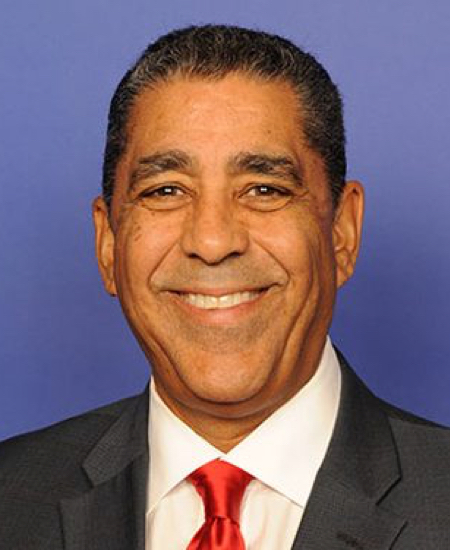
Rep. Adriano Espaillat
Sponsored bills
Hot Foods Act of 2025 This bill expands the Supplemental Nutrition Assistance Program (SNAP) to permit the use of SNAP benefits to purchase hot foods or hot food products ready for immediate consumption.
Maddy summaryHR 2185, the Mink VIRUS Act, prohibits fur farming of mink in the U.S. beginning one year after enactment (Section 2(a)). It requires painless mink termination methods meeting federal euthanasia standards and AVMA guidelines (Section 2(b)), with civil penalties of up to $10,000 per violation. The bill establishes a USDA payment program (Section 3) to compensate fur farm owners for compliance costs and the market value of their mink operations (valued as of the day before enactment), subject to restrictions on fund use and permanent land easements banning future fur farming. The law directly affects mink fur farm owners and operators, ending commercial mink farming while providing financial transition support.
Maddy summaryThis concurrent resolution (HCONRES 26) expresses Congress's condemnation of the lack of accountability for Serbian sexual war crimes committed against Vasfije Krasniqi Goodman, a U.S. citizen raped by Serbian forces during the 1999 Kosovo war. It specifically references her case - where perpetrators were acquitted and later released despite multiple legal appeals - amid reports that only one perpetrator has been convicted of such crimes out of approximately 20,000 victims. The resolution calls on Kosovo to prioritize prosecuting 1999 war rape cases, urges Serbia to investigate and extradite perpetrators, and directs the U.S. government to elevate Goodman’s case in diplomatic engagements and support rehabilitation efforts. As a non-binding resolution, it formally urges action but does not create new legal obligations.
Maddy summaryHRES 326 is a non-binding resolution designating April 10 as "Dolores Huerta Day" to honor the late labor and civil rights leader Dolores Huerta. It recognizes her foundational work co-founding the United Farm Workers, leading grape boycotts that secured union contracts, advocating for farm workers' safety, and championing women's rights and Latino political representation. The resolution has no policy impact or direct effect on any group, as it solely serves to commemorate Huerta's legacy. It was introduced by multiple House members in recognition of her contributions to civil rights and equality.
Working for Immigrant Safety and Empowerment Act or the WISE Act This bill expands eligibility for U nonimmigrant visas (victims of criminal activity) and prohibits immigration enforcement activities in specified areas. Generally, U visas are for victims of specified crimes (e.g., rape, trafficking, or domestic violence) who assist with the investigation or prosecution of the crime. The bill adds hate crimes, child abuse, and elder abuse as crimes that may qualify a victim for a U visa and removes criteria related to the victim's assistance with the investigation or prosecution of the crime. Furthermore, the Department of Homeland Security (DHS) must provide work authorization to U visa applicants, whereas currently DHS may grant work authorization but is not required to do so. The bill also eliminates the annual numerical cap on U visas. The bill establishes a rebuttable presumption that certain individuals, including U visa applicants and T visa (victims of human trafficking) applicants, shall not be detained while the application is pending. Additionally, the bill provides immigration-related protections, such as by extending the admission period and providing work authorization, to the spouse or child of a nonimmigrant visa holder who subjected that spouse or child to battery or extreme cruelty. Further, the bill prohibits, with some exceptions for exigent circumstances, U.S. Immigration and Customs Enforcement or U.S. Customs and Border Protection from conducting immigration enforcement actions within 1,000 feet of a school, health care facility, place of worship, or other location specified in the bill.
Maddy summaryHR 2888, the "Stopping a Rogue President on Trade Act," terminates specific executive orders imposing tariffs (EOs 14257, 14193, and 14194) and requires congressional approval for new tariffs or trade restrictions. It directly affects the President, who can no longer unilaterally impose or increase tariffs without Congress passing a joint resolution approving the action. Key mechanisms include mandating a formal joint resolution process for tariff decisions (with limited exceptions for existing antidumping duties and trade agreements) and applying expedited congressional procedures. This bill shifts authority from the executive branch to Congress for major trade policy changes.
Maddy summaryThis resolution (HRES 315) is a purely commemorative measure that formally recognizes the 159th anniversary of the Civil Rights Act of 1866. It acknowledges the historical significance of the 1866 Act as the first federal law defining citizenship and affirming equal legal protection for all Americans, regardless of race. The resolution highlights the Act's role as a foundational precedent for the Thirteenth and Fourteenth Amendments. As a ceremonial resolution, it has no legal effect or policy impact on any individuals or groups.
Maddy summaryThe American Family Act (HR 2763) establishes a new refundable child tax credit that provides monthly payments to eligible families with children. It would pay $300 per month for each child under age 6 and $360 per month (120% of $300) for each child age 6 or older, with income limits of $150,000 for joint filers and $112,500 for other filers. The bill creates a "period of presumptive eligibility" to determine eligibility for monthly payments, allowing families to receive advance payments based on information from previous tax returns. This would directly affect millions of families with children who meet the income requirements, providing more consistent financial support throughout the year rather than an annual tax credit.
Maddy summaryHR 2799, the Closing the Bump Stock Loophole Act of 2025, prohibits the sale, possession, and modification of devices that increase the firing rate of semi-automatic firearms to mimic machine guns (commonly called "bump stocks"). It specifically bans manual, power-driven, or electronic devices designed to speed up firing, as well as modified firearms that achieve this effect. Owners of pre-existing modified firearms must register them within 120 days of the law's enactment, with exemptions for government entities and firearms already lawfully modified and registered before the bill passes. The bill does not restrict standard semi-automatic firearms or require registration of unmodified guns.