

Maddy summaryHR 3376 creates the Water Affordability, Transparency, Equity, and Reliability Trust Fund, funded by increasing the corporate tax rate from 21% to 24.5% starting in 2025, with annual funding capped at $35 billion or 1/20th of 20-year infrastructure needs. The bill allocates funds to clean water programs (42%), safe drinking water programs (42.5%), household water well systems (1%), colonias assistance (0.5%), and Indian health services (3%), requiring specific prioritization of low-income and minority communities for many programs. It mandates an EPA study on water affordability, discriminatory practices, and civil rights violations in water service, including data collection on service disconnections affecting vulnerable populations. The bill also includes provisions for lead service line replacement, PFAS contamination response, and job training grants for water system operators with specific requirements to prioritize low-income communities.
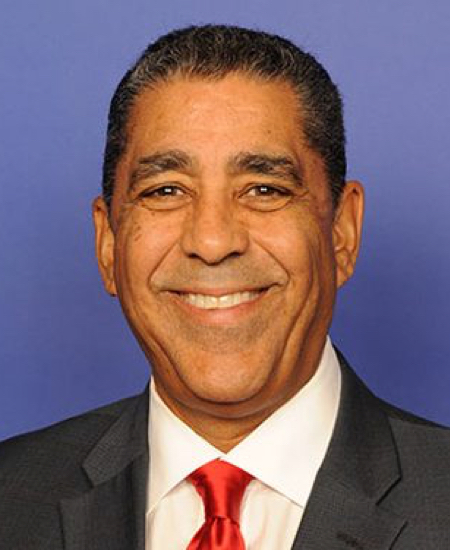
Rep. Adriano Espaillat
Sponsored bills
Maddy summaryHR 3316, the Stop Mental Health Stigma in Our Communities Act of 2025, requires the HHS Secretary to develop a national outreach strategy and conduct two systematic reviews targeting mental health disparities in Asian American, Native Hawaiian, and Pacific Islander (AANHPI) communities. The strategy mandates culturally tailored materials to reduce stigma, increase awareness of mental health services, and engage community members, funded at $3 million annually from 2026-2030. It also directs a year-long review of AANHPI youth mental health crises (including suicide rates) and a review of AANHPI behavioral health workforce shortages, both requiring disaggregated data reporting. The bill directly affects AANHPI individuals - particularly youth and underserved subgroups - by mandating federal action to address systemic barriers like language gaps and underrepresentation in care.
Maddy summaryHR 3243, the Therapeutic Fraud Prevention Act of 2025, bans the provision of paid conversion therapy aimed at changing a person's sexual orientation or gender identity, and prohibits advertising such therapy as effective, safe, or without risk. It directly affects LGBTQ+ individuals and their families who might be targeted by these practices, as professionals have determined conversion therapy is ineffective and harmful. The law treats violations as deceptive acts under consumer protection laws, empowering the Federal Trade Commission and state attorneys general to enforce it through civil actions. It explicitly excludes legitimate gender transition support and non-discriminatory counseling from the ban.
Maddy summaryHouse Resolution 388 designates the first week of April as "Adolescent Immunization Action Week" to promote vaccination for teens and young adults. The resolution calls on communities, health providers, and organizations to support immunization efforts, particularly addressing vaccine misinformation and low uptake in rural and underserved areas. It does not create new laws or funding but encourages collaborative action to improve vaccination rates for adolescents.
Maddy summaryThe Artificial Intelligence Literacy and Inclusion Act authorizes the National Science Foundation to fund local AI literacy programs targeting underserved communities, including people of color, low-income residents, rural populations, seniors, and people with disabilities. These programs must cover AI basics, ethics, applications, and societal impacts, with grantees required to submit annual reports on participant demographics and program effectiveness. Federal agencies like Labor, Commerce, and Education must also submit reports to Congress within one year on integrating AI literacy into workforce training, small business support, and school curricula, including how to adapt existing grant programs. The bill mandates public availability of all agency reports and emphasizes community-driven education to build broader public understanding of AI. This legislation aims to expand equitable access to AI education without specifying outcomes or advocating for particular policies.
Maddy summaryHRES 378 is a non-binding House resolution urging the Department of Homeland Security to create a humanitarian parole program for Cameroonian immigrants fleeing violence and instability in Cameroon. It directly affects Cameroonian nationals currently in the U.S. or seeking entry who face risks like deportation to a country with ongoing armed conflicts, including the Anglophone Crisis and Boko Haram insurgency, which have displaced over 600,000 people internally and 70,000 externally. The resolution cites existing U.S. authority under Section 212(d)(5)(A) of the Immigration and Nationality Act to establish such a program, noting Cameroon’s TPS designation is set to expire. It emphasizes the need for humanitarian relief amid reports of severe human rights abuses against Cameroonian returnees and systemic discrimination against Black immigrants in U.S. immigration enforcement. The resolution does not create new law but formally requests DHS action.
Maddy summaryHRES 384 is a non-binding House resolution recognizing Cinco de Mayo's cultural and historical significance. It commemorates Mexico's 1862 victory at the Battle of Puebla against French forces, highlighting its role in Mexico's fight for independence and freedom. The resolution encourages U.S. citizens to observe Cinco de Mayo through ceremonies and activities, acknowledging its importance to Mexican and Mexican-American communities. As a ceremonial resolution, it has no legal effect or policy changes.
Maddy summaryThis bill amends the tax code to limit corporate tax deductions for certain executive compensation. It expands the definition of "covered individual" to include former top executives (like former CEOs or CFOs) who received high pay before 2021, as well as current executives whose compensation was reported to shareholders. The key change prevents companies from deducting excessive pay packages - such as multimillion-dollar bonuses - from taxable income for these covered individuals. The policy applies to publicly traded corporations and takes effect for tax years starting in 2025.
Maddy summaryHR 3112, the Better CARE for Animals Act of 2025, strengthens enforcement of the federal Animal Welfare Act by requiring dealers and exhibitors to hold valid licenses for animal sales or transport (Section 4). It expands enforcement authority by allowing the Attorney General to sue violators for up to $10,000 per day, seize animals, and seek injunctions (Section 20), while clarifying that courts can address violations of related rules and regulations. The bill directly affects animal dealers, exhibitors, the USDA, and the Department of Justice, creating clearer pathways for holding violators accountable. Key provisions include updating definitions, broadening inspection powers to cover all regulations, and directing penalty funds toward temporary animal care costs during legal proceedings.
Maddy summaryThe SHIELD Act (HR 3101) would create a federal grant program to expand legal representation for immigrants facing deportation. It authorizes $100 million annually for fiscal years 2026-2027 to fund workforce development, training, and infrastructure for legal services organizations. Eligible recipients include states, local governments, community organizations, and educational institutions that provide immigration legal services. Funds would support recruitment and training of legal staff, technical assistance, and coordination of services to better serve immigrants in deportation proceedings, addressing the current shortage of representation that affects most immigrants in deportation cases who cannot afford attorneys.