

Maddy summaryHR 6083 establishes a Commission to study U.S. military interventions in nine Latin American nations, including Nicaragua, Mexico, the Dominican Republic, Guatemala, Grenada, and Panama, as detailed in the bill's findings section. The Commission would document these historical interventions, analyze their societal impacts on local populations, and recommend educational efforts and potential remedies for the U.S. public. Composed of government officials, appointed members, and representatives from affected nations, the Commission would submit a report to Congress within four years and require $20 million in federal funding. This bill directly affects how the U.S. government examines historical military actions in the Americas and addresses their long-term consequences.
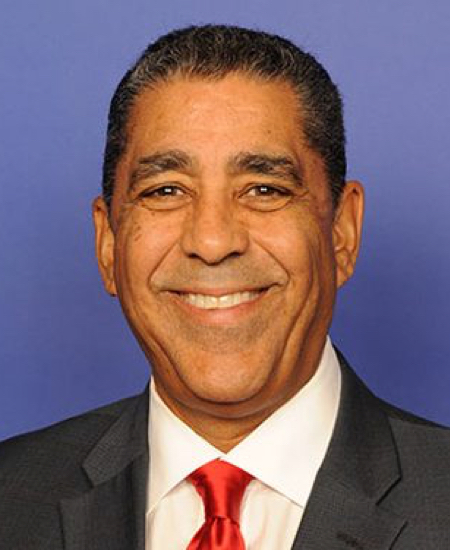
Rep. Adriano Espaillat
Sponsored bills
Closing Loopholes for Oil and other Sources of Emissions Act or the CLOSE Act This bill amends the Clean Air Act to revise requirements for hazardous air pollutants. Specifically, the bill allows (1) emissions from oil or gas exploration or production wells and emissions from pipeline compressors or pump stations to be aggregated with emissions from other similar sources and regulated as a major source of toxic air pollutants, (2) emissions from those wells to be aggregated for purposes of emissions standards for hazardous air pollutants, and (3) emissions from oil or gas production wells to be regulated as an area source of toxic air pollutants. The Environmental Protection Agency must (1) issue a final rule adding hydrogen sulfide to the list of hazardous air pollutants; and (2) revise the list of air pollution sources within 365 days after issuing the rule to include categories and subcategories of major sources and area sources of hydrogen sulfide, including oil and gas wells.
Maddy summaryHR 6056, the International Human Rights Defense Act of 2025, establishes a permanent Special Envoy at the State Department to lead U.S. foreign policy efforts addressing discrimination and violence against LGBTQI+ people globally. The bill requires the U.S. government to develop and update a biannual global strategy to prevent criminalization and violence against LGBTQI+ individuals, mandate detailed reporting on such abuses in annual country reports, and ensure all U.S. foreign assistance programs include inclusive nondiscrimination policies. This legislation directly affects U.S. foreign policy implementation, federal agencies receiving funding, and LGBTQI+ communities facing persecution worldwide. The bill aims to coordinate U.S. government efforts across departments and with international partners to advance LGBTQI+ rights globally through concrete policy mechanisms.
Maddy summaryThis resolution designates the week of November 10-16, 2025, as "National Caregiving Youth Week" to highlight young people under 18 who provide regular care for family members with health conditions, such as chronic illness, disability, or aging. It aims to raise public awareness and encourage recognition of these youth, who often balance caregiving with school while facing challenges like mental health risks and reduced educational opportunities. The resolution urges educators, policymakers, and community leaders to better support this group but does not create new programs or funding. It focuses on symbolic recognition, not legislative action.
Maddy summaryHRES 870 is a commemorative resolution honoring the 265 victims of the 2001 American Airlines Flight 587 crash in Rockaway, Queens, New York. It specifically recognizes the families and communities affected, particularly the large Dominican American community among the victims, and marks the 24th anniversary of the tragedy on November 12, 2025. The resolution extends the U.S. House’s condolences to the victims’ families and acknowledges the existing memorial and annual ceremony held at Rockaway Park. As a purely symbolic gesture, it does not create new policies or funding.
Maddy summaryThis bill ensures continuous funding for SNAP (food assistance) and WIC (nutrition program for mothers/children) during government funding gaps. It authorizes emergency Treasury funds to cover SNAP/WIC benefits and reimburse states for costs if Congress fails to pass regular appropriations for the Department of Agriculture by September 30, 2025. The funding covers missed payments retroactively from September 30, 2025, through the bill’s enactment date, and continues until either regular appropriations pass or September 30, 2026. It directly affects low-income households relying on these programs and state agencies administering them during funding lapses.
Maddy summaryHRES 846 is a symbolic resolution designating October 2025 as National Domestic Violence Awareness Month. It expresses the House's support for raising awareness about domestic violence and its impacts, and calls for continued congressional attention to ending domestic violence through existing programs. The resolution does not create new laws, allocate funding, or directly affect any specific groups - it is purely a statement of support. It references statistics on domestic violence prevalence but focuses on awareness rather than policy changes.
Maddy summaryHR 5847, the Airline Travelers Right to Know Act, requires airlines to disclose potential toxic fume exposure risks to passengers and flight crew before ticket purchase and during flight operations. The bill mandates airlines to provide detailed information about chemicals in jet exhaust and fumes (including cancer risks) via pre-purchase notifications, install fume sensors on aircraft, and ensure crew have access to oxygen masks during incidents. It directly affects passengers, pilots, and cabin crew by requiring airlines to confirm passenger acknowledgment of risks during booking and to notify all crew immediately during fume events. Violations, including false reporting or missing sensor installations, trigger civil penalties up to $100,000 per incident. The law focuses on transparency about health risks from engine exhaust and fuel fumes during commercial flights.
Maddy summaryHR 5846 reauthorizes the Solid Waste Infrastructure for Recycling Grant Program by extending annual funding of $65 million for fiscal years 2027 through 2036. The bill directly affects local governments and communities by providing continued financial support for projects that improve recycling infrastructure, such as modernizing facilities or expanding collection systems. Key provisions include maintaining the $65 million annual funding level for a decade beyond the previous authorization period (2021-2025), ensuring stable resources for waste management upgrades. This concrete policy change allows communities to access federal grants for recycling infrastructure projects without interruption through 2036.
Maddy summaryHRES 837 is a non-binding House resolution expressing the House's recognition of the connection between firearm violence and intimate partner violence. It highlights statistics showing firearms are used in 66% of intimate partner homicides, disproportionately impact women (especially Black, American Indian/Alaska Native, and Hispanic women), and honors victims like Gladys Ricart. The resolution recommends Congress strengthen background checks, restrict firearm access for those under domestic violence restraining orders, fund research on this intersection, and prioritize related legislation like H.R. 4166. It does not create new law but urges action based on the documented risks. The resolution directly addresses congressional policy priorities, not affected individuals.