

Maddy summaryThe PSLF Payment Completion Fairness Act (HR 2949) amends the Higher Education Act to clarify eligibility for the Public Service Loan Forgiveness (PSLF) program. It revises Section 455(m)(1)(B) by removing the phrase "is employed" and related text, replacing it with "has been" to focus solely on payment completion. This change ensures borrowers qualify for loan forgiveness once they've made 120 qualifying payments, regardless of current employment status. The bill directly affects federal student loan borrowers working in public service jobs who are seeking loan forgiveness under the PSLF program.
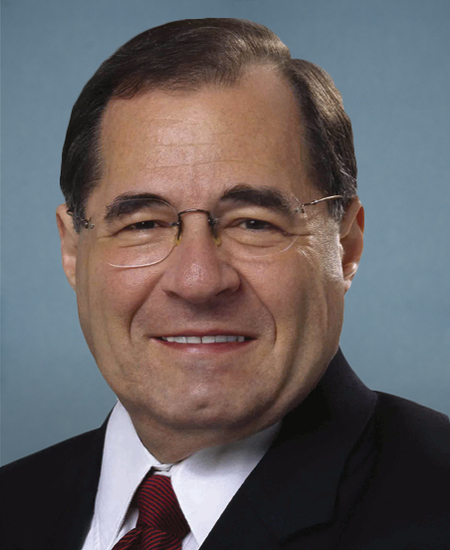
Rep. Jerrold Nadler
Sponsored bills
Maddy summaryThis bill requires the Pentagon to obtain a clean audit of its finances. If the Department of Defense fails to get an unqualified audit (a "clean" opinion) for a department or agency, it triggers automatic spending cuts: 0.5% in the first year of failure and 1.0% in subsequent years. These cuts apply broadly across programs but exclude military personnel, National Guard, reserve forces, and the Defense Health Program. The President may temporarily waive cuts for national security reasons, but must justify the waiver to Congress. The goal is to link defense spending to financial accountability, using existing audit standards.
Maddy summaryThe Child Care for Working Families Act establishes a federal entitlement program providing subsidized child care for working families with children under age 6 who are not yet in kindergarten. It creates a sliding fee scale where families at or below 85% of State median income pay no copayment, while higher-income families pay up to 7% of their income based on income thresholds. The bill requires states to develop quality rating systems for child care providers and ensures providers receive sufficient funding to meet quality standards, including wages equivalent to elementary educators. It prioritizes access for underserved populations including children with disabilities, infants and toddlers, children experiencing homelessness, and families in low-income communities. The program is funded with $20 billion for fiscal year 2024 and subsequent years through 2029.
Forced Arbitration Injustice Repeal Act of 2023 or the FAIR Act of 2023 This bill prohibits a predispute arbitration agreement from being valid or enforceable if it requires arbitration of an employment, consumer, antitrust, or civil rights dispute.
Performing Artist Tax Parity Act of 2023 This bill modifies the above-the-line tax deduction for the expenses of performing artists (including commissions paid to managers or agents) to provide for a phaseout of such deduction for taxpayers whose adjusted gross income exceeds $100,000 ($200,000 for joint return filers). The $100,000 phaseout threshold is adjusted for inflation annually for taxable years beginning after 2023.
Maddy summaryHR 2370, the Access to AEDs Act, authorizes $25 million in federal funding (2024-2028) to help public elementary and secondary schools improve access to automated external defibrillators (AEDs) and CPR training. The bill directs the Secretary of Health and Human Services to award grants to school districts and partners for developing AED programs, training staff and students, purchasing and maintaining AEDs, and creating cardiac emergency response plans. It specifically targets schools to address sudden cardiac arrest (SCA), which is a leading cause of death among student athletes and youth, with 90% of SCA victims dying without immediate CPR and defibrillation. The law requires grantees to report on their activities and establishes a clearinghouse to collect data on school AED access and costs.
Maddy summaryHRES 324 is a non-binding House resolution expressing support for library staff across public, school, academic, and special libraries. It recognizes these workers as essential community resources providing access to information, internet services, and social support - especially for underserved populations - and highlights their expanded roles during crises like the opioid epidemic and pandemic. The resolution calls for adequate funding, protects staff from threats while performing their duties, supports their right to unionize, and upholds the public’s right to free access to library resources. It does not create new laws or funding but formally acknowledges these priorities during National Library Week.
Maddy summaryThe Water Affordability, Transparency, Equity, and Reliability Act of 2023 establishes a new trust fund funded by increasing the corporate tax rate from 21% to 24.5% to support water infrastructure and affordability programs. It allocates funds to clean water programs (42%), safe drinking water funding (42.5%), household water wells (1%), colonias assistance (0.5%), Indian health services (3%), and water operator job training (0.5%). The bill requires the EPA to conduct a study and submit a report on water affordability, discrimination in water services, public participation in regionalization, and data collection related to service disconnections. It includes specific provisions for colonias, household water wells, and job training programs for water system operators to improve water access and equity.
Maddy summaryThis bill establishes a comprehensive framework to address environmental justice by requiring federal agencies to identify and address disproportionately adverse environmental and health effects on communities of color, low-income communities, and Tribal and Indigenous communities. It creates a White House Environmental Justice Interagency Council to coordinate federal efforts, mandates that agencies develop environmental justice strategies, and requires consideration of cumulative impacts in permitting decisions for pollution sources. The bill also establishes grant programs for environmental justice communities, creates training requirements for federal employees, and includes specific provisions for safer cosmetics and economic revitalization in fossil fuel-dependent communities. These provisions aim to ensure fair treatment and meaningful involvement of all people in environmental decision-making processes, directly affecting federal agencies and communities disproportionately burdened by environmental hazards.
Maddy summaryThe Armenian Genocide Education Act (HR 2803) establishes a Library of Congress program to support U.S. schools in teaching about the Armenian Genocide of 1915-1923. The program will develop educational resources, provide teacher training, and maintain an online resource center to help schools incorporate accurate historical information into curricula. It prioritizes schools without existing Armenian Genocide education programs, with $2 million authorized annually for five years. The Librarian of Congress will report yearly on the program’s activities to Congress.