

Maddy summaryHR 7503, the Health Equity for People with Disabilities Act, amends Section 330 of the Public Health Service Act to require health centers and programs serving underserved communities to explicitly include people with disabilities and provide accessible healthcare services. The bill inserts "including people with disabilities" in multiple sections and adds requirements for communication devices or services to meet accessibility needs. These changes apply to community health centers, migrant health centers, and other programs funded under Section 330, which serve medically underserved populations. The law clarifies that existing funding mechanisms remain unchanged but ensures people with disabilities are included in program eligibility and access to care.
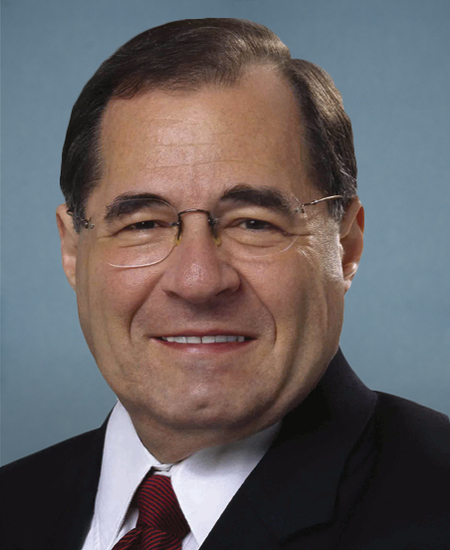
Rep. Jerrold Nadler
Sponsored bills
Maddy summaryThis bill reauthorizes the Preventing Maternal Deaths program through 2028, extending existing provisions under the Public Health Service Act. It requires maternal mortality review committees to include obstetricians and gynecologists and improves death certificate accuracy by directing coordination with death certifiers. The Centers for Disease Control and Prevention must annually share evidence-based best practices for preventing maternal mortality with hospitals, state health groups, and perinatal quality collaboratives. The changes directly affect state maternal mortality review committees, healthcare providers, and hospitals receiving CDC guidance. The bill does not create new funding but extends the current program's authorization period from 2019-2023 to 2024-2028.
Maddy summaryThis resolution (HRES 1050) designates March 2024 as National Colorectal Cancer Awareness Month. It symbolically supports existing public awareness efforts around colorectal cancer prevention, screening, and early detection, without creating new requirements or funding. The resolution encourages the public to observe the month with educational activities, aligning with ongoing annual campaigns. It directly affects public awareness efforts but has no binding policy impact.
Maddy summaryHR 6203 extends funding for the Emergency Food Assistance Program (EFAP) through fiscal year 2028, increasing annual commodity funding to $500 million per year for 2024-2028. It raises storage and distribution funding from $100 million to $200 million annually and creates new delivery options for geographically isolated states (Hawaii, Alaska, Puerto Rico, Northern Mariana Islands, U.S. Virgin Islands, and Guam), including allowing them to order through the Department of Defense Fresh Fruit and Vegetable Program. The bill also permits these states to use up to 20% of allocated funds to directly purchase locally grown food. Finally, it allows the Secretary to consider factors like product variety and transportation distance when awarding contracts for fresh produce packages, while maintaining nutritional goals.
Maddy summaryHRES 1032 is a symbolic resolution designating the week of February 26-March 1, 2024, as "Public Schools Week" in the U.S. House of Representatives. It expresses congressional support for public education, highlighting its role in preparing students and communities. The resolution has no legal effect or funding provisions - it solely serves as a formal expression of backing for public schools. It directly affects no individuals or entities but aims to raise awareness about public education. This is a non-binding gesture, not a policy change.
Maddy summaryThe Price Gouging Prevention Act of 2024 prohibits businesses from charging "grossly excessive" prices for goods or services during exceptional market shocks (like natural disasters or pandemics), directly affecting large corporations with over $100 million in annual U.S. revenue. Key provisions include presuming violations if prices rise more than 20% above pre-shock averages without justification, allowing companies to defend against claims by proving legitimate cost increases, and requiring major corporations to disclose pricing changes in SEC filings. Enforcement will be handled by the Federal Trade Commission (FTC) and state attorneys general, with civil penalties up to 5% of a company’s revenue. The bill defines "unfair leverage" for dominant firms and mandates annual inflation adjustments to revenue thresholds starting in 2025.
Maddy summaryHRES 966 is a symbolic resolution condemning alleged sexual violence committed by Hamas during its October 7, 2023, attack on Israel. It specifically references eyewitness accounts, forensic evidence, and Hamas fighters' admissions of ordering gang rape, sexual mutilation, and assault against Israeli civilians. The resolution calls for international condemnation of such acts as weapons of war, urges nations to criminalize sexual violence, and supports investigations into Hamas' actions. As a non-binding resolution, it does not create new laws or directly affect any individuals but formally expresses the House's position on the issue.
Maddy summaryHR 7248, the FDA Modernization Act 3.0, creates a new FDA process to qualify alternative nonclinical testing methods that can replace or reduce animal testing in drug development. Drug developers can request qualification for methods that improve safety/efficacy predictivity or shorten development time, with the FDA required to review requests within 180 days. If qualified, these methods allow expedited FDA review of drug applications and enable referencing the qualified method in submissions. The bill mandates annual reports tracking qualified methods, animal use reduction, and application approvals, with transparency requirements for Congress. This directly affects pharmaceutical companies and biotech firms developing new drugs.
Maddy summaryHRES 1002 is a symbolic House resolution recognizing the cultural and historical significance of Lunar New Year (celebrated as the Year of the Dragon in 2024). It acknowledges the holiday's 4,000-year history in China, its celebration across Asia (including Seollal and Tết), and its significance to Asian Americans and others in the U.S. The resolution expresses respect for those observing the holiday and wishes them a happy new year, but it does not create new laws, policies, or funding. As a ceremonial resolution, it has no direct effect on legislation or constituents.
Maddy summaryThe JOBS Act of 2023 would expand Federal Pell Grant eligibility to cover certain short-term job training programs that prepare students for high-demand careers. It defines "eligible job training programs" as those offering 150-600 hours of instruction over 8-15 weeks, aligned with in-demand industry sectors, and leading to recognized credentials that help students meet hiring requirements and take licensure exams. The bill would allow students in these programs to receive Pell Grants under standard terms, with the minimum Pell Grant amount reduced from 10% to 5% of the maximum. It also requires accrediting agencies to evaluate these programs and creates data-sharing between Education and Labor departments to track program effectiveness.