

Maddy summaryThis bill awards a Congressional Gold Medal to the 761st Tank Battalion (known as the "Black Panthers"), the first predominantly Black armored unit in World War II's European Theater. It recognizes their combat service from 1944-1946, including key roles in the Battle of the Bulge and breaking the Siegfried Line, despite facing racial prejudice during and after the war. The medal will be displayed at the National Museum of African American History and Culture, with bronze duplicates available for sale to cover costs. The bill commemorates the battalion's 130,000 enemy casualties inflicted, 50% casualty rate, and their 1978 Presidential Unit Citation. It does not create new laws or affect current policies.
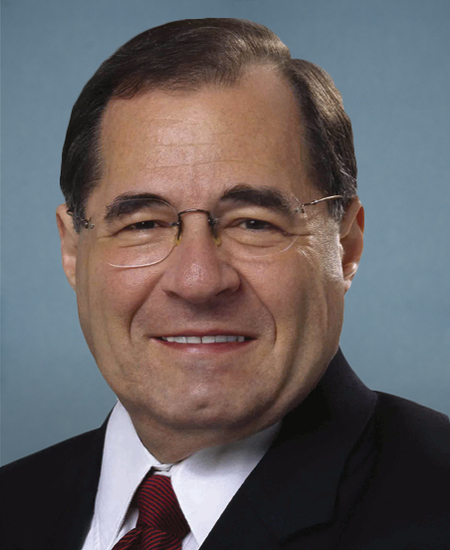
Rep. Jerrold Nadler
Sponsored bills
Maddy summaryThe RAISE Act of 2025 creates a new tax credit for teachers and early childhood educators, with a base of $1,000 plus additional amounts based on school poverty rates. Teachers working in schools where more than 39% of students live in poverty can receive up to $14,000 more in tax credits, calculated based on how much a school's poverty rate exceeds 39%. The bill also increases the deduction for teachers' classroom expenses from $250 to $500 and requires schools to maintain teacher pay levels to receive certain federal funds. This directly affects public school teachers, early childhood educators, and schools serving communities with high poverty rates.
Maddy summaryHR 1567 requires the Secretary of the Interior to conduct a study assessing the feasibility of establishing the African Burial Ground International Memorial Museum and Educational Center at New York City's African Burial Ground National Monument. The study will examine factors like available collections (including DNA samples from remains), potential locations (such as 22 Reade Street), community involvement, financial planning, and collaboration opportunities with institutions like the National Museum of African American History and Culture. The Secretary must submit a report to Congress within three years, detailing findings on costs, location options, and recommendations for the museum's potential development. This bill does not create the museum but sets the process for evaluating its future establishment.
Maddy summaryEthan's Law requires gun owners to store firearms securely in homes where minors live or where residents are legally prohibited from owning guns. It makes it unlawful to leave firearms unsecured if a minor or ineligible person could access them, with fines of $500 per violation and harsher penalties if injury or death occurs. The bill creates a federal grant program to help states implement similar secure storage laws and treats unsafe storage as negligence in legal cases. It directly affects households with children or residents who cannot legally possess firearms, aiming to reduce accidental shootings and unauthorized access.
Maddy summaryHR 1568 would establish the African Burial Ground International Memorial Museum and Educational Center at the National Historic Landmark site in Lower Manhattan, New York City, honoring the approximately 20,000 enslaved Africans buried there. The museum would examine African cultural traditions brought to the U.S. by enslaved people, explore the institution of slavery through exhibits and educational programs, and be associated with the National Museum of African American History and Culture. The National Park Service would operate the museum, with the Secretary of the Interior managing the facility in consultation with an advisory council composed of federal, state, and local officials. The bill authorizes $15 million for fiscal year 2025 and additional funding for subsequent years to support the museum's construction, operation, and educational programs. The museum would be located on property adjacent to the National Monument established at the burial ground site.
Maddy summaryHRES 155 is a symbolic congressional resolution expressing strong U.S. support for Ukraine during Russia’s third year of invasion. It condemns Russia’s war crimes - including attacks on civilians, forced deportations of children, and infrastructure destruction - and demands Russia’s immediate withdrawal from all Ukrainian territory. The resolution reaffirms U.S. commitment to Ukraine’s sovereignty and territorial integrity within internationally recognized borders, insisting Ukraine must be central to any peace negotiations. It also calls for accountability for Russian leaders and the safe return of kidnapped Ukrainian children. As a non-binding resolution, it does not create new laws but formalizes U.S. diplomatic stance.
Maddy summaryHRES 159 is a symbolic resolution expressing the U.S. House of Representatives' support for designating February 24-28, 2025, as "Public Schools Week." It does not create new laws or allocate funds but aims to highlight the importance of public schools in communities. The resolution cites reasons such as public schools serving 90% of U.S. students, fostering critical thinking, and requiring equitable funding - though these are context, not policy changes. It directly affects public schools and their communities by raising awareness of their role in education. As a non-binding resolution, it has no direct impact on school operations or funding.
New Era of Preventing End-Stage Kidney Disease Act This bill establishes regional centers of excellence, postgraduate fellowships, and training for health professionals relating to the diagnosis and treatment of rare kidney disease. It also requires the Department of Health and Human Services (HHS) to conduct various studies on rare kidney disease. Specifically, it authorizes the National Institute of Diabetes and Digestive and Kidney Diseases to award funding to public and private nonprofit entities for establishing regional centers of excellence that will increase public awareness, conduct research, and develop resources for diagnosing and treating rare kidney diseases. A center may receive such funding for up to five years, unless extended by the institute. The bill also requires health professions schools receiving a grant from the Health Resources and Services Administration (HRSA) Centers of Excellence program to award fellowships for training on preventing, diagnosing, and treating rare kidney disease in disproportionately impacted populations. Also, the bill expands the priorities of HRSA’s Primary Care Training and Enhancement program to include training for health care workers to care for individuals with kidney disease. Additionally, HHS must conduct several studies and report to Congress on topics such as treating rare kidney disease in disproportionately affected populations, eliminating the need for dialysis or kidney transplants, and increasing public awareness of rare kidney disease.
Maddy summaryThis bill allows physical therapists to use temporary replacement staff (locum tenens) under Medicare, similar to how physicians currently can. It directly affects physical therapists providing outpatient services and Medicare beneficiaries relying on those services. The key change modifies Medicare rules to apply the same provisions for physical therapy services as are already used for physician services. This means physical therapists can more easily fill temporary staffing gaps without disrupting patient care. The amendment applies to services provided after the bill's enactment date.
Pay Our Coast Guard Parity Act of 2025 This bill provides continuing appropriations to the Coast Guard for pay and benefits when there is a Coast Guard-specific funding lapse. Under the bill, a Coast Guard-specific funding lapse occurs when (1) a bill providing appropriations for the Coast Guard for a fiscal year has not been enacted before the beginning of that fiscal year, and no joint resolution providing continuing appropriations for the Coast Guard is in effect; and (2) a bill providing appropriations for the Department of Defense (DOD) for the fiscal year has been enacted before the beginning of the fiscal year, or a joint resolution providing continuing appropriation for DOD is in effect. If a Coast Guard-specific funding lapse occurs, the bill provides appropriations to the Coast Guard for pay and allowances for military members of the Coast Guard who perform active service or inactive-duty training; pay and benefits for certain civilian employees and contract employees; the payment of a death gratuity; payments for travel related to funerals, the dignified transfer of remains, and unit memorial services; and the temporary continuation of the basic allowance for housing for dependents of members of the Coast Guard dying on active duty. The bill generally provides the appropriations to the Coast Guard until the earlier of the enactment of specified Coast Guard appropriations legislation, the termination of the availability of appropriations for DOD, or two weeks after the beginning of the Coast Guard-specific funding lapse.