

Maddy summaryHR 2682, the STOP Bullying Act, requires each state to establish a state anti-bullying task force using federal grants. The task force must study bullying in K-12 schools, including policies, education efforts, and bullying-related violence or self-harm, and include specific members like teachers, students, parents, psychologists, and LGBTQ+ advocates. States must submit a public report with findings, recommendations for legislation or actions, and best practices for addressing bullying within one year. This bill directly affects all public K-12 schools and students across the country, particularly focusing on reducing bullying against marginalized groups like LGBTQ+ students, Jewish students, and students with disabilities. The law creates a structured process for states to develop evidence-based anti-bullying strategies but does not provide direct funding for school programs.
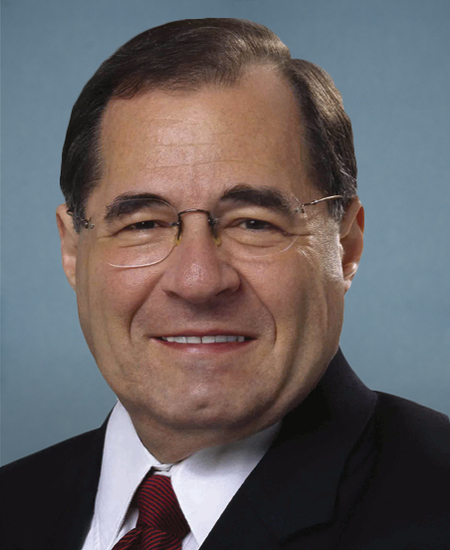
Rep. Jerrold Nadler
Sponsored bills
Maddy summaryHR 2678, "Ellie’s Law," authorizes $20 million annually from fiscal years 2026 through 2030 for the National Institute of Neurological Disorders and Stroke to conduct new research on unruptured brain aneurysms. The funding specifically aims to study diverse patient populations by age, sex, and race, addressing gaps in current research. This bill directly affects the estimated 6.8 million Americans with unruptured brain aneurysms - particularly women and people of color, who face higher rupture risks - by advancing medical understanding of the condition. The law requires the funds to supplement, not replace, existing research budgets.
Maddy summaryThis bill, HR 2253 (Puppy Protection Act of 2025), sets new federal standards for commercial dog dealers who sell puppies to the public. It requires specific housing sizes based on dog size (e.g., 12-30 square feet per dog), daily exercise in safe outdoor areas, clean water and nutritious food twice daily, and annual veterinary exams including dental checks. The bill also limits breeding frequency (max 2 litters in 25 months), sets age minimums for breeding (18 months for small dogs, 2 years for large dogs), and mandates health screenings to prevent genetic diseases. These requirements apply directly to commercial dealers, with final regulations to be issued within 18 months of enactment.
Maddy summaryThis bill, HR 2102 (Major Richard Star Act), allows veterans with combat-related disabilities to receive both full military retired pay and veterans' disability compensation simultaneously, without the previous offset that reduced retired pay. It directly affects veterans already eligible for both benefits due to combat-related injuries, removing the requirement that their retired pay be reduced by the disability compensation amount. The key provision amends Title 10 and Title 38 to eliminate the offset rule (sections 5304 and 5305 of Title 38) for these veterans. The change applies to payments starting after the bill’s enactment date, effective for all qualifying veterans. This is a policy change to increase financial support for affected veterans, not a new benefit.
Maddy summaryThe IDEA Full Funding Act (HR 2598) mandates specific annual federal funding levels for the Individuals with Disabilities Education Act (IDEA), directly affecting schools and students with disabilities nationwide. It requires the federal government to appropriate either a fixed dollar amount or a specified percentage (increasing annually from 4.5% to 40%) of a calculated total - based on the number of eligible students and average per-pupil costs - starting in fiscal year 2026 through 2035. The bill sets clear, escalating funding targets, with the higher of two calculated amounts (dollar figure or percentage) becoming available for obligation each fiscal year. This establishes a binding financial commitment to address long-standing underfunding of special education services under IDEA.
Maddy summaryThis bill requires the State Department to obtain specific congressional authorization and submit a detailed reorganization plan before making any structural changes. The plan must cover impacts on diplomatic operations, consular services, workforce transitions, and risks to U.S. foreign policy interests. If the department bypasses these requirements, federal funds cannot be used for State Department efficiency activities or official travel by politically appointed officials. The bill directly affects State Department leadership and congressional committees, mandating strict oversight before any reorganization takes effect.
Maddy summaryHR 2585, the Armenian Genocide Education Act, establishes a federal program through the Library of Congress to develop educational resources about the 1915-1923 Armenian Genocide for K-12 schools. It requires the Librarian to create and distribute accurate teaching materials, provide teacher training workshops, and maintain an online resource hub focused on the genocide's history, lessons, and prevention of hate. The program directly supports local educational agencies, independent schools, and educators by offering professional development and curriculum resources. It defines key terms like "denial" and "distortion" to guide the educational content, aiming to improve understanding of this historical event and its relevance to preventing modern-day hate crimes.
Maddy summaryHR 2586, the Reentry Act of 2025, amends Medicaid rules to allow incarcerated individuals to receive Medicaid coverage during the 30 days immediately before their release from prison or jail. This directly affects people leaving correctional facilities, ensuring they can access health care as they transition back into communities. The bill requires a report within 18 months analyzing current health care standards in prisons, the number of people who would gain coverage, and current discharge practices to improve Medicaid enrollment for newly released individuals. The report will also assess how to better connect people with community health services and addiction treatment after release.
Sanctioning Russia Act of 2025 This bill imposes penalties on certain persons (individuals and entities) if the President determines that the Russian government or a person acting at Russia's direction is involved with (1) refusing to negotiate a peace agreement with Ukraine; (2) violating a negotiated peace agreement; (3) initiating another invasion of Ukraine; or (4) overthrowing, dismantling, or seeking to subvert the Ukrainian government. If the President makes such a determination, the bill requires certain actions including the President must impose visa- and property-blocking sanctions on specified persons such as the Russian president, certain Russian military commanders, and any foreign person that knowingly provides defense items to the Russian armed forces; the President must increase the rate of duty on all goods and services imported from Russia into the United States to at least 500% relative to the value of such goods and services; the President must increase the rate of duty on all goods and services imported into the United States from countries that knowingly engage in the exchange of Russian-origin uranium and petroleum products to at least 500% relative to the value of such goods and services; the Department of the Treasury must impose property-blocking sanctions on any financial institution organized under Russian law and owned wholly or partly by Russia, and any financial institution that engages in transactions with those entities; and the Department of Commerce must prohibit the export, reexport, or in-country transfer to or in Russia of any U.S.-produced energy or energy product.
Maddy summaryThis symbolic resolution (HCONRES 23) expresses Congress's support for International Transgender Day of Visibility, observed annually on March 31. It encourages Americans to recognize and celebrate transgender community achievements while acknowledging ongoing challenges like discrimination in employment, healthcare, and public accommodations. The resolution does not create new laws or policies but formally endorses the day's purpose through non-binding statements of support and recognition. It directly affects the broader public by promoting awareness and respect for transgender individuals' rights and contributions.