

Tax-Free Pell Grant Act This bill excludes from gross income, for income tax purposes, any amount received as a federal Pell Grant. It also expands the definition of qualified tuition and related expenses under the American Opportunity and Lifetime Learning tax credit to include computer or peripheral equipment (up to a maximum of $1,000), child and dependent care expenses, and course materials.
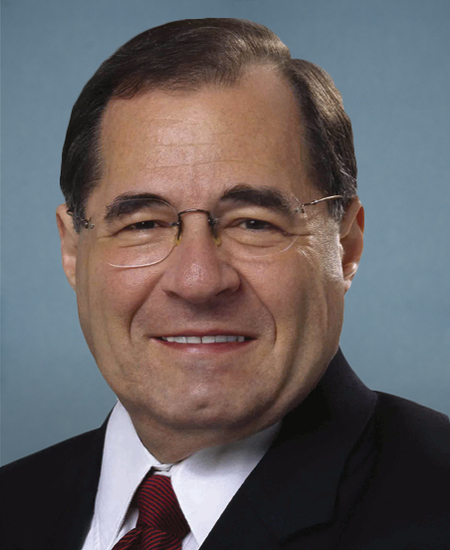
Rep. Jerrold Nadler
Sponsored bills
Better Care Better Jobs Act This bill establishes programs and provides funds for state Medicaid programs to improve home- and community-based services (HCBS), such as home health care, personal care, case management, and rehabilitative services. Specifically, the bill provides funds for the Centers for Medicare & Medicaid Services to award planning grants, develop quality measures, and provide technical assistance to states regarding specified HCBS improvements, particularly with respect to access, utilization, and the associated workforce. The bill also increases the Federal Medical Assistance Percentage (i.e., federal matching rate) for HCBS in states that develop plans and meet specified benchmarks for improvements. The bill also makes permanent (1) the Money Follows the Person Rebalancing Demonstration Program (a grant program to help states increase the use of HCBS for long-term care and decrease the use of institutional care), and (2) certain provisions regarding Medicaid eligibility that protect against spousal impoverishment for recipients of HCBS.
Therapeutic Fraud Prevention Act of 20 21 This bill prohibits commercial conversion therapy, which is a practice or treatment designed to change a person's sexual orientation or gender identity or otherwise change behaviors, thoughts, or expressions related to gender or sexual attraction. This prohibition does not apply to treatment that assists an individual undergoing a gender transition or facilitates identity exploration and development.
Safe Skies Act of 2021 This bill directs the Department of Transportation (DOT) to modify a specified DOT final rule relating to flight crew member duty and rest requirements so that the requirements under that rule apply to all-cargo flight crew members to the same extent they apply to air passenger flight crew members.
Ending Platform Monopolies Act This bill prohibits large online platforms, as designated by the Department of Justice or Federal Trade Commission, from offering certain products or services from another line of business that is owned or controlled by the platform. Specifically, such platforms are prohibited from owning or controlling another line of business that (1) uses the platform to sell products or services, (2) offers a product or service that the platform requires a business user to purchase or use as a condition for access to the platform, or (3) gives rise to a conflict of interest. Under the bill, a conflict of interest occurs when a platform operator's ownership or control of another line of business creates an incentive and the ability for the platform to provide an advantage to the platform's own products or services over those of a competitor on the platform, or exclude or disadvantage the products or services of a competitor on the platform. For example, under the bill, Amazon.com, Inc. may be prohibited from offering for sale on Amazon.com privately labeled products or services (e.g., Amazon Essentials, AmazonBasics, etc.) if designated as a large online platform. Finally, the bill prohibits a director, officer, employee, or agent of a platform from simultaneously serving in the same or a similar role with a formerly affiliated entity.
Platform Competition and Opportunity Act of 2021 This bill generally prohibits operators of covered platforms from acquiring the stock or other share capital or the assets of another person engaged in commerce or in any activity affecting commerce. Covered platforms are online platforms that (1) have at least 50 million U.S.-based monthly active users or at least 100,000 U.S.-based monthly active business users, (2) are owned or controlled by a person with net annual sales or a market capitalization greater than $600 billion, and (3) are critical trading partners for the sale or provision of any product or service offered on or directly related to the platform. The Federal Trade Commission or the Department of Justice must designate whether an entity is a covered platform, and both must carry out enforcement activities. The bill provides for any person (other than a foreign state and any instrumentality thereof) who is injured by an activity forbidden under the bill to recover triple damages. (A foreign state may only recover actual damages.) Further, the bill specifies the U.S. Court of Appeals for the District of Columbia Circuit as the judicial venue for a covered platform's appeals related to (1) the designation as a covered platform, (2) other administrative and enforcement proceedings, or (3) a final order issued in any district court.
Augmenting Compatibility and Competition by Enabling Service Switching Act of 2021 or the ACCESS Act of 2021 This bill requires large online platforms (e.g., YouTube, Salesforce) to facilitate consumers and businesses switching from one platform to another. Specifically, the platforms must maintain interfaces that (1) securely transfer user data to other platforms (i.e., portability), and (2) allow other platforms to connect and communicate with their systems (i.e., interoperability). The bill provides the Federal Trade Commission (FTC) and the Department of Justice with the authority to designate specific platforms to which these requirements apply. After a platform is designated, the FTC must issue standards of interoperability specific to the platform. A platform may not change its interoperability interface without petitioning the FTC, and the platform must provide to competing businesses documentation for accessing the interface. Further, the FTC must establish a technical committee to assist with the implementation of these requirements. The bill provides the FTC with authority to enforce these requirements including through recovery of civil penalties and injunctive relief.
Elder Abuse Protection Act of 2021 This bill provides statutory authority for the Elder Justice Initiative, which coordinates activities of the Department of Justice (DOJ) to combat elder abuse, neglect, and financial fraud. The bill requires DOJ's Elder Justice Coordinator to serve as the head of the initiative. The bill also requires the initiative to establish a national elder fraud telephone hotline, promote civil legal aid to victims of elder fraud and elder abuse, and make resources available online in English and Spanish.
Artistic Recognition for Talented Students Act or the ARTS Act This bill directs the Copyright Office to waive various copyright registration-related fees for works that win certain competitions sponsored by the Congressional Institute or established by Congress. To qualify for the fee waiver, the copyright registration application must be filed within a specified time frame, but the Copyright Office may waive fees for a qualifying work even if the application is filed outside the time frame.
Cultivating Opportunity and Recovery from the Pandemic through Service Act or the CORPS Act This bill makes several changes to AmeriCorps programs during the COVID-19 health emergency. Specifically, the bill: increases living allowance payments to program participants; increases educational awards for program participants; relaxes program requirements, including reducing the age requirement for AmeriCorps Seniors to 45 and older; creates a pilot program to allow state commissions to directly place individuals in approved AmeriCorps programs; and allows for targeted AmeriCorps grants to fund recovery projects in communities disproportionately affected by COVID-19. The bill also excludes AmeriCorps living allowance payments and educational awards from taxable income for program participants.