

Terry Technical Correction Act This bill broadens the scope of crack cocaine offenders who are eligible for a retroactive sentencing reduction under the First Step Act of 2018. The First Step Act made the Fair Sentencing Act of 2010 retroactive and authorized sentencing reductions for certain crack cocaine offenders convicted and sentenced before the Fair Sentencing Act became effective. Under current law, crack cocaine offenders whose conduct triggered a mandatory minimum sentence are eligible for a retroactive sentencing reduction under the First Step Act. However, in 2021, the Supreme Court held in Terry v. United States that low-level crack cocaine offenders whose conduct did not trigger a mandatory minimum sentence are not eligible for a retroactive sentencing reduction under the First Step Act. This bill extends eligibility for a retroactive sentencing reduction under the First Step Act to all crack cocaine offenders convicted and sentenced before the Fair Sentencing Act became effective, including low-level offenders whose conduct did not trigger a mandatory minimum sentence.
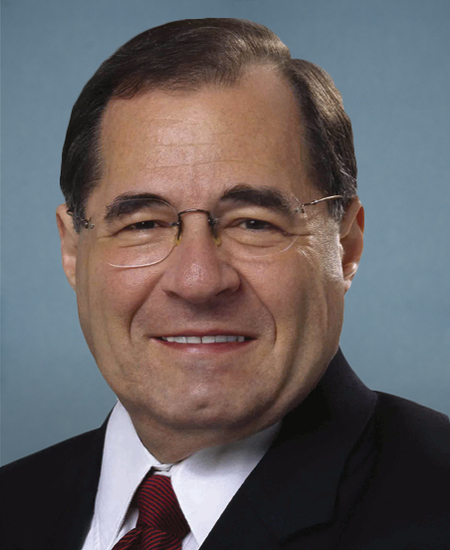
Rep. Jerrold Nadler
Sponsored bills
SNAP Theft Protection Act of 2022 This bill directs the Department of Agriculture (USDA) to establish criteria for state agencies to identify Supplemental Nutrition Assistance Program (SNAP) benefits stolen by identity theft or typical skimming practices and provide for the reissuance of stolen SNAP benefits to households that meet such criteria. USDA must periodically review and modify its regulations to take into account evolving technology and the threat landscape to better protect against theft.
Independent Drug Value Assessment Act This bill requires the Office of the Assistant Secretary for Planning and Evaluation to contract with outside entities to conduct independent value assessments of approved drugs (i.e., economic analysis of the benefits to patients and the health care system).
Lymphedema Treatment Act This bill provides for Medicare coverage of lymphedema compression treatment items. Specifically, the bill provides for coverage of standard and custom fitted gradient compression garments and other approved items that are prescribed by a physician or other specified health care professional to treat lymphedema.
Continuity for Operators with Necessary Training Required for ATC Contract Towers Act of 2021 or the CONTRACT Act of 2021 This bill exempts certain air traffic controllers from a required reduction in their retirement annuity payment on account of earnings from certain work performed while entitled to such annuity. Under current law, retired Federal Aviation Administration air traffic controllers receive an annuity payment during the period between the mandatory retirement age of 56 and the Social Security minimum age of 62. Such annuity payment is required to be reduced by a certain percentage of any excess earnings during this period. The bill exempts from such reduction in annuity payments an air traffic controller who participates in the Air Traffic Control Contract Program (a public-private partnership for air traffic control services) following mandatory retirement.
New York-New Jersey Watershed Protection Act This bill requires the U.S. Fish and Wildlife Service to establish the New York-New Jersey Watershed Restoration Program, a nonregulatory program, to coordinate restoration and protection activities among government entities and conservation partners throughout the watershed. The bill also establishes the New York-New Jersey Watershed Restoration Grant Program, a voluntary grant and technical assistance program, to provide competitive matching grants to certain entities to implement restoration and protection activities for the watershed.
Fairness for 9/11 Families Act This bill authorizes and provides funding for lump-sum catch-up payments from the United States Victims of State Sponsored Terrorism Fund to 9/11 victims, 9/11 spouses, and 9/11 dependents. The bill also rescinds specified unobligated funds that were provided to the Small Business Administration for the Paycheck Protection Program.
Prevent All Soring Tactics Act of 2022 or the PAST Act of 2022 This bill addresses the practice of soring horses. The soring of horses includes various actions taken on horses' limbs to produce higher gaits that may cause pain, distress, inflammation, or lameness. Specifically, the bill expands soring regulation and enforcement at horse shows, exhibitions, sales, and auctions, including by establishing a new system for inspecting horses for soring. In addition, the bill increases penalties for violations.
Norman Y. Mineta Japanese American Confinement Education Act This bill increases the authorization of appropriations for the Japanese American Confinement Sites (JACS) grant program, which supports the preservation of U.S. confinement sites that were used to detain Japanese Americans during World War II (i.e., internment camps). It also establishes a program within JACS to provide grants to Japanese American nonprofits to educate individuals about the historical significance of these events.
Asunción Valdivia Heat Illness and Fatality Prevention Act of 2022 This bill directs the Occupational Safety and Health Administration to promulgate a standard that requires employers to implement certain measures for protecting workers from heat stress and related illnesses or injuries. Heat stress refers to the load of heat that a person experiences due to sources of heat or heat retention (including metabolic heat, environmental factors, and clothing or personal protective equipment) or the presence of heat in a work setting. Further, if an employer cannot reduce exposure to heat stress below hazardous levels through engineering controls (e.g., heat shields and insulation) or personal protective equipment (e.g., heat reflective clothing), the employer must implement a program that mitigates such exposure through access to appropriate hydration and cool-down spaces, acclimatization policies, and periodic paid rest breaks. Additionally, the bill establishes requirements concerning judicial review, implementation, enforcement, recordkeeping, and whistle-blower protections related to the standard. The bill also requires the Department of Labor to include questions about heat-related illness and injury in the National Agricultural Workers Survey (an employment-based, random-sample survey of U.S. crop workers that collects demographic, employment, and health information).