Eric Garner Excessive Use of Force Prevention Act of 2021 This bill modifies the criminal civil rights statute that prohibits the deprivation of rights under color of law. Currently, the second prong of the prohibition bars the application of different punishments, pains, or penalties based on an individual's alien status, color, or race. This bill specifies that the application of any pressure to a person's throat or windpipe, the use of maneuvers that restrict blood or oxygen flow to the brain, or carotid artery restraints that prevent or hinder breathing or reduce intake of air (e.g., a chokehold) constitute a punishment, pain, or penalty.
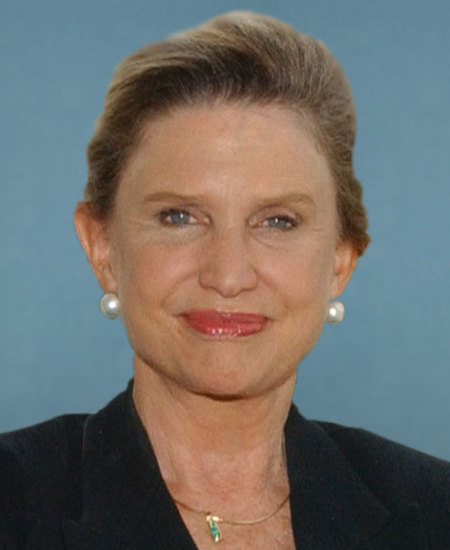
Rep. Carolyn B. Maloney
Sponsored bills
Mainstreaming Addiction Treatment Act of 2021 This bill removes the requirement that a health care practitioner apply for a separate waiver through the Drug Enforcement Administration (DEA) to dispense certain narcotic drugs (e.g., buprenorphine) for maintenance or detoxification treatment (i.e., substance use disorder treatment). Further, a community health aide or community health practitioner may dispense certain narcotic drugs for maintenance or detoxification treatment without registering with the DEA if the drug is prescribed by a health care practitioner through telemedicine. It preempts state laws related to licensure for this activity. The bill also directs the Substance Abuse and Mental Health Services Administration to conduct a national campaign to educate health care practitioners and encourage them to integrate substance use disorder treatment into their practices.
New Deal for New Americans Act of 2021 This bill provides assistance to immigrants and addresses issues related to naturalization. The bill establishes the National Office of New Americans to (1) welcome and support immigrants, (2) promote and support immigrant integration, and (3) promote the pursuit of U.S. citizenship among immigrants. The bill also establishes grant programs for eligible entities that provide (1) legal services for immigrants, (2) English language education that focuses on integrating students into society, and (3) workforce development training that supports the economic integration of immigrants. The bill also reauthorizes the Citizenship and Integration Grant Program within U.S. Citizenship and Immigration Services (USCIS). USCIS shall establish a nonprofit entity to spur innovation in the expansion of citizenship preparation programs and to support assistance for immigrants seeking permanent resident status or citizenship. The bill also requires the Department of Homeland Security to (1) report to Congress before increasing fees for immigration adjudication and naturalization services above the levels of such fees on January 1, 2019, and (2) waive or reduce certain immigration-related fees for low-income aliens. The bill also (1) waives the English proficiency requirement for the naturalization of certain permanent residents, (2) repeals the public charge ground for deportation, (3) requires states to provide for automatic voter registration to qualifying new citizens unless that individual declines, and (4) sets a floor of 125,000 to the maximum number of refugees who may be admitted into the United States each year.
Juror Non-Discrimination Act of 2021 This bill prohibits the exclusion of individuals from jury service on the basis of their sexual orientation or gender identity.
U.S. Citizenship Act This bill establishes a path to citizenship for certain undocumented individuals. The bill also replaces the term alien with noncitizen in the immigration statutes and addresses other related issues. Specifically, the bill establishes a new status of lawful prospective immigrant . This status shall be available to an applying noncitizen who meets certain requirements, including being continually present in the United States from January 1, 2021, and passing background checks. After at least five years with this status, an eligible noncitizen may apply for and receive permanent resident status. The bill also provides permanent resident status to certain applying noncitizens, specifically for eligible noncitizens who (1) entered the United States as a minor, (2) were eligible for temporary protected status or deferred enforced departure on January 1, 2017, or (3) worked a certain amount of agricultural labor in the five years prior to applying. Among other things, the bill also redefines for immigration purposes the term conviction to exclude convictions that have been expunged or vacated, requires the Department of State to implement a strategy to advance reforms in Central America and address key factors contributing to migration from the region to the United States, requires the State Department to establish refugee processing centers in Central America, requires Customs and Border Patrol sectors and stations to have a certain number of employees with certain qualifications such as paramedic training, generally prohibits religious discrimination in granting or denying immigration benefits, and establishes grant programs for providing training and services to immigrants.

Preventing Tragedies Between Police and Communities Act of 2021 This bill requires a state or local government that receives funding under the Edward Byrne Memorial Justice Assistance Grant (JAG) program to train law enforcement officers on de-escalation techniques and require law enforcement to use such techniques. The Department of Justice (DOJ) may reduce the JAG allocation of a state or local government that fails to comply with the training requirement. DOJ must reduce by 15% the JAG allocation of a state or local government that fails to require law enforcement officers to use de-escalation techniques.
Domestic Violence Public Health Emergency Guidance Act This bill requires the Department of Justice to issue guidance to law enforcement agencies on model practices for addressing domestic violence and protecting the safety of law enforcement officers during the COVID-19 (i.e., coronavirus disease 2019) public health emergency.
Elijah E. Cummings Lower Drug Costs Now Act This bill establishes several programs and requirements relating to the prices of prescription drugs. In particular, the bill requires the Department of Health and Human Services (HHS) to negotiate prices for certain drugs (current law prohibits HHS from doing so). Specifically, HHS must negotiate maximum prices for single-source, brand-name drugs that lack certain generics and that are among either the 125 drugs that account for the greatest national spending or the 125 drugs that account for the greatest Medicare spending. HHS must negotiate the prices of at least 25 such drugs for 2024 and of at least 50 such drugs thereafter and must also negotiate prices for certain newly approved drugs and for insulin products. The negotiated prices must be offered under Medicare and may also be offered under private health insurance unless the insurer opts out. The negotiated maximum price may not exceed (1) 120% of the average price in Australia, Canada, France, Germany, Japan, and the United Kingdom; or (2) if such information is not available, 85% of the U.S. average manufacturer price. Drug manufacturers that fail to comply with the bill's negotiation requirements are subject to civil and tax penalties. The bill also makes a series of additional changes to Medicare prescription drug coverage and pricing, including by (1) requiring drug manufacturers to issue rebates to the Centers for Medicare & Medicaid Services for covered drugs that cost $100 or more and for which the average manufacturer price increases faster than inflation, and (2) capping annual out-of-pocket spending under the Medicare prescription drug benefit. The bill also requires drug manufacturers to report specified information for certain high-cost drugs, and it provides funds for opioid epidemic initiatives and biomedical research.
Nuclear Weapons Abolition and Economic and Energy Conversion Act of 2021 This bill directs the U.S. government to sign and ratify the United Nations Treaty on the Prohibition of Nuclear Weapons or a similar international agreement that calls for the elimination of all nuclear weapons in every country. The government shall (1) redirect resources currently used in nuclear weapons programs toward building an ecologically beneficial peace economy and addressing human and infrastructure needs, and (2) actively promote policies to induce all other countries to take similar actions.
Affordable Housing Preservation Act of 2021 This bill directs the Department of Housing and Urban Development (HUD) to implement a demonstration program for the establishment or preservation of limited- or zero-equity resident-controlled housing. Limited- or zero-equity resident-controlled housing (e.g., a housing cooperative) restricts the initial and resale price of shares of stock or membership interests in a residence so that the shares or interests remain affordable to families of certain incomes. Specifically, HUD may assist nonprofit organizations to establish or preserve such housing through providing (1) mortgage insurance; and (2) grants for predevelopment costs, monitoring fees, technical assistance, gap funding, and intermediary financing. Housing receiving such assistance must be governed by a board of directors elected by members of a limited- or zero-equity resident-controlled housing corporation with voting structured equitably among all members. A limited- or zero-equity resident-controlled housing corporation may sell corporate shares in such housing to an eligible household for a purchase price that ensures dwelling units in the housing will remain affordable for at least 30 years to households earning less than a certain income.