

Nurse Staffing Standards for Patient Safety and Quality Care Act of 2021 This bill requires hospitals to implement and submit to the Department of Health and Human Services (HHS) a staffing plan that complies with specified minimum nurse-to-patient ratios by unit. Hospitals must post a notice regarding nurse-to-patient ratios in each unit and maintain records of actual ratios for each shift in each unit. The bill also requires hospitals to follow certain procedures regarding how ratios are determined and other staff are prohibited from performing nurse functions unless specifically authorized within a state's scope of practice rules, among other requirements. HHS must adjust Medicare payments to hospitals to cover additional costs attributable to compliance with these ratios. Nurses may object to, or refuse to participate in, an assignment if it would violate minimum ratios or if they are not prepared by education or experience to fulfill the assignment without compromising the safety of a patient or jeopardizing their nurse's license. Hospitals may not (1) take adverse actions against a nurse based on the nurse's reasonable refusal to accept an assignment; or (2) discriminate against individuals for good faith complaints relating to the care, services, or conditions of the hospital or related facilities. HHS may impose civil monetary penalties on hospitals violating the ratio requirements and must publish the names of such hospitals. The bill provides stipends to the nurse workforce loan repayment and scholarship program and expands the nurse retention grant program to include nurse preceptorship and mentorship projects.
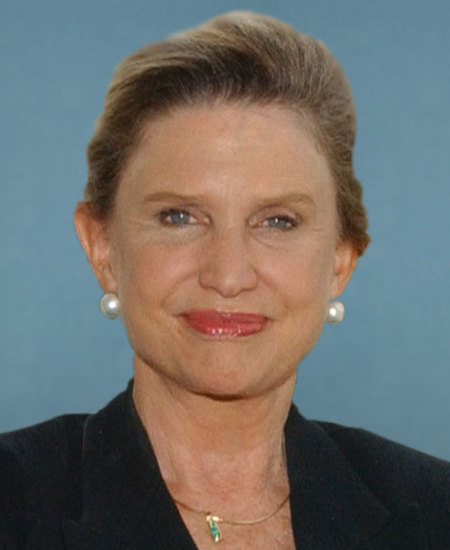
Rep. Carolyn B. Maloney
Sponsored bills
Postal Service Improvement Act This bill requires mail-in ballots for federal elections to meet certain design and tracking requirements and revises authority to provide parental leave to postal employees. Specifically, each mail-in ballot must be carried or delivered in an envelope that contains a USPS barcode that enables tracking of each individual ballot, satisfies USPS requirements for ballot envelope design and for machinable (i.e., able to be processed using USPS equipment) letters, and includes the official election mail logo. The federal government must reimburse each state (including the District of Columbia and any U.S. territory or possession) for the cost of using the barcode service. The bill also provides paid parental leave to officers and employees of the USPS and the Postal Regulatory Commission.
Integrity Committee Transparency Act of 2021 This bill addresses issues regarding inspectors general (IGs) and the Council of the Inspectors General on Integrity and Efficiency (CIGIE) Integrity Committee. The committee is charged with investigating allegations of wrongdoing against office of IG officials. The committee must notify Congress when an allegation of wrongdoing made by a Member of Congress is closed without referral for investigation. The bill requires CIGIE to report semiannually to Congress and the President on the activities of the committee. The bill requires the appointment of a former IG to the committee. An IG must refer to the committee any allegation of wrongdoing against that IG.
Federal Advisory Committee Transparency Act This bill revises provisions regarding federal advisory committees, including to (1) require designation of committee members as special government employees or representatives, (2) apply the Federal Advisory Committee Act (FACA) to subcommittees and subgroups, and (3) require publication of certain information about advisory committees. The bill requires appointments to advisory committees to be made without regard to political affiliation or campaign activity, unless required by federal statute. Each agency, prior to appointing members to an advisory committee, must solicit nominations for potential committee members. The agency shall solicit nominations at least once every two years. The bill provides statutory authority for the designation of advisory committee members as special government employees (if they are appointed to exercise their individual best judgement) or representatives (if they are appointed to represent a nongovernment entity). Agencies may not designate committee members as representatives to avoid federal ethics rules. Each agency shall make available on its website specified information about each of the agency's advisory committees, including membership, meeting minutes, and notices of future meetings. The General Services Administration must also publish this information. The bill revises requirements for Advisory Committee Management Officers, including to require them to be senior officials with expertise in implementing FACA. The Government Accountability Office shall report on agency compliance with FACA.
Healthy Maternity and Obstetric Medicine Act or the Healthy MOM Act This bill expands health insurance coverage availability for pregnant individuals. It requires health insurers, health insurance exchanges, and group health plans to offer a special enrollment period to pregnant individuals. The special enrollment period offered by an insurer or exchange must begin when the pregnancy is reported to the insurer or exchange. The special enrollment period offered by a group health plan must begin when the pregnancy is reported to the plan or is confirmed by a health care provider. The bill also makes pregnancy a qualifying life event for the purpose of enrolling in a federal employee health benefit plan. Additionally, a group health plan or health insurer that covers dependents must provide coverage for maternity care to all covered individuals. Any individual who is eligible for Medicaid and is, or becomes, pregnant maintains such eligibility for one year after the end of the pregnancy. The bill revises the range in which a state must establish a maximum level of family income for pregnant women and infants to be eligible for Medicaid. The upper limit of the range is eliminated and the lower limit is set to the level in place on January 1, 2014.
Interstate Rail Compacts Advancement Act of 2021 This bill establishes a grant program and makes other changes to support interstate rail compacts with improving and enhancing intercity passenger rail transportation systems. The Department of Transportation (DOT) must award up to 10 matching grants each fiscal year to interstate rail compacts or commissions for administrative costs related to the compact. In awarding the grants, DOT must consider (1) the amount of funding from and participation of railroads and other stakeholders, (2) whether the compact seeks to restore routes formerly operated by Amtrak, and (3) other factors. Additionally, DOT must give preference to compacts that are initiating, restoring, or enhancing intercity rail passenger transportation. Further, DOT must publish on its website a list of interstate rail compacts, as well as annuallly updated information for the public about how states may establish compacts. The bill also repeals a prohibition on the use of funds made available for Amtrak to carry out interstate rail compacts.
Equity in Neuroscience and Alzheimer's Clinical Trials Act of 2021 or the ENACT Act of 2021 This bill sets out activities and requirements to increase the participation of underrepresented populations in research and clinical trials for Alzheimer's disease and related dementias. Specifically, the National Institute on Aging (NIA) must establish and provide technical assistance to Alzheimer's research centers located in areas with higher concentrations of minority groups. These centers must establish diagnostic and treatment clinics designed to serve minority, rural, and other underserved populations; operate clinical trials; and carry out public outreach to encourage members of minority populations to participate in clinical trials and research. Additionally, the NIA must disseminate information to members of minority populations about participating in clinical trials and take other actions to enhance diversity with respect to the Alzheimer's research that it conducts or supports. The bill also directs the NIA to increase diversity among Alzheimer's researchers by encouraging the participation of individuals who are from groups that are underrepresented in clinical, behavioral, and social sciences.
Northern Rockies Ecosystem Protection Act This bill designates specified National Forest System lands, National Park System lands, and public lands in Idaho, Montana, Oregon, Washington, and Wyoming as wilderness and as components or additions to existing components of the National Wilderness Preservation System. The Department of the Interior and the Department of Agriculture (USDA) must accept donations of leases or permits authorizing grazing on specified public or National Forest System lands. The bill also designates (1) specified federal lands as biological connecting corridors and as special corridor management areas; (2) segments of specified rivers and creeks in Idaho, Montana, and Wyoming as components of the National Wild and Scenic Rivers System; and (3) specified areas as wildland recovery areas. USDA shall develop a wildland recovery plan for each recovery area. A panel of independent scientists shall study roadless lands greater than 1,000 acres that are within the National Forest System in the Wild Rockies bioregion in Idaho, Montana, Oregon, Washington, or Wyoming and that are not designated as components of the National Wilderness Preservation System for their role in maintaining biological diversity in the Northern Rockies and as part of the overall forest reserve system. Any new road construction or reconstruction or timber harvest is prohibited in those lands after the evaluation without an act of Congress. Oil or gas leasing, mining, or other development which impairs the natural and roadless qualities of the land is also prohibited.
Servicemember Parental Leave Equity Act This bill modifies Department of Defense parental leave provisions for members of the Armed Forces. Specifically, the bill increases parental leave for primary caregivers to 18 weeks (currently 12) following the birth of a child and to 12 weeks (currently 6) following the adoption of a child. The bill increases parental leave for a secondary caregiver from 21 days to 12 weeks in connection with the birth or adoption of a child. Primary or secondary caregivers of a long-term foster child are authorized to take up to 12 weeks of leave in connection with such placement. Parental leave for a primary or secondary caregiver for a birth, adoption, or foster child placement may be taken in more than one increment. For primary caregivers, the leave must be utilized within one year of the event. The bill authorizes up to 12 weeks of leave to certain service members who would have been secondary caregivers but for a miscarriage, stillbirth, or infant death. The following activities required of an active-duty member within a 12-month postpartum period must have the approval of a health care provider and be at the election of the member or in the interest of national security: (1) an order of temporary duty overnight travel or to participate in physically demanding field training exercises, (2) meeting of body composition standards, or (3) passing a physical fitness test. The bill also reduces the service commitment required for participation in the Career Intermission Program.
Maximizing Outcomes for Moms through Medicaid Improvement and Enhancement of Services Act or the MOMMIES Act This bill establishes a series of programs and requirements under Medicaid and the Children's Health Insurance Program (CHIP) relating to maternal health. For example, the bill expands eligibility for coverage under Medicaid and CHIP from 60 days to one year after the last day of pregnancy and requires such coverage to include oral health services. The bill also establishes a demonstration program in which states receive grants to implement or expand models for maternity care homes that provide services to Medicaid or CHIP beneficiaries. The Government Accountability Office must report on (1) gaps in coverage under Medicaid and CHIP for pregnant and postpartum women, and (2) the use of telehealth by state Medicaid programs to increase access to maternity care.