America's Red Rock Wilderness Act This bill designates specified lands in the following areas of Utah as components of the National Wilderness Preservation System: (1) Great Basin, (2) Grand Staircase-Escalante, (3) Moab-La Sal Canyons, (4) Henry Mountains, (5) Glen Canyon, (6) San Juan-Anasazi, (7) Canyonlands Basin, (8) San Rafael Swell, and (9) Book Cliffs and Uinta Basin. The bill sets forth administrative requirements for (1) the exchange of state-owned lands within such areas, (2) federal reservation of water rights, (3) measurement of setbacks for roads with adjacent wilderness, (4) authorized livestock grazing, and (5) withdrawal of such lands from disposition under certain public land laws.
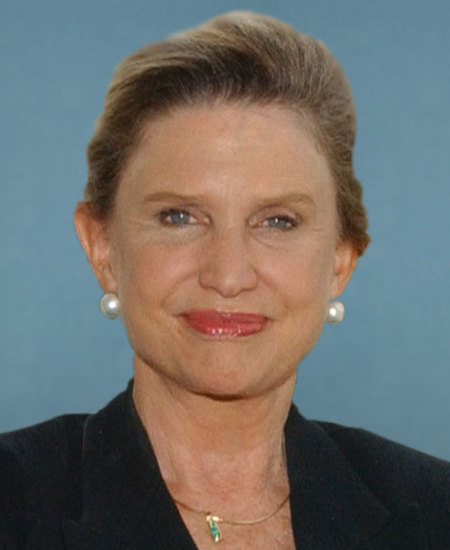
Rep. Carolyn B. Maloney
Sponsored bills
Providing Resources and Occupational Training for Emotional Crisis and Trauma in 911 Act or the PROTECT 911 Act This bill requires reporting on, and authorizes a grant program to address, suicide and other behavioral health issues among 9-1-1 operators and other public safety personnel who receive and communicate requests for emergency assistance. Specifically, the Centers for Disease Control and Prevention must develop a reporting system to collect data on the suicide rate among and identify best practices to reduce suicides within that profession. In addition, the bill establishes within the Department of Homeland Security grants for emergency communications centers and relevant nonprofits to raise awareness of, prevent, and mitigate job-related mental health issues.
Medicare Dental, Vision, and Hearing Benefit Act of 2021 This bill provides for Medicare coverage of dental, vision, and hearing care. Coverage includes (1) routine dental cleanings and exams, basic and major dental services, emergency dental care, and dentures; (2) routine eye exams, eyeglasses, and contact lenses; and (3) routine hearing exams, hearing aids, and exams for hearing aids. With respect to such care, the bill establishes special payment rules, limitations, and coinsurance requirements.
United States Postal Service 50th Anniversary Resolution or the USPS 50th Anniversary Resolution This bill recognizes the 50th anniversary of the establishment of the U.S. Postal Service and applauds its employees' dedication and service.
This resolution expresses support for the goals and ideals of Uterine Fibroids Awareness Month. Uterine fibroids are muscular tumors that grow in the wall of the uterus and may cause pain, heavy menstrual bleeding, and reproductive issues.
COVID-19 and Pandemic Response Centers of Excellence Act This bill establishes and provides funding for the COVID-19 and Pandemic Response Centers of Excellence Program Fund. The Department of Health and Human Services (HHS) must use the funds to set up at least 10 centers of excellence at academic medical centers to address issues associated with COVID-19 and future pandemic preparedness and response efforts. In addition, HHS must establish an advisory committee comprised of representatives from relevant federal agencies, each center of excellence, and national organizations that work with populations disproportionately impacted by COVID-19 and other health disparities. The committee must facilitate collaboration, information-sharing, and dissemination of best practices relating to COVID-19 and future pandemic responses.
Screening With Dignity Act This bill directs the Transportation Security Administration (TSA) to develop procedures to appropriately and respectfully screen self-identified transgender air passengers and passengers traveling with religious headwear or other articles of faith and begin training of all TSA Officers on such procedures. The TSA must implement protections for such passengers, including (1) prohibiting human viewing of passenger images and conducting pat downs by an officer of the gender requested by the passenger; and (2) ensuring secondary screening measures are no more intrusive than necessary to resolve an alarm or other concern raised by primary screening, including consideration of the sensitivity of the groin, chest, and other body areas and the sensitivity of religious articles of faith such as religious headwear. The TSA shall separately study and report on (1) the cost and feasibility of retrofitting advanced image technology screening equipment to distinguish between foreign objects and human body parts (including hair) in a manner that is gender neutral; and (2) the impact of imaging technology on transgender passengers, passengers whose religious faith requires them to travel with articles of faith, and passengers traveling with assistive devices. Additionally, the TSA must identify any policy, procedure, or training changes and complete any testing, certification, and assessment for qualifying additional technology to ensure that any advanced imaging utilized for passenger screening meets certain requirements, including not generating alarms based only on passengers' body parts (including hair), undergarments, or religious headwear.

This concurrent resolution expresses the sense of Congress that title IX of the Education Amendments of 1972 applies to the National Collegiate Athletics Association (NCAA) and that the NCAA should work to prevent sex-based discrimination in its programs and activities.
Tenant Empowerment Act of 2021 This bill generally expands the rights of tenants in federally assisted housing. Specifically, the bill allows tenants to place rent in an escrow account in the event that a housing project is found to be in violation of certain housing standards; seek judicial enforcement of specified housing agreements; and access information related to a housing project, including the ownership, specified reports, and contracts. The bill also provides for continuing rental assistance payments for tenants if the property is in foreclosure.
Merit Systems Protection Board Empowerment Act of 2021 This bill reauthorizes the Merit Systems Protection Board through FY2026 and modifies certain requirements relating to the administration of cases involving whistleblowers. Specifically, it requires cases involving alleged retaliation against whistleblowers to be heard by the board, an administrative law judge, or a designated board employee who has received training regarding the protections afforded whistleblowers under law.