

Maddy summaryHRES 1392 is a non-binding congressional resolution recognizing "Banned Books Week" and expressing concern about widespread book bans in U.S. schools and libraries. It cites data showing over 1,600 unique books were banned in K-12 schools during the 2021-2022 school year, including works addressing race, LGBTQ+ themes, and historical topics. The resolution urges educational institutions to follow best practices for handling book challenges, protect students' access to diverse materials, and avoid censorship based on political or ideological preferences. It does not create new laws but formally condemns book bans as threats to free expression and democratic discourse.
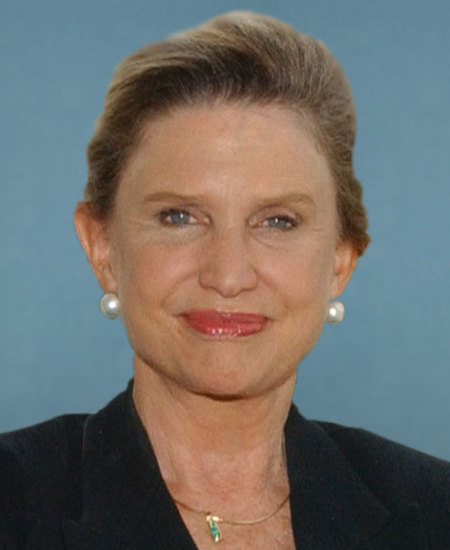
Rep. Carolyn B. Maloney
Sponsored bills
This resolution expresses support for the designation of National Voting Rights Month, encourages people to uphold the right to vote, encourages Congress to pass certain voting rights legislation, encourages the development of strategies to educate students about voting, encourages the U.S. Postal Service to issue a special Representative John R. Lewis stamp during the month of September, and invites Congress to allocate funds for public service announcements regarding elections.
This resolution expresses the sense that the federal government should adopt a global health solidarity strategy to end medically avertable deaths and respond to the full burden of disease in poor countries; the federal government should use laws and diplomatic influence to stop ongoing economic harms to the global South; and it is the duty of the federal government to issue reparations, including for slavery and colonialism.
This resolution condemns the Supreme Court's holding in Dobbs v. Jackson Women's Health Organization (that there is no constitutional right to abortion) and expresses a commitment to instituting judicial reform and supporting access to abortion and the communities affected by the Court's ruling. It also urges the executive branch to advance reproductive justice.
This resolution expresses support for implementing a Transgender Bill of Rights that guarantees certain rights for transgender and nonbinary people with respect to public services and accommodations, employment, housing, health care, and other specified areas.
This resolution recognizes the significance of the 40th anniversary of Vincent Chin's death and mourns those of have lost their lives to anti-Asian hate. Vincent Chin was killed in a racially motivated assault.
This resolution expresses the sense of the House of Representatives that (1) lesbian, gay, bisexual, transgender, queer, intersex, and asexual (LGBTQIA+) rights are human rights and protected by the U.S. Constitution; (2) LGBTQIA+ Pride Month should be celebrated; and (3) all Americans should be treated equally regardless of sexual orientation or gender identity.
Maddy summaryHRES 1144 is a symbolic resolution designating June 3, 2022, as "National Gun Violence Awareness Day" and June 2022 as "National Gun Violence Awareness Month." It does not create new laws or policies but urges the public to wear orange, promote gun safety awareness, and hold community discussions about reducing gun violence during these dates. The resolution cites U.S. statistics on gun-related deaths and injuries as context for the designation. It directly affects the general public by encouraging voluntary observance and community engagement. The bill has no binding effect or funding provisions.
This resolution expresses support for the goals and values of the 54th anniversary of the Fair Housing Act and for efforts to strengthen housing protections, particularly during the COVID-19 pandemic and recovery.
Maddy summaryThis resolution (HRES 981) commemorates the one-year anniversary of the March 16, 2021, Atlanta spa shootings that killed eight people, six of whom were Asian women, and denounces anti-Asian hate. It formally condemns the violence, honors the victims, and recognizes the ongoing impact of anti-Asian hate crimes on the Asian American and Pacific Islander community. The resolution reaffirms support for the existing COVID-19 Hate Crimes Act and commits the federal government to combating hate and violence against AAPI communities. As a symbolic measure, it does not create new laws or funding but serves as a formal statement of solidarity.