

Pandemic Risk Insurance Act of 2021 This bill establishes the Pandemic Risk Reinsurance Program within the Department of the Treasury. The program generally provides compensation to property and casualty insurers if they incur losses as a result of coverage related to pandemics and outbreaks of disease. All insurers as specified in the bill must participate in the program. These insurers must offer, in all property and casualty insurance policies, coverage of losses related to an outbreak of infectious disease or a pandemic for which a covered public health emergency is certified by the Department of Health and Human Services. Additionally, these insurers must offer, in all its commercial property insurance policies, coverage to compensate the insured for a portion of 180 days' fixed costs and payroll triggered upon the certification of a public health emergency and state or local government closure orders without requiring specific proof of losses. The bill establishes the share of insured losses covered by the program and conditions for payment to insurers. The bill also provides for the treatment of reinsurance, captive insurers, other self-insurance arrangements, and state residual market insurance entities. The Government Accountability Office must report on the availability and affordability of property and casualty insurance.
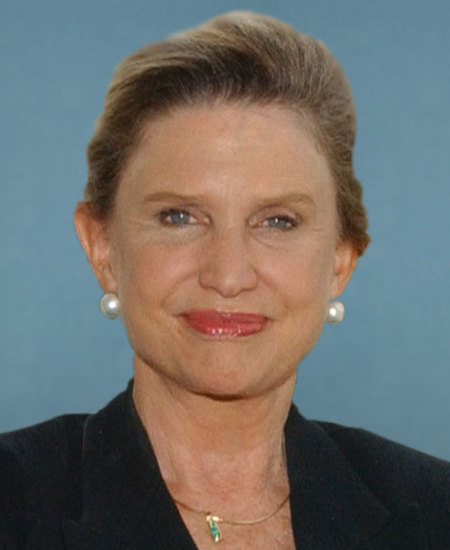
Rep. Carolyn B. Maloney
Sponsored bills
Overseas Americans Financial Access Act This bill modifies tax reporting requirements that apply to foreign financial institutions and individuals with foreign financial assets to create exceptions for the foreign accounts of certain U.S. residents or citizens living abroad.
This resolution expresses that the House of Representatives applauds the Biden administration for reaffirming the U.S. commitment to the Paris Agreement on climate change and to our collective responsibility to globally combat climate change; encourages the Biden administration to implement measures to ensure global climate change remains a top priority for this and future administrations and to cement the United States as a global leader in the fight to mitigate its most severe consequences; voices strong commitment as legislators toward achieving the climate goals of the Paris Agreement, fulfilling the forthcoming pledges from the COP26 in Glasgow, Scotland, and advancing other international efforts to keep global warming to no more than 1.5 degrees Celsius and realize global net-zero carbon emissions by 2050 using a whole-of-government approach; and recognizes the critical responsibility of the United States and other developed nations to ensure all societies have the capabilities to transition to a clean energy economy, the resources to protect against climate-induced disasters, and the necessary assistance to endure climate-related challenges to food security, regional migration, and public health.
This resolution supports the designation of Oxi Day in commemoration of Greece's refusal to submit to the Axis Powers during World War II and notes that this resistance likely led to the ultimate defeat of Nazi Germany. (Greece's Prime Minister at the time, Ioannis Metaxas, had responded to Italy's demand for surrender with the single word Oxi! or No! )
Cady Housh and Gemesha Thomas Student Suicide Prevention Act of 2021 This bill reauthorizes through FY2028, and otherwise revises, grants administered by the Substance Abuse and Mental Health Services Administration (SAMHSA) to support youth suicide early-intervention and prevention strategies. Specifically, the bill requires SAMHSA to award a portion of such grants for statewide training programs on emotional well-being, mental health, and suicide awareness and prevention for elementary and secondary school students and staff.
Social Security 2100: A Sacred Trust This bill makes changes to Social Security benefits, taxes, and other aspects of the program, including by raising the primary insurance amount, increasing the maximum taxable earnings that are subject to Social Security payroll taxes, and requiring Social Security account statements to be mailed unless the individual recipient opts for electronic delivery.
Equitable Health Care for All Act This bill prohibits discrimination in health care based on race, religion, and other characteristics. It also revises reporting requirements, adds equity-related measures to certain Medicare programs, and makes other changes to reduce health disparities. To enforce the prohibition, the Department of Health and Human Services (HHS) must establish an administrative process to resolve complaints about inequitable health care. HHS must investigate these complaints and mediate agreements to resolve issues. In the event of noncompliance with a mediated agreement, an aggrieved individual may bring a civil action. Health care providers must also report data in formats that allow disaggregation by demographic factors. HHS must issue proposed regulations to carry out this requirement within 90 days. Additionally, the Centers for Medicare & Medicaid Services (CMS) must include measures related to equitable health care in the Medicare value-based purchasing program for hospitals. This program provides incentive payments based on quality of care. The CMS may also exclude providers that furnish inequitable health care from its programs. In addition, the bill establishes the Federal Health Equity Commission to monitor implementation of the bill and establishes a grant program for hospitals to promote equitable health care.
Original National Domestic Violence Awareness Month Resolution of 2021 This resolution supports the goals and ideals of National Domestic Violence Awareness Month. Further, it expresses the sense of the House of Representatives that Congress should continue to raise awareness of and support programs to end domestic violence.
Government Integrity is Not for Trade or Sale Act of 2021 or the GIFTS Act of 2021 This bill directs any federal entity accepting a gift or donation in exchange for naming rights to include certain conditions in the contract or agreement to accept such gift or donation. The entity may revoke any rights to name, designate, or redesignate the subject of any gift or donation contained in the contract without incurring liability or creating an obligation to return the gift or donation if a certain period of time has elapsed and in the reasonable view of such entity a criminal act or an ethical violation has been committed; and because of the act, the revocation of such rights is necessary to protect the reputation or integrity of the federal government.
Public Service Freedom to Negotiate Act of 20 21 This bill provides minimum collective bargaining rights and procedures for public employees and prohibits strikes by certain public safety workers. The Federal Labor Relations Authority (FLRA) shall determine for each state whether the laws of such state substantially provide for each of the minimum standard collective bargaining rights and procedures specified by this bill, including the right of public employees and supervisory employees to self-organize, form or join a labor organization, or collectively bargain. The FLRA must issue rules and take actions to establish and administer bargaining rights and procedures for those states that do not substantially provide for them. No employers, emergency services employees, or law enforcement officers may engage in a lockout, strike, or any other organized job action that is likely to result in a measurable disruption of the delivery of emergency or public safety services. Furthermore, no labor organization may be the cause of a violation of such prohibition.