PCAOB Whistleblower Protection Act of 2022 This bill establishes a whistleblower protection program at the Public Company Accounting Oversight Board (PCAOB). Specifically, individuals reporting information to the PCAOB regarding securities law violations relating to audits (1) are protected from retaliation by an employer, and (2) could be eligible for a monetary reward. The reward program applies to individuals who voluntarily report original information that results in the PCAOB imposing civil penalties exceeding $250,000.
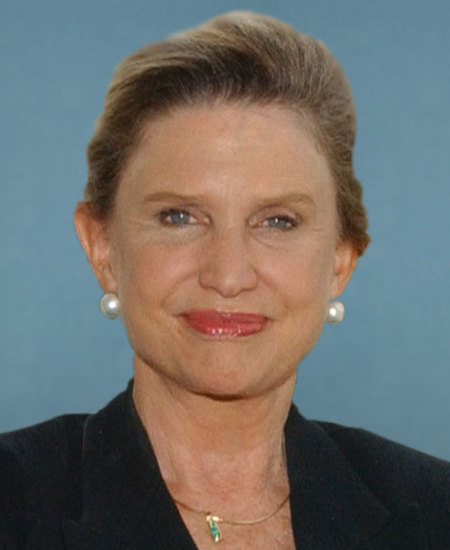
Rep. Carolyn B. Maloney
Sponsored bills
9-8-8 Implementation Act of 2022 This bill modifies provisions to increase access to behavioral health services, with a focus on crisis services and the 9-8-8 telecommunication system. (The 9-8-8 system provides callers with mental health or suicide crisis support and resources through the existing National Suicide Prevention Lifeline and is scheduled to take effect by July 16, 2022.) The bill reauthorizes through FY2027 and revises the National Suicide Prevention Lifeline program and requires a national suicide prevention media campaign. In addition, the Substance Abuse and Mental Health Services Administration (SAMHSA) must establish standards for a behavioral health crisis continuum of care that health care providers and communities may use in responding to individuals experiencing a behavioral health crisis. The continuum must include emergency treatment, stabilization, and related services. The bill expands Medicaid and other insurance coverage for such services. The bill further expands Medicaid coverage for behavioral health services. This includes permanently allowing coverage of certain community-based mobile crisis services and exempting some short-term stabilization services from coverage restrictions that apply to institutions for mental diseases. Additionally, the bill establishes (1) an office within SAMHSA to coordinate behavioral health activities; and (2) various grants, including a pilot program for mobile crisis care teams that respond to behavioral health crises rather than law enforcement and a capital improvement program for certain behavioral health facilities. The bill also reauthorizes through FY2027 and expands certain workforce programs for behavioral health providers. It also addresses training for emergency services dispatchers and coordination of the 9-1-1 system with the 9-8-8 system.
Creating a Respectful and Open World for Natural Hair Act of 2022 or the CROWN Act of 2022 This bill prohibits discrimination based on a person's hair texture or hairstyle if that style or texture is commonly associated with a particular race or national origin. Specifically, the bill prohibits this type of discrimination against those participating in federally assisted programs, housing programs, public accommodations, and employment. Persons shall not be deprived of equal rights under the law and shall not be subjected to prohibited practices based on their hair texture or style. The bill provides for enforcement procedures under the applicable laws.
Forced Arbitration Injustice Repeal Act of 2022 or the FAIR Act of 2022 This bill prohibits a predispute arbitration agreement from being valid or enforceable if it requires arbitration of an employment, consumer, antitrust, or civil rights dispute.
CFO Vision Act of 2022 This bill establishes or modifies provisions to provide for standardized government-wide financial management requirements. Each agency Chief Financial Officer must oversee and provide leadership in the areas of budget formulation and execution, planning and performance, risk management, internal controls, financial systems, accounting, and other areas as the Office of Management and Budget may designate. The bill requires the government-wide financial management plan to include actions for improving financial management systems, strengthening the federal financial management workforce, and linking performance and cost information to budget decision-making. The bill requires (1) the development of financial management performance-based metrics, and (2) an assessment of performance by such metrics to be included in the government-wide and agency-level financial management plans and status reports.
Dr. Lorna Breen Health Care Provider Protection Act This bill establishes grants and requires other activities to improve mental and behavioral health among health care providers. Specifically, the Department of Health and Human Services (HHS) must award grants to hospitals, medical professional associations, and other health care entities for programs to promote mental health and resiliency among health care providers. In addition, HHS may award grants for relevant mental and behavioral health training for health care students, residents, or professionals. Additionally, HHS must conduct a campaign to (1) encourage health care providers to seek support and treatment for mental and behavioral health concerns, and (2) disseminate best practices to prevent suicide and improve mental health and resiliency among health care providers. HHS must also study and develop policy recommendations on improving mental and behavioral health among health care providers, removing barriers to accessing care and treatment, and identifying strategies to promote resiliency. Furthermore, the Government Accountability Office must report on the extent to which relevant federal grant programs address the prevalence and severity of mental health conditions and substance use disorders among health care providers.

This resolution expresses that the House of Representatives condemns the continued use of unlawful and indiscriminate violence against civilian populations by Russia, its allies, and any other parties to the military invasion of Ukraine by Russia; urges that the global community hold Vladimir Putin and the Russian government accountable for war crimes committed during the invasion of Ukraine; urges the United States and its allies to continue providing defense security assistance and humanitarian aid to Ukraine as Ukrainians defend themselves against Russia's invasion of their country; supports the continued use of sanctions against Russia and its allies until Russia ends its invasion of Ukraine and recognizes Ukraine's internationally recognized borders and political independence; and stands in solidarity with the people of Ukraine who are fighting for their freedom and democracy.
This resolution condemns the violence and killing of 14 individuals on Bloody Sunday 50 years ago in Northern Ireland and supports justice for the victims and their families. The resolution urges the full implementation of the Good Friday Agreement to ensure peace and stability in Ireland. The resolution recognizes the findings of the Bloody Sunday Inquiry, also known as the Saville Inquiry, and calls upon the United Kingdom to support the prosecutions of individuals who committed unjustifiable crimes on Bloody Sunday based on the evidence collected. Finally, this resolution urges the European Union, including the Republic of Ireland, and the United Kingdom to act in good faith with regard to negotiations around Brexit and implementation of the Northern Ireland Protocol.
This resolution urges the government of Argentina to bring the perpetrators of the March 17, 1992, terrorist attack on the Embassy of Israel in Buenos Aires to justice (in 1999 the Supreme Court of Argentina found that the transnational terrorist organization Hezbollah was responsible for the attack). The resolution commends the Argentinian government for designating Hezbollah as a terrorist organization and urges other U.S. allies and partners in Latin America and the Caribbean to do the same. The resolution urges these allies and partners to condemn and counter regional governments in the hemisphere that aid and abet Iran and Hezbollah. The resolution also commends the Argentinian government for adopting the International Holocaust Remembrance Alliance working definition of antisemitism and encourages other partners and allies to do the same. Finally, the resolution commends the Secretary General of the Organization of American States for appointing a Commissioner to Monitor and Combat Anti-Semitism in the Western Hemisphere.
LIHTC Financing Enabling Long-term Investment in Neighborhood Excellence Act or the LIFELINE Act This bill permits states, territories, or tribal governments to use State and Local Fiscal Recovery Funds to finance qualified low-income housing projects (i.e., projects for residential rental property meeting certain income tests) with loans obligated by December 31, 2024, and having maturities of 30 or more years.