

Pharmaceutical Research Transparency Act of 2022 This bill requires the disclosure of costs associated with clinical trials and pharmaceutical research and development. Specifically, the National Institutes of Health must create a publicly available repository of cost data from certain clinical trials that test the efficacy of drugs, biological products, and devices in human subjects. For each applicable trial, the registry must, among other information, include the total and per patient cost of the trial, as well as costs for personnel, health care services, and other categories of expenditures. Information must be added to the registry within one year of the trial's completion. The bill also requires drug manufacturers to include their research and development expenditures for drugs and biological products in annual disclosures made to the Securities and Exchange Commission.
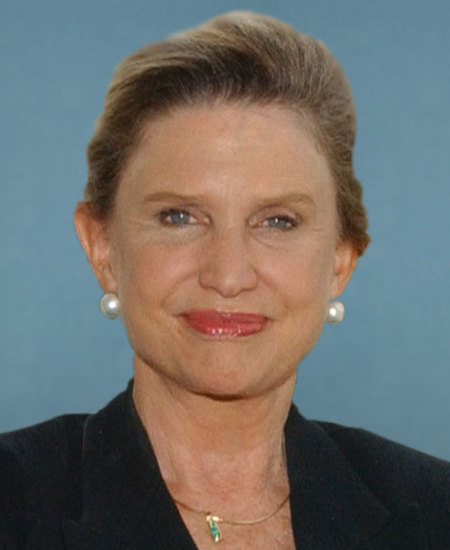
Rep. Carolyn B. Maloney
Sponsored bills
Discounted Drugs for Clinical Trials Act This bill allows researchers to obtain certain high-cost drugs and biologics at discounted prices from manufacturers. Researchers must apply to the Food and Drug Administration for approval; manufacturers must sell the approved quantity of drugs to researchers at the discounted price and are subject to civil actions from researchers for noncompliance.
Energy Security and Independence Act of 2022 This bill addresses domestic industrial base and manufacturing capabilities for specified energy-efficiency and renewable energy systems and technologies (e.g., electric transportation systems), including by establishing a program to provide financial assistance for the construction of new facilities that manufacture components of specified energy-efficiency and renewable energy systems and technologies (or to retool, retrofit, or expand such facilities).
Maddy summaryHR 7477, the CERTS Tax Exemption Act, ensures that grants provided under the Coronavirus Economic Relief for Transportation Services Act are tax-free for eligible transportation service providers. The bill directly affects companies and organizations providing transportation services that receive these specific federal grants. Key provisions state that grant amounts cannot be counted as taxable income, deductions related to grant-funded costs cannot be denied, and tax attributes (like basis increases) must be treated as tax-free for partnerships and S corporations. This change simplifies tax treatment for recipients by preventing unintended tax liabilities on relief funds.
This resolution supports and encourages Americans who choose to exercise their free speech rights by boycotting companies that do not provide life-saving or health-related goods and services to the Russian people yet continue to operate in Russia. The resolution also condemns companies that continue to operate in Russia and provide financial benefits to the Putin regime that enable his ability to continue waging war in Ukraine. Finally, the resolution commends companies that have already suspended operations in or withdrawn from markets in Russia in response to the Putin regime's unlawful invasion of Ukraine.
Russian Digital Asset Sanctions Compliance Act of 2022 This bill allows additional sanctions against Russia and creates specified reporting requirements regarding digital assets. Specifically, the President must periodically identify foreign persons who facilitate evasion of Russian sanctions using digital assets. The bill authorizes sanctions against such persons. The bill requires a U.S. taxpayer engaged in offshore digital asset transactions greater than $10,000 to file an annual Report of Foreign Bank and Financial Accounts with the Financial Crimes Enforcement Network. The bill allows the Department of the Treasury to prohibit U.S. digital asset trading platforms and transaction facilitators from transacting with Russian digital asset addresses. Additionally, Treasury must report on its progress in implementing the bill and must annually identify foreign digital asset trading platforms that are a high risk for sanctions evasion, money laundering, and other illicit activities.
Federal Contracting for Peace and Security Act This bill requires executive agencies to terminate their contracts with companies conducting business operations in Russia. This requirement ends when Russia takes steps to restore the safety, sovereignty, and condition of Ukraine. The bill shall not apply to the procurement of products or services for (1) the benefit, either directly or through the efforts of regional allies, of Ukraine; or (2) humanitarian purposes to meet basic human needs. The bill provides for a waiver where in the national interest of the United States.
Postal Service Reform Act of 202 2 This bill addresses the finances and operations of the U.S. Postal Service (USPS). The bill requires the Office of Personnel Management (OPM) to establish the Postal Service Health Benefits Program within the Federal Employees Health Benefits Program under which OPM may contract with carriers to offer health benefits plans for USPS employees and retirees. The bill provides for coordinated enrollment of retirees under this program and Medicare. The bill repeals the requirement that the USPS annually prepay future retirement health benefits. Additionally, the USPS may establish a program to enter into agreements with an agency of any state government, local government, or tribal government, and with other government agencies, to provide certain nonpostal products and services that reasonably contribute to the costs of the USPS and meet other specified criteria. The USPS must develop and maintain a publicly available dashboard to track service performance and must report regularly on its operations and financial condition. The Postal Regulatory Commission must annually submit to the USPS a budget of its expenses. It must also conduct a study to identify the causes and effects of postal inefficiencies relating to flats (e.g., large envelopes). The USPS Office of Inspector General shall perform oversight of the Postal Regulatory Commission.
Measuring Real Income Growth Act of 2021 This bill requires the Bureau of Economic Analysis of the Department of Commerce to include in each of its gross domestic product analyses a recent estimate of the total amount added to the U.S. economy during the period covered by the recent estimate. The estimate must also disaggregate this amount by each of the 10 deciles of income and the highest 1% of income.
This bill prohibits using federal funds to support or facilitate (1) Russia's participation in a Group of Seven (G-7) proceeding, or (2) a reconstituted Group of Eight (G-8) that includes Russia. (The G-7 is an informal group consisting of seven of the world's largest advanced economies. In 2014, the G-8 became the G-7 when Russia 's membership was suspended following Russia's annexation of the Crimea region of Ukraine.)