

Social Security Expansion Act This bill increases benefits and certain taxes related to the Social Security program. Changes to benefits include (1) increasing the primary insurance amount for certain beneficiaries; (2) revising the method of calculating cost-of-living adjustments; (3) establishing a new minimum benefit for certain low earners; and (4) allowing certain children of retired, deceased, or disabled workers to receive benefits until age 22 if they are a full-time student. Changes to taxes include (1) increasing the net investment income tax and making active trade or business income subject to this tax; and (2) extending payroll taxes on wages, salaries, and self-employment earnings to income above $250,000 (the maximum amount subject to the Social Security payroll tax is currently $147,000 for 2022). The bill also combines the existing Federal Old-Age and Survivors Insurance Trust Fund and the Federal Disability Insurance Trust Fund into a single Social Security Trust Fund.
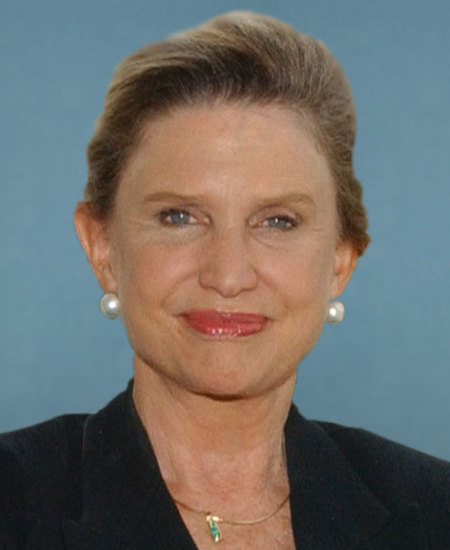
Rep. Carolyn B. Maloney
Sponsored bills
This resolution declares gun violence to be a public health crisis. It also urges the Centers for Disease Control and Prevention to expand research and data collection on preventing gun violence and the Surgeon General to report on firearm injuries and violence prevention.
Ruthie and Connie LGBTQ Elder Americans Act of 2022 This bill addresses matters related to lesbian, gay, bisexual, transgender, and queer (LGBTQ) individuals in certain federal programs serving older Americans, particularly by including an individual's LGBTQ status within the scope of the greatest social needs served by such programs.
Protecting Our Kids Act This bill makes various changes to federal firearms laws, including to establish new criminal offenses and to expand the types of weapons and devices that are subject to regulation. Among the changes, the bill generally prohibits the sale or transfer of certain semiautomatic firearms to individuals who are under 21 years of age; establishes new federal criminal offenses for gun trafficking and related conduct; establishes a federal statutory framework to regulate ghost guns (i.e., guns without serial numbers); establishes a framework to regulate the storage of firearms on residential premises at the federal, state, and tribal levels; subjects bump stocks to regulation under federal firearms laws; generally prohibits the import, sale, manufacture, transfer, and possession of large capacity ammunition feeding devices; and requires the Department of Justice to report on the demographic data of persons who are determined to be ineligible to purchase a firearm based on a background check performed by the national instant criminal background check system.
Federal Extreme Risk Protection Order Act of 2022 This bill authorizes and establishes procedures for federal courts to issue federal extreme risk protection orders. Additionally, the bill establishes grants to support the implementation of extreme risk protection order laws at the state and local levels, extends federal firearms restrictions to individuals who are subject to extreme risk protection orders, and expands related data collection. Extreme risk protection order laws, or red flag laws, generally allow certain individuals (e.g., law enforcement officers or family members) to petition a court for a temporary order that prohibits an at-risk individual from purchasing and possessing firearms. Among its provisions, the bill authorizes a family or household member, or a law enforcement officer, to petition for a federal extreme risk protection order with respect to an individual who poses a risk to themselves or others; directs the Department of Justice to establish a grant program to help states, local governments, Indian tribes, and other entities implement extreme risk protection order laws; extends federal restrictions on the receipt, possession, shipment, and transportation of firearms and ammunition to individuals who are subject to extreme risk protection orders; and requires the Federal Bureau of Investigation to compile records from federal, tribal, and state courts and other agencies that identify individuals who are subject to extreme risk protection orders.
This resolution condemns in the strongest terms the great replacement theory, which it describes as a white supremacist conspiracy theory that has been used to falsely justify racially motivated, violent acts of terrorism domestically and internationally.
Sustaining Our Democracy Act This bill establishes and provides funds through FY2032 for the State Election Assistance and Innovation Trust Fund for purposes of promoting election activities. Specifically, the bill establishes the Democracy Advancement and Innovation Program, through which the Office of Democracy Advancement and Innovation (also established by this bill) shall make allocations to states for carrying out democracy promotion activities. These activities include improving the administration of federal elections, recruiting and training nonpartisan election officials and poll workers, and increasing voting access. The bill requires each state, in order to receive allocated funds, to (1) submit a plan for approval that describes how the state will distribute resources and carry out democracy promotion activities, and (2) establish uniform and nondiscriminatory state-based administrative complaint procedures. The bill prohibits states from using funds for certain activities, including any activity that diminishes the ability of any eligible voter to participate in the electoral process.
This bill establishes reporting and other requirements related to disaster preparedness and response and hazard mitigation. The Governmental Accountability Office (GAO) must conduct a study and report on disaster spending and strategies for reducing the need for such spending. Specifically, the GAO must identify for the 5-year period ending on the date of this bill's enactment, the total amount of federal, state, and tribal funds spent in response to major disasters and emergencies; 10 proposed federal actions, including reinsurance, that, if implemented, would most effectively reduce the need for spending related to such major disasters or emergencies; the effect that using blockchain may have on delivering disaster assistance to state and Indian tribal governments; and whether insurance protection against wildfires will remain available and affordable to homeowners. The President must coordinate with each state to update state plans to incorporate strategies that decrease the time required to prepare for disasters, including the time to evacuate individuals. An entity that receives grants for hazard mitigation revolving loan funds must ensure that at least 10% of the total dollar amount of the loans it makes each fiscal year assist projects or activities that reduce risks for residential structures related to specified natural hazards.
This bill extends authorization through FY2027 and expands veteran eligibility for certain Department of Veterans Affairs programs for homeless or seriously mentally ill veterans, including (1) outreach services; (2) care, treatment, and rehabilitative services; and (3) therapeutic transitional housing assistance. The bill also extends through FY2027 a program to provide additional services for homeless veterans at certain centers.
This bill extends paid leave relating to COVID-19 (e.g., medical, caregiver, and immunization leave) for federal employees until December 31, 2022. The bill applies retroactively to October 1, 2021.