Preventing Vigilante Stalking that Stops Women's Access to Healthcare and Abortion Rights Act of 2021 This bill increases the maximum prison term for a stalking offense, if the offense is committed with the intent to obtain health care information of an individual or to prevent the health care decisions of an individual.
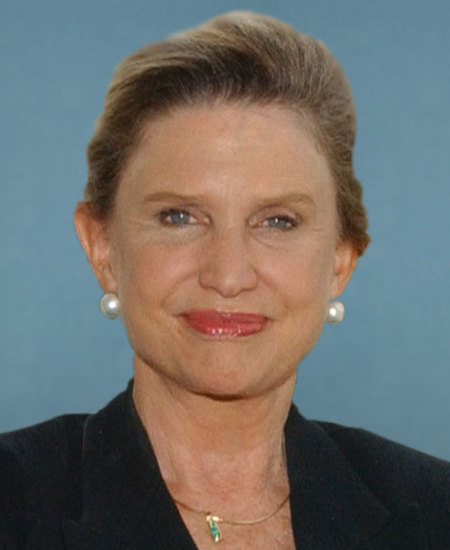
Rep. Carolyn B. Maloney
Sponsored bills
9/11 Immigrant Worker Freedom Act This bill provides lawful permanent resident status to qualifying aliens who performed rescue, debris cleanup, or related services following the September 11, 2001, attacks. This bill shall apply to an alien who (1) performed a certain number of hours of such services in New York, New York, after the attack; (2) was exposed to debris from the former World Trade Center and airborne toxins while performing vehicle maintenance services after the attack; or (3) performed rescue, cleanup, or related services following the attack on the Pentagon or the aircraft crash in Shanksville, Pennsylvania. An individual who has applied for lawful permanent resident status under this bill shall receive work authorization while the application is pending. An individual who willfully makes a material misrepresentation or material omission related to the performance of these services may not receive lawful permanent resident status under this bill.
Firearms Retailer Code of Conduct Act of 2021 This bill establishes requirements for federal firearms licensees (e.g., gun dealers) and their employees regarding certain business practices, training, and certification. It also prohibits licensees from transferring firearms to certain individuals, including straw purchasers, gun traffickers, intoxicated individuals, or individuals at risk of harming themselves or others.
Cameroon TPS Act of 2021 This bill permits nationals of Cameroon to qualify for temporary protected status, which prevents their removal from the United States and allows them to obtain employment and travel authorization. Such status shall be available to qualifying nationals of Cameroon for 18 months starting from this bill's enactment.
Reduce Financial Barriers to Immigration and Citizenship Act of 2021 This bill prohibits the Department of Homeland Security (DHS) from charging fees for certain immigration applications (or petitions), requires DHS to provide fee waivers to certain applicants, and addresses related issues. DHS may not impose fees for certain applications for or related to (1) asylum or refugee status, (2) special immigrant juvenile status, (3) U or T non-immigrant visas (victims of certain crimes such as human trafficking), (4) the Violence Against Women Act, (5) special immigrant status for Afghan or Iraqi nationals employed by the U.S. government, or (6) immigration-related fee waivers. DHS must also waive immigration-related application fees for an applicant who receives a means-tested benefit or meets certain conditions related to financial hardship. However, DHS is not required to provide fee waivers for applications for certain employment-based immigration benefits. Receipt of a fee waiver may not be used as a factor (1) for determining whether an alien should be considered a public charge, or (2) when considering an affidavit of support filed by a sponsor. The bill also requires all collected immigration-related adjudication fees to be used only to fund the adjudication and administration of immigration benefits and naturalization.
Gun Trafficker Detection Act This bill requires gun owners to report the theft or loss of a firearm to law enforcement. It imposes civil monetary penalties on a violator.
Lifting Immigrant Families Through Benefits Access Restoration Act of 2021 or the LIFT the BAR Act of 2021 This bill repeals certain limits on the eligibility of noncitizens who lawfully reside in the United States for federal means-tested programs, including Medicaid, the Children's Health Insurance Program (CHIP), programs funded through Temporary Assistance for Needy Families (TANF) grants, Supplemental Security Income (SSI), and certain nutrition and housing programs.
Afghan and Iraqi Allies Resettlement Improvement Act This bill addresses the settlement of Afghan and Iraqi special immigrant visa (SIV) holders. (Generally, SIV holders are individuals who received visas due to their work with the U.S. Armed Forces in Iraq or Afghanistan.) The Department of Health and Human Services must survey long-term outcomes, such as employment, housing, and educational attainment, of SIV holders as part of its annual survey of refugees. The Department of State must implement additional ways to deliver information in certain languages (i.e., Dari, Pashto, or Urdu) to prospective SIV holders about resettlement in the United States to assist with their adjustment process. The State Department and the Department of Defense must jointly establish a temporary program to offer SIV holders employment as translators, interpreters, and cultural awareness instructors.
Frank Harrison, Elizabeth Peratrovich, and Miguel Trujillo Native American Voting Rights Act of 2021 This bill addresses the voting rights of Native American and Alaska Native voters and voting access on tribal lands. The bill includes provisions expanding the types of facilities that can be used as voter registration agencies; increasing polling site accessibility, including by expanding early in-person voting and providing ballot drop boxes; providing enforcement power to citizens and attorneys general; requiring approval for actions like moving a polling place; validating certain tribal identification for voting or registering to vote; permitting voters to designate another individual to return a ballot on their behalf; and expanding requirements for bilingual voting accessibility. In addition, the bill establishes a Native American voting task force grant program for the purpose of increasing voter outreach, education, registration, turnout, and accessibility for Native American communities. The bill also directs the Government Accountability Office to study and report on (1) the prevalence of nontraditional or nonexistent mailing addresses among Indians, members of tribes, and individuals residing on Indian lands; and (2) the alternatives for removing barriers to voter registration, receipt of voter information and materials, and receipt of ballots.

Improving Diaper Affordability Act of 2021 This bill treats diapers as qualified medical expenses for purposes of certain health savings accounts and spending arrangements. The bill prohibits a state or local government from imposing a sales tax on the retail sale of diapers.