

Maddy summaryHR 2757, the Puerto Rico Status Act, establishes a process for Puerto Rico to determine its political status through a plebiscite on November 2, 2025, offering three options: independence, sovereignty in free association with the United States, or statehood. If no option receives a majority in the initial vote, a runoff plebiscite would be held on March 8, 2026. The bill outlines transition processes for each option, including constitutional conventions, implementation steps, and provisions for citizenship, immigration, and economic benefits. It mandates bilingual voter education materials and requires oversight by the Elections Commission and the Attorney General to ensure fair representation of all options. This legislation directly affects Puerto Rico's residents by providing a structured process to choose their permanent political relationship with the United States.
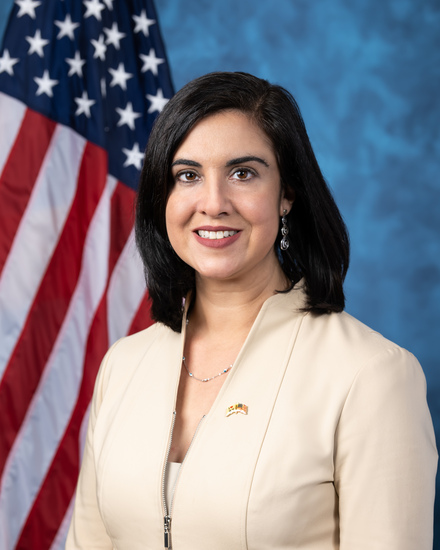
Rep. Nicole Malliotakis
Sponsored bills
Maddy summaryHRES 339 is a non-binding House resolution expressing that an "all-of-the-above" energy strategy - including oil, gas, nuclear, coal, hydropower, and renewables - is the most viable approach to U.S. energy policy. It states this strategy would strengthen national security, lower consumer energy prices, and reduce reliance on foreign energy sources. The resolution highlights that domestic energy production supports infrastructure funding, job creation, and energy independence, while noting U.S. energy sources like Gulf of Mexico oil and nuclear power provide clean, reliable electricity. As a statement of congressional opinion, it does not create new laws or policy changes.
Maddy summaryHR 2965, the Autism Family Caregivers Act of 2023, establishes a federal pilot program to provide free or low-cost evidence-based skills training for family caregivers of children (ages 0-9) with autism spectrum disorder or other developmental delays. It authorizes $10 million annually to fund grants for eligible organizations (like nonprofits, health centers, and community groups) to teach caregivers practical strategies for communication, social engagement, daily living skills, and managing challenging behaviors. The program requires local stakeholder committees - including caregivers, healthcare providers, and community representatives - to ensure cultural relevance, and mandates annual evaluations to assess impacts on children's well-being and caregiver support.
Cuban-American Unrecognized Bravery Act of 2023 or the CUBA Act of 2023 This bill expands eligibility for Department of Veterans Affairs (VA) benefits to certain individuals who served in the Bay of Pigs, Cuba, in April 1961. Specifically, the bill expands eligibility for benefits to individuals who (1) were members of the military group that invaded the Bay of Pigs in 1961, (2) are citizens of the United States, and (3) have not received VA benefits for which they have applied.
Maddy summaryThe SAFE Banking Act of 2023 would protect banks and financial institutions that provide services to state-legal marijuana businesses and hemp-related businesses by preventing federal regulators from taking adverse actions against them solely for serving these businesses. It clarifies that income from state-legal marijuana businesses can be considered for mortgage applications, and requires regulators to update guidance on suspicious activity reports related to these businesses. The bill does not require financial institutions to serve these businesses, but ensures they won't face penalties for doing so. It extends similar protections to hemp-related businesses, which have faced banking challenges despite being federally legal under the 2018 Farm Bill.
This concurrent resolution expresses the sense of Congress that the individuals responsible for the July 1999 murders of U.S. citizens Ylli, Agron, and Mehmet Bytyqi in Serbia should be brought to justice and that the United States should devote sufficient resources to fully assist and monitor Serbia's efforts to investigate and prosecute such individuals.
Maddy summaryThe Postal Police Reform Act of 2023 updates federal law to explicitly include "Postal Service police officers" alongside Postal Inspectors as authorized personnel for enforcing regulations on U.S. Postal Service property. It clarifies that the Postmaster General can establish and post rules for protecting postal property, with violations punishable by fines or up to 30 days in jail. This change directly affects USPS police officers (by formalizing their role), the Postmaster General (by expanding regulatory authority), and anyone on postal property who must follow posted rules. The bill makes existing enforcement procedures more explicit without altering penalties or creating new requirements.
Maddy summaryThis bill protects living organ donors from insurance discrimination by prohibiting life, disability, and long-term care insurers from denying coverage, raising premiums, or altering policy terms solely because someone donated an organ while alive. It also updates the Family and Medical Leave Act to include recovery from organ donation surgery as a qualifying health condition, allowing donors to take protected leave for this purpose. Additionally, the bill requires the Health and Human Services Secretary to update public educational materials about living donation benefits, risks, and insurance protections within six months of enactment. These changes directly affect living organ donors, insurers, employers, and healthcare systems by ensuring fair access to insurance and workplace leave.
Maddy summaryHR 2955, the Stop Institutional Child Abuse Act, establishes a Federal Work Group to improve data collection and best practices for youth in residential programs (like therapeutic schools, treatment centers, and group homes). The Work Group, composed of federal agency representatives and diverse stakeholders, must develop national data standards, create risk assessment tools, and issue biennial reports with recommendations to enhance safety, reduce restraints, and expand community-based alternatives. It directly affects youth with mental health, substance use, or disability needs placed in these facilities, as well as agencies overseeing them. The bill also mandates a National Academies study to examine funding, oversight, and barriers to community care. These mechanisms aim to standardize data tracking and promote less restrictive, trauma-informed care for youth in residential programs.
Maddy summaryHR 2878 (CARE Act of 2023) requires federally funded research facilities (like those receiving NIH grants) to develop and publicly post adoption policies for dogs, cats, and rabbits no longer used in biomedical research. Key provisions mandate facilities to assess each animal’s health for adoption suitability, make reasonable efforts to place them through shelters, adoption organizations, or private arrangements, and publicly track adoption rates and outcomes. The bill directly affects over 240,000 companion animals used annually in U.S. research, ensuring transparency by requiring facilities to publish annual records on adoption numbers and euthanasia. It also provides legal immunity to facilities following these adoption policies, except for gross negligence.