

This resolution states that the government of the United Kingdom should enter into negotiations with the government of Greece to facilitate the return of the Parthenon Marbles to Greece. (The Parthenon Marbles are marble sculptures that were removed from the Parthenon in the early 19th century when it was under Ottoman rule and later transferred to the British Museum.)
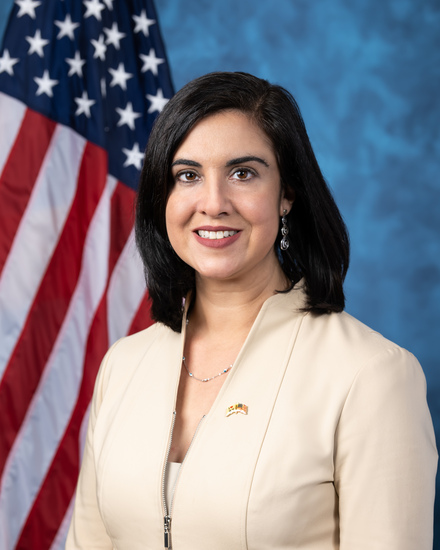
Rep. Nicole Malliotakis
Sponsored bills
Maddy summaryHR 4086 directs the U.S. government to use its influence at the United Nations to extend the mandate of the UN Human Rights Council's independent fact-finding mission on Venezuela. The bill requires the Secretary of State to support efforts to continue this mission until Venezuela holds free elections, ends authoritarian rule, restores democracy, frees political prisoners, and allows humanitarian aid. It also directs the U.S. to urge the UN to condemn Venezuela's use of political prisoners, support humanitarian aid for vulnerable Venezuelans, and assist in releasing detained individuals. The bill mandates annual reports to Congress on these diplomatic actions. This legislation directly affects the UN mission's work and U.S. diplomatic engagement regarding Venezuela's human rights situation.
Maddy summaryThe Telehealth Expansion Act of 2023 modifies the Internal Revenue Code to require health insurance plans to cover telehealth services without applying deductibles. It directly affects high deductible health plans (HDHPs) and their enrollees, ensuring telehealth visits aren’t counted toward annual deductibles. The key provision creates a "safe harbor" (Section 223(c)(2)(E)) so plans won’t lose HDHP status for excluding telehealth deductibles. This change applies immediately upon enactment and affects all plans offering telehealth services. It does not create new funding or services but adjusts tax code requirements for existing coverage.
Maddy summaryHR 3996 would impose a 60% tax on the purchase of U.S. agricultural interests (including farmland and livestock production land) by individuals or entities from designated "countries of concern," such as China, Russia, Iran, North Korea, Cuba, and Venezuela. It requires transaction closers (like title companies or attorneys) to report buyer details to the IRS and request an affidavit confirming the buyer is not a disqualified person. If a disqualified person fails to provide the affidavit, the closing entity must inform them of the tax obligation, and the buyer would owe 60% of the purchase price. The tax does not apply to U.S. citizens, lawful permanent residents, or U.S. public companies not controlled by disqualified persons.
Maddy summaryThe Neighborhood Homes Investment Act creates a new tax credit for developers who rehabilitate or build affordable homes in distressed communities. The credit is calculated based on the difference between rehabilitation costs and the sale price, with homes required to be sold at affordable prices to qualified homeowners with incomes up to 140% of the local median family income. The bill targets specific "qualified census tracts" defined by high poverty rates, low homeownership, and below-average home values. Developers must ensure homes are sold to qualified homeowners who use them as primary residences for at least five years, with additional safeguards to prevent program abuse and ensure fair housing practices.
Pets Belong With Families Act This bill prohibits public housing agencies from imposing breed restrictions on pets owned by residents of public housing units. The bill continues to allow public housing agencies to prohibit ownership of dangerous animals in public housing, but prohibits classification as dangerous by breed and requires that any such classification be based on specific behaviors or actions of the animal.
Maddy summaryHR 3892, the Improving Mental Health and Drug Treatment Act of 2023, permanently allows Medicaid coverage for individuals with serious mental illness or substance use disorders in certain residential facilities (previously limited to a temporary 2019-2023 period). It extends the maximum stay in these facilities from 30 to 45 days and requires states to establish standards for appropriate care placement and a review process for facility compliance. States must also conduct a one-time assessment within 12 months of approval to evaluate treatment availability across care levels and medication-assisted treatment services. This bill directly affects Medicaid programs, states administering them, and individuals receiving care in qualifying residential facilities for mental health and substance use disorders.
Maddy summaryThis bill renames the "standard deduction" as the "guaranteed deduction" throughout the tax code (Section 2), primarily changing terminology without altering the deduction's structure. It then adds a temporary "bonus guaranteed deduction" for 2024-2025, increasing the deduction by $4,000 for joint filers/surviving spouses, $3,000 for heads of household, and $2,000 for others (Section 3). The bonus phases out for higher earners, reducing by 5% of modified AGI above $200,000 (singles), $300,000 (heads of household), or $400,000 (joint filers). These changes directly affect taxpayers who itemize or claim the standard deduction, with the bonus applying only to 2024-2025 taxable years.
Maddy summaryHR 3828 designates the U.S. Postal Service facility at 80 Prospect Street in Avon, New York, as the "Officer Anthony Mazurkiewicz Memorial Post Office Building." This bill directly affects the physical location of that post office and all official references to it. The key provision updates all federal documents, maps, and records to use the new memorial name instead of the address. As a naming resolution, it has no policy impact beyond commemoration and does not alter postal services or operations.
Maddy summaryThis bill prohibits the Department of Veterans Affairs from changing its anesthesia care policies to allow nurse anesthetists (CRNAs) to provide anesthesia independently without a physician anesthesiologist. It specifically blocks implementation of a 2016 proposed rule that would have expanded CRNAs' authority in VA facilities. The law maintains current requirements that physician anesthesiologists must oversee or provide anesthesia care for veterans during surgical procedures. Emergency orders for veteran safety during surgery remain permitted under the bill's exception clause.