

Maddy summaryHR 5465, the Congressional Access to Bureaucratic Offices Act (CABO Act), requires federal agency heads to allow Members of Congress and their staff access to agency headquarters buildings during regular business hours. It mandates that access be granted upon presentation of valid congressional identification (for Members) or a staff badge while accompanied by the employing Member (for staff), with exceptions for areas requiring secret-level security clearance. The bill also ensures this access applies during declared emergencies (like national emergencies under the National Emergencies Act or public health emergencies), without imposing additional costs by using existing agency funds. This directly affects how federal agencies manage physical access for congressional personnel.
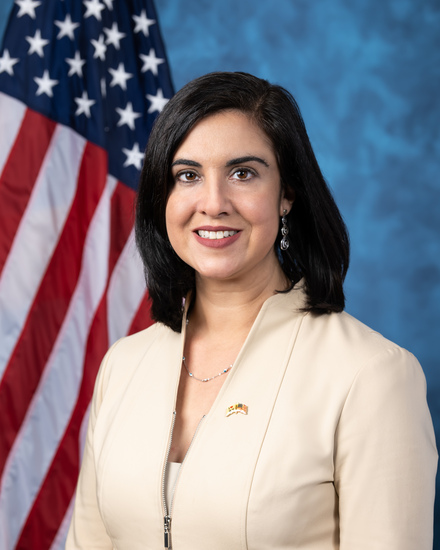
Rep. Nicole Malliotakis
Sponsored bills
Maddy summaryHR 5455, the Collision Avoidance Systems Act of 2023, allows automakers to install pulsating light systems as rear-end collision avoidance technology on new vehicles. The bill requires the Secretary of Transportation to issue new regulations within 180 days updating Federal Safety Standard 108 to include performance-based rules for these systems. Specifically, it defines a "pulsating light system" as a high-mounted brake light that flashes rapidly (up to 4 times for no more than 1.2 seconds) before switching to steady light, with a 5-second lockout period after braking stops. This directly affects vehicle manufacturers who must comply with the updated safety standards for brake lights.
Maddy summaryThe Humane Cosmetics Act of 2023 bans cosmetic animal testing in the United States, prohibiting companies from conducting or contracting such testing after its enactment (effective 1 year later). It also bans selling or transporting cosmetics developed using animal testing conducted after that date within U.S. interstate commerce. The law directly affects cosmetic manufacturers, retailers, and suppliers operating in the U.S. market, requiring them to use non-animal testing methods for safety evaluations. Exceptions exist for foreign regulatory requirements or when no alternative testing methods are available for specific ingredients.
Maddy summaryHR 5498 prohibits the use of federal funds to provide shelter or housing on U.S. military bases (in any state or D.C.) for non-admitted immigrants - those not formally admitted to the U.S. under immigration law. The bill directly affects military installations, federal agencies managing housing funds, and immigrants classified as "non-admitted" under U.S. immigration law. Its key mechanism bans federal funding for such housing under any applicable federal, state, or local law, though it does not restrict the provision of housing itself. The policy change is limited to funding restrictions, not immigration status or base access.
Maddy summaryHR 3152, the "Fight CRIME Act," aims to maintain international restrictions on Iran's missile-related activities by requiring diplomatic efforts to extend these restrictions before they expire in October 2023. The bill mandates annual reports detailing U.S. diplomatic strategies, potential impacts of expiration, and measures to deter missile technology transfers to Iran. It establishes sanctions against foreign individuals or entities that knowingly support Iran's missile or drone programs, including asset freezes and visa restrictions. These sanctions apply regardless of whether UN restrictions remain in effect after their expiration, directly affecting foreign entities involved in these activities.
Safeguarding Endangered Children, Unaccompanied and at Risk of Exploitation Act of 2023 or SECURE Act of 2023 This bill requires regular reports to Congress detailing the status of unaccompanied non-U.S. national ( alien under federal law) children. The bill also rescinds certain funding for the agencies responsible for the report for each day that a report is late. Specifically, the Department of Health and Human Services (HHS), the Department of Homeland Security (DHS), and the Federal Bureau of Investigation must jointly report to Congress every 60 days on such children that have been in the custody of the Office of Refugee Resettlement (ORR) since January 1, 2021, and have been released to a parent, family member, or sponsor within the United States. This report must provide each child’s age, sex, location, and detail the child’s health and well-being. Additionally, the report must provide specified information about adults living in the child’s home, such as whether adults in the home have been subject to a fingerprint-based check of national crime information databases. The report must also specify the number of children that ORR has tried to contact without success on at least three separate attempts. The report must be provided for up to three years or until all of the specified children have been accounted for. The bill also rescinds certain funding from HHS, DHS, and the FBI for each day that a report is late. Up to $10 million may be rescinded from each agency for each fiscal year.
Maddy summaryHRES 670 is a non-binding resolution expressing the House of Representatives' sense that all 50 states should include the September 11, 2001, terrorist attacks in elementary and secondary school curricula. It aims to ensure students learn about this historical event to honor the 2,977 victims and remember its significance, though it does not require states to change education standards. The resolution highlights the attacks as a pivotal moment that shaped U.S. national security and calls for continued remembrance through education. As a procedural resolution, it carries no legal force but seeks to encourage state-level curriculum decisions.
Maddy summaryThe Patriot Day Act would add "Patriot Day" to the list of federal holidays in the U.S. Code (specifically, 5 U.S.C. § 6103(a)), requiring federal offices to close on that day. This designation would formally recognize Patriot Day as a national observance, though the bill does not specify its date. The change would affect federal employees and agencies, aligning Patriot Day with other established holidays like Labor Day. The bill is procedural, focusing solely on naming the holiday without altering other policies.
Maddy summaryThis bill creates a new $0.20 per credit system (adjustable for inflation) for conventional biofuel waivers under the Clean Air Act, directly affecting refiners and fuel producers with renewable fuel obligations. Credits must be used immediately for that year's compliance and cannot be resold or applied toward other biofuel requirements. Revenue from credit sales is split equally: one-third funds advanced biofuel investments, one-third supports agricultural diversification programs, and one-third flows into the Habitat and Wildlife Restoration Fund. This fund targets conservation in areas impacted by corn/soy expansion since 2007, managed with the National Fish and Wildlife Foundation.
This bill increases from 20% to 25% the value of the total assets represented by securities of one or more taxable Real Estate Investment Trust (REIT) subsidiaries (thus restoring the REIT subsidiary asset test).