

Fairness for All Act This bill prohibits discrimination on the basis of sex, sexual orientation, or gender identity, while providing certain benefits and exemptions to religious providers. An otherwise qualified religious provider shall be eligible to receive federal financial assistance for a particular service without regard to the provider's religious views or teachings. The bill expands the definition of public accommodation to which sex discrimination laws apply, including to cover providers of financial services, medical services, and providers of transportation services. Exceptions from these sex discrimination prohibitions are made for (1) religious camps or religious retreat centers unless they also discriminate based on race, color, or national origin; and (2) providers of funeral services or burial plots that primarily limit their services or facilities to those of a particular religion unless the provider discriminates based on those factors. Agencies authorized to administer federal financial assistance for the support of adoption and foster care services shall issue final rules within two years of this bill's enactment to create an indirect funding program that delivers such assistance to eligible prospective parents for the purpose of obtaining adoption and foster care services through a qualified private agency that they select. The bill (1) exempts a church or religious organization from claims of employment discrimination because of sexual orientation or gender identity under specified circumstances; and (2) prohibits sanctions for certain employee speech regarding the employee's religious, political, or moral beliefs in the workplace. The bill establishes certain anti-bullying policies for public elementary and secondary schools, including cyber bullying. Any determination of the tax-exempt status of a charitable organization shall be made without regard to the organization's religious beliefs or practices concerning marriage, family, or sexuality, except insofar as such practices pertain to race or criminal sexual offenses punishable under constitutionally valid federal or state law.
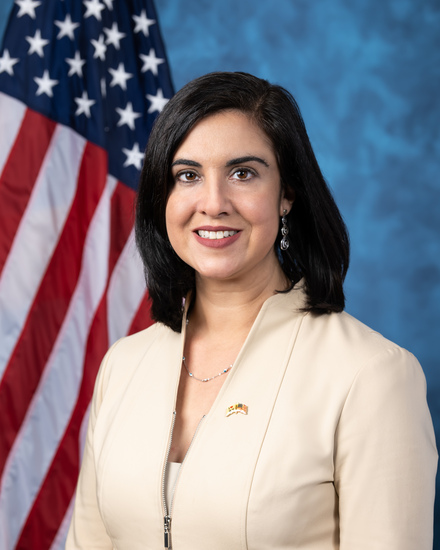
Rep. Nicole Malliotakis
Sponsored bills
Return Excessive Migrants and Asylees to International Neighbors in Mexico Act of 2021 or the REMAIN in Mexico Act of 2021 This bill requires the Department of Homeland Security (DHS) to implement the Migrant Protection Protocols as outlined in the January 25, 2019, memo titled Policy Guidance for Implementation of the Migrant Protection Protocols . (The protocols generally required aliens who are not clearly admissible, including those seeking asylum, arriving by land along the U.S.-Mexico border to be returned to Mexico while their immigration proceedings are pending, rather than remain in the United States. On January 21, 2021, DHS stopped applying the protocols to newly-arrived individuals.)
PFC Joseph P. Dwyer Peer Support Program Act This bill requires the Department of Veterans Affairs (VA) to establish the PFC Joseph P. Dwyer Peer Support Program to make grants to eligible entities for peer-to-peer mental health programs for veterans. Eligible entities include (1) a nonprofit organization that has historically served the mental health needs of veterans; (2) a congressionally chartered veteran service organization; or (3) a state, local, or tribal veteran service agency, director, or commissioner. The VA shall establish an advisory committee to create appropriate program standards.
This resolution condemns the actions taken by the governments of China and Hong Kong to put in place national security legislation that violates the freedoms and rights guaranteed to the people of Hong Kong. (Hong Kong is a part of China but, by agreement, has operated a legal and economic system largely separate from China's.)
FDA Modernization Act of 2021 This bill allows an applicant for market approval for a new drug to use methods other than animal testing to establish the drug's safety and effectiveness. Under this bill, these alternative methods may include cell-based assays, organ chips and microphysiological systems, sophisticated computer modeling, and other human biology-based test methods.
Careful Resumption Under Improved Safety Enhancements Act or the CRUISE Act This bill requires various activities to mitigate the impact of COVID-19 on the operation of cruise ships. Specifically, the bill establishes a working group comprised of specified federal departments and industry stakeholders to develop recommendations for resuming cruise ship operations. In addition, the Centers for Disease Control and Prevention (CDC) must issue (within 30 days) separate recommendations on mitigating the introduction, transmission, and spread of COVID-19 onboard cruise ships and to communities onshore. The CDC must consult with the working group on these recommendations. Furthermore, the Department of Health and Human Services must revoke by July 4, 2021, its order issued on November 4, 2020, which restricts the operation of cruise ships in U.S. waters.
This resolution expresses the sense of the House of Representatives that (1) clean water is a national priority, and (2) the 2020 final rule titled The Navigable Waters Protection Rule: Definition of "Waters of the United States" should not be withdrawn or vacated.
Fire Fighters and EMS Employer-Employee Cooperation Act This bill requires the Federal Labor Relations Authority to determine whether a state substantially provides fire and emergency medical services (EMS) personnel the right to form and join a labor organization; recognition by fire and EMS employers of the employees' labor organization, agreement to bargain with the organization, and reduction of any agreements to writing in a contract or memorandum of understanding; the right to bargain over hours, wages, and terms and conditions of employment; and arbitration or other mechanisms to resolve an impasse in collective bargaining negotiations. The bill makes the authority responsible for (1) determining the appropriateness of units for labor representation; (2) supervising elections; (3) conducting hearings and resolving complaints of unfair labor practices; and (4) protecting the right of employees to form, join, or assist any labor organization, or to refrain from doing so. An employer, fire and EMS personnel, or labor organization may not engage in a lockout, sickout, work slowdown, strike, or any other organized job action that will measurably disrupt the delivery of emergency services and is designed to compel an employer, fire and EMS personnel, or labor organization to agree to the terms of a proposed contract.
Kids In-Person Determines School Success Act or the KIDS Success Act This bill requires each local educational agency (LEA) that received federal COVID-19 relief funds to, within 60 days, submit a report to the Department of Education (ED). The bill also requires ED to assess the impact of school closures due to COVID-19. Specifically, the LEA must report on each elementary or secondary school that did not reopen for full-time, in-person learning as of April 5, 2021. The report must include the reasons why the school did not reopen in accordance with specified guidance from the Centers for Disease Control and Prevention and the expected date for return to full-time, in-person learning. In addition, the report must include the total amount of federal COVID-19 relief funds received by the LEA. Upon receiving the information from LEAs, ED must assess and report on the effects of school closures due to COVID-19. The assessment must include (1) the long-term effects of extended e-learning and hybrid learning on students, and (2) the effect of closures on student absenteeism and disciplinary changes.
Economic Impact of Tolling Act This bill prohibits the Department of Transportation from implementing a congestion pricing program for any toll road, bridge, or tunnel until an economic impact analysis is completed and made available to the public.