

Parents Bill of Rights Act This bill outlines various rights of parents and guardians regarding the elementary or secondary school education of their children. Among other requirements, the bill (1) directs local educational agencies to publicly post the curriculum for each elementary and secondary school grade level; and (2) requires schools to notify parents and guardians of their rights, including the right to review the school's curriculum and budget.
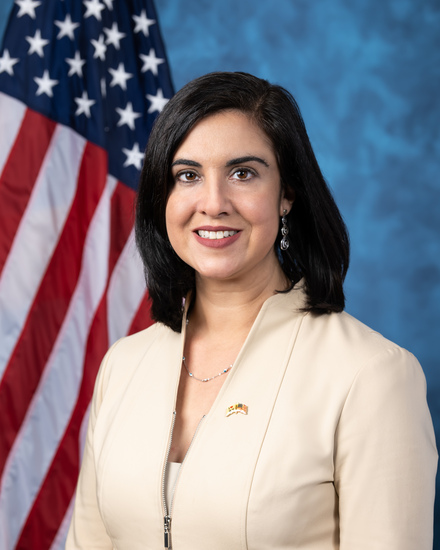
Rep. Nicole Malliotakis
Sponsored bills
FEMA Emergency Management Performance Grants Program Reauthorization Act of 2021 This bill extends the authorization of the Emergency Management Performance Grants Program through FY2026. This program provides state, local, tribal, and emergency management agencies with resources to implement the National Preparedness System and otherwise support emergency planning, preparedness, and response.
Fairness for Federal Contractors Act of 2021 This bill prohibits executive agencies from requiring contractors to receive a COVID-19 vaccination. The bill also requires the Government Accountability Office to study the degree to which Executive Order 14042 (Ensuring Adequate COVID Safety Protocols for Federal Contractors) caused disruptions to federal contracts, supply chains, and transportation systems.
This joint resolution nullifies a Department of Labor emergency temporary standard for preventing the transmission of COVID-19 in employment settings. Under the standard issued on November 5, 2021, employers with 100 or more employees must require their onsite employees to either be fully vaccinated against COVID-19 or undergo weekly COVID-19 testing.
Fairness and Accountability in Underwriting Chinese Institutions Act or the FAUCI Act This bill prohibits making any federal funding available to laboratories or research institutions in China for gain-of-function research. The President may waive this prohibition for national security interests. (Under the bill, gain-of-function research generally involves the enhancement of potential pandemic pathogens or related risky research with potentially dangerous pathogens.) Furthermore, if the Office of the Inspector General of the Department of Health and Human Services determines that a National Institutes of Health official, employee, or grantee has intentionally misled or omitted information in a relevant disclosure (e.g., to Congress) about federal funding for international gain-of-function research, such a person shall be ineligible for any federal funding or federal employment.
SIGSSAW Act This bill establishes the Office of the Special Inspector General (SIG) for State Spending and Waste. Specifically, the SIG must conduct, supervise, and coordinate audits and investigations of the treatment, handling, and expenditure of amounts appropriated or otherwise made available for use by states; and establish, maintain, and oversee such systems, procedures, and controls as the SIG considers appropriate to discharge its duties. Whenever information or assistance requested by the SIG is unreasonably refused or not provided, the SIG shall report the circumstances to the Department of Justice and to the appropriate congressional committees without delay. The SIG shall report on a quarterly basis to such committees and to the Department of Housing and Urban Development.
Supply Chain Emergency Response Act This bill directs the Maritime Administration to establish a program to provide grants to certain owners of cargo vessels to cover toll costs associated with rerouting cargo vessels from ports along the western seaboard of the United States through the Panama Canal to ports along the Gulf of Mexico and the eastern seaboard of the United States. To receive a grant, an owner of a cargo vessel shall submit documentation that such owner intends to reroute a cargo vessel and has the corresponding docking agreements. The bill allows states and localities to use COVID-19 relief funds for costs related to rerouting cargo vessels. Any marine terminal operator who is operating a port located along the western seaboard of the United States may not collect port fees from a recipient of a grant who has rerouted a cargo vessel from such port due to the inability of such port to receive such vessel. Any individual who is a member of the Chinese Communist Party or any company owned, in whole or in part, by the Chinese Communist Party may not receive a grant under this bill.
This concurrent resolution declares that Congress should not impose any new performance fee, tax, royalty, or other charge relating to the public performance of sound recordings on a local radio station for broadcasting sound recordings over the air, or on any business for such public performance of sound recordings.
Maddy summaryHRES 386 is a symbolic resolution introduced in the U.S. House of Representatives that expresses support for recognizing "National Police Week" each year. The resolution acknowledges law enforcement officers' sacrifices, particularly during the pandemic, and encourages the public to honor their service. As a non-binding statement, this resolution does not create new law or change policy but serves as a formal expression of support for law enforcement officers across the United States.
SIGMMA Act This bill establishes the Office of the Special Inspector General (SIG) for Major Metropolitan Areas. Specifically, the SIG must conduct, supervise, and coordinate audits and investigations of the treatment, handling, and expenditure of amounts appropriated or otherwise made available for use by major cities; and establish, maintain, and oversee such systems, procedures, and controls as the SIG considers appropriate to discharge its duties. Whenever information or assistance requested by the SIG is unreasonably refused or not provided, the SIG shall report the circumstances to the Department of Justice and to the appropriate congressional committees without delay. The SIG shall report on a quarterly basis to such committees and to the Department of Housing and Urban Development.