

Equal Access to Therapeutics Act This bill prohibits using race or ethnicity as a factor in decisions about an individual's access to COVID-19 treatments (e.g., monoclonal antibody therapies). Specifically, the Department of Health and Human Services (HHS) may not adopt any policy or guidance that allows race or ethnicity to be factored into such decisions. Furthermore, the Secretary of HHS shall be personally liable for the death of any individual who is denied access to COVID-19 treatments pursuant to a prohibited policy or guidance. The bill also prohibits hospitals or other health care providers that have policies restricting access to COVID-19 treatments based on race or ethnicity from receiving federal funds.
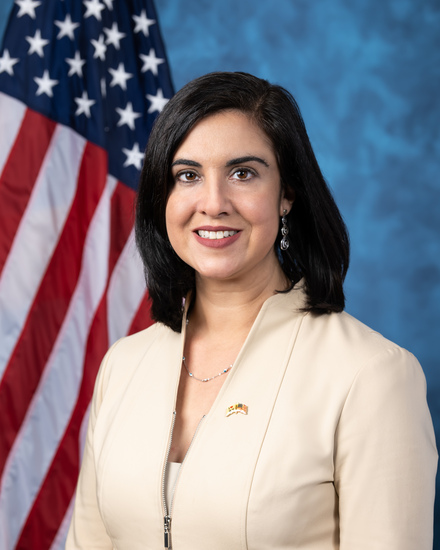
Rep. Nicole Malliotakis
Sponsored bills
Informed Lawmaking to Combat Inflation Act This bill requires the Congressional Budget Office to provide inflation estimates for certain legislation that is projected to cause an annual gross budgetary effect of at least 0.25% of the projected gross domestic product of the United States. The estimates must determine whether the legislation will have no significant impact on inflation, a quantifiable inflationary impact on the consumer price index, or a significant impact on inflation that cannot be quantified at the time the estimate is prepared. The requirement does not apply to legislation that (1) provides for emergency assistance or relief at the request of any state, local, or tribal government; or (2) is necessary for the national security or the ratification or implementation of international treaty obligations.
NYCHA Accountability Act of 2022 This bill directs the Office of Inspector General of the Department of Housing and Urban Development to report on matters concerning the New York City Housing Authority, including the health and safety conditions of its housing and the federal funds it received FY2014-FY2022.
Maddy summaryHR 6518 would establish a new office within the U.S. Department of State, led by a Special Envoy, to address the global rise of authoritarian socialism and communism. The bill amends the State Department Basic Authorities Act to create this position, specifying it as a permanent part of the Department's structure. This change directly affects the Department of State by adding a dedicated leadership role focused on monitoring and countering these political systems internationally. The bill does not detail specific actions or policies for the office, only its creation and leadership structure.
Crime Doesn't Fly Act of 2022 This bill prohibits the use of warrants for the arrest, removal, or deportation of an alien as proof of identity at an airport security checkpoint unless the alien is being removed from the United States pursuant to immigration laws.
This bill requires the Department of Agriculture (USDA) to submit a report on the potential costs and benefits of its proposed rule governing the importation of live sheep, goats, other ruminants, and products derived from sheep and goats. It also bars USDA from finalizing, implementing, administering, or enforcing the rule until one year after the date that USDA submits the report.
This bill revises enforcement provisions under the Animal Welfare Act (AWA), including by directing inspectors to confiscate or destroy in a humane manner animals found to be suffering physical or psychological harm as a result of failure to comply with the AWA.
Accelerating Access to Critical Therapies for ALS Act This bill establishes grant programs to address neurodegenerative diseases, such as amyotrophic lateral sclerosis (also known as ALS or Lou Gehrig's disease), and contains other related provisions. The Department of Health and Human Services (HHS) shall award grants to eligible entities for scientific research utilizing data from expanded access to investigational ALS treatments for individuals who are not otherwise eligible for clinical trials. The Food and Drug Administration (FDA) shall award grants to public and private entities to cover the costs of research and development of drugs that diagnose or treat ALS and other rare neurodegenerative diseases. HHS shall also establish the Public-Private Partnership for Neurodegenerative Diseases between the National Institutes of Health, the FDA, and at least one eligible entity (generally, an institution of higher education or a nonprofit organization). The partnership shall support the development and regulatory review of drugs that address ALS and other rare neurodegenerative diseases. The FDA shall publish on its website a five-year action plan for fostering the development of drugs that improve or extend the lives of people living with rare neurodegenerative diseases. The Government Accountability Office must report to Congress about the grants provided under this bill, including an analysis of the impact of such grants on research and development of treatments for ALS.
Wildlife Conservation and Anti-Trafficking Act of 2021 This bill sets forth provisions relating to wildlife conservation, anti-trafficking and poaching, and illegal fishing. Specifically, the bill directs the Departments of Justice, the Interior, Commerce, State, and the Treasury to develop a plan of action for awards to whistleblowers of violations of laws applicable to wildlife trafficking; directs Interior to carry out the International Wildlife Conservation Program to, among other things, address global conservation threats and combat wildlife trafficking and poaching; provides funding for the conservation of certain endangered species; authorizes Interior, in consultation with the State Department, to station not less than one U.S. Fish and Wildlife Service officer in the primary diplomatic or consular post of the United States in a focus country or country of concern (i.e., countries engaging in wildlife trafficking); and directs Commerce to make amounts available for illegal, unreported, and unregulated fishing enforcement. The bill also modifies the federal criminal code to make wildlife trafficking and illegal fishing predicates with respect to the enforcement of certain criminal offenses, including racketeering and money laundering.
This concurrent resolution expresses the sense of Congress that tax-exempt fraternal benefit societies provide critical benefits to the people and communities of the United States and their work should continue to be promoted.