

Maddy summaryHRES 1570 is a symbolic resolution that states the House of Representatives affirms the Twenty-second Amendment's existing rule limiting U.S. presidents to two terms. It does not change any law or constitutional provision - it simply reiterates that the amendment applies to two terms in total and applies to President-elect Trump (as referenced in the resolution's preamble). The resolution addresses past statements by Donald Trump about seeking additional terms but has no legal effect on term limits. It is purely procedural, not a policy change.
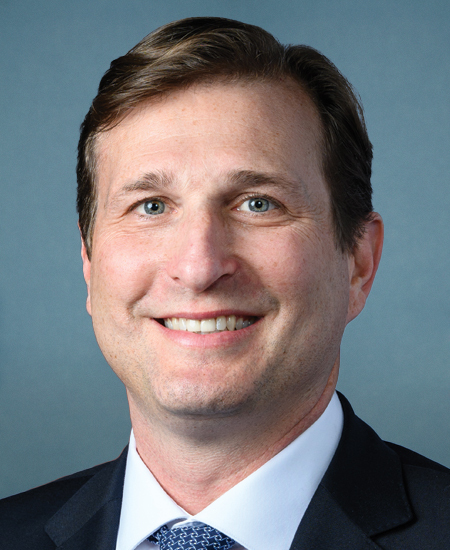
Rep. Daniel S. Goldman
Sponsored bills
Maddy summaryHRES 1562 is a non-binding House resolution condemning Turkish President Recep Tayyip Erdoğan for specific statements and actions regarding Israel and NATO. It criticizes his rhetoric supporting Hamas (a U.S.-designated terrorist group), comparing Israeli leaders to Hitler, threatening Israel, obstructing NATO-Israel cooperation, and fostering antisemitism, citing examples like calling Netanyahu "the butcher of Gaza" and hosting Hamas leaders. The resolution urges Turkey to denounce Hamas, stop blocking NATO cooperation, extradite wanted Hamas members, and cease inflammatory rhetoric toward Greece and Cyprus. As a symbolic congressional statement - not a law - it expresses disapproval but does not impose legal consequences.
Maddy summaryThis resolution (HRES 1558) is a symbolic House of Representatives measure supporting October as "National Domestic Violence Awareness Month." It does not create new laws or allocate funding but formally expresses the House's support for raising awareness about domestic violence and its impacts, and urges continued backing for existing programs that address domestic violence. The resolution cites statistics on domestic violence prevalence (e.g., 24 people per minute affected by intimate partner violence) to underscore the importance of the observance. It directly affects public awareness efforts but does not change policies or directly impact individuals.
Maddy summaryHR 10090, the "Keeping Guns from High-Risk Individuals Act," expands existing federal firearm prohibitions. It bars individuals convicted of a crime of violence (as defined in Section 16 of Title 18) within the last five years, or convicted of stalking, from purchasing or possessing firearms. This directly affects people with these specific recent convictions, adding them to the list of those prohibited under Section 922(d) (sales) and Section 922(g) (possession) of the U.S. Code. The bill makes concrete policy changes by broadening the categories of individuals barred from gun access based on certain criminal histories.
Maddy summaryHRES 1555 is a symbolic House resolution condemning the spread of false claims and malicious rumors about disaster response efforts, which have led to credible threats against FEMA personnel and disrupted aid for survivors. It specifically references incidents after Hurricanes Helene and Milton, including a pause in North Carolina door-to-door assistance due to safety threats and antisemitic targeting of officials. The resolution formally condemns those spreading disinformation for political gain and commits Congress to supporting FEMA’s efforts to combat misinformation and promote accurate recovery information. As a non-binding resolution, it does not create new laws but expresses congressional support for protecting disaster response workers and ensuring survivors receive timely aid.
Maddy summaryHRES 1553 is a resolution expressing the House of Representatives' sense that action is needed to address a federal tax exemption under Puerto Rico's Act 22. This provision allows wealthy Americans who do not reside in Puerto Rico to receive 100% exemptions from income and capital gains taxes in Puerto Rico while legally avoiding U.S. federal taxes. The resolution focuses on the tax loophole enabling this arrangement, which the bill claims contributes to housing displacement and price spikes on the island. It does not change tax law but urges the House to act on this issue. (Note: As a resolution, it is procedural and not a binding legislative measure.)
Maddy summaryHRES 1548 is a non-binding resolution supporting the designation of October 2024 as "National Learning Disabilities Awareness Month." It highlights that specific learning disabilities affect 34% of students receiving special education services and notes significant academic challenges, with over 95% of affected 4th and 8th graders not proficient in reading or math in 2022. The resolution calls on schools to continue providing appropriate support for students with learning disabilities but does not create new laws or funding. It aims to raise public awareness about learning disabilities, not to change educational policies.
Maddy summaryThe VA Employee Fairness Act of 2024 modifies collective bargaining rules for employees of the Veterans Health Administration (VHA). It removes existing subsections (b), (c), and (d) from the law governing VHA employee bargaining and renumbers the remaining provision. This change streamlines the collective bargaining framework but does not alter the Secretary of Veterans Affairs' existing authorities over incentive pay and expedited hiring. The bill directly affects VHA employees by changing how their collective bargaining rights are structured under federal law. The law remains neutral, focusing solely on procedural adjustments to the existing bargaining framework.
Maddy summaryThis bill establishes minimum safety standards for railroad bridges and requires railroad carriers to provide detailed inspection reports classifying bridges as poor, fair, or good condition, including repair timelines and costs for bridges in poor condition. It mandates railroad carriers to post visible signs identifying bridge ownership and a contact number for public safety concerns, and creates a public database showing basic bridge condition information without detailed technical specifications. The bill also establishes a safety concern reporting system for the public and authorities, and requires the Department of Transportation to conduct randomized bridge inspections to verify reported conditions. Railroad carriers that fail to meet safety requirements face civil penalties, including weekly fines for continued operation of unsafe bridges.
Maddy summaryHR 9982 creates a dedicated Office of Children’s Health Protection within the EPA to address environmental risks affecting children. The office, led by an EPA-appointed director, will assess health threats like pollution or chemicals that disproportionately impact infants, children, and adolescents, and coordinate federal efforts to reduce these risks through policy, research, and school health programs. It establishes a permanent advisory committee to guide the EPA and requires $7.8 million annually for the office plus $13.2 million for the committee through 2029. The bill directly affects children’s health by mandating EPA action on environmental hazards through specific programs, not by changing existing regulations or creating new taxes.