

Maddy summaryHR 1637, the Protect Veteran Jobs Act, allows veterans who were involuntarily dismissed without cause from federal civil service positions between January 20, 2025, and the bill’s enactment date to seek reinstatement to their former role or a qualified position. It directly affects eligible veterans dismissed during this period and requires federal agencies to report quarterly on veteran removals, including the number and reasons for each dismissal. Agencies must submit these reports to specified congressional committees until January 20, 2029, when the reporting requirement ends. The bill aims to restore employment opportunities for affected veterans while increasing transparency around federal hiring and dismissal practices.
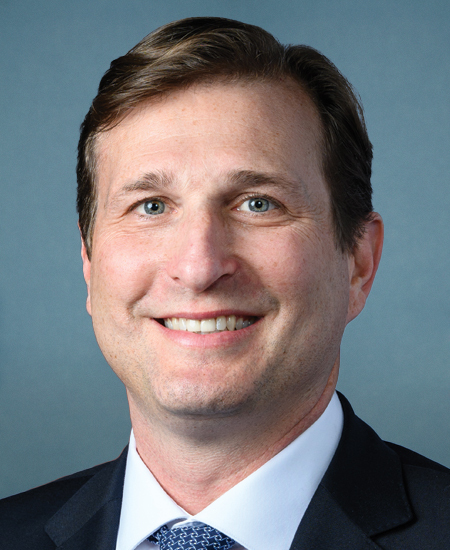
Rep. Daniel S. Goldman
Sponsored bills
Maddy summaryHR 1591, the Security Clearance Review Act, requires the FBI Director to approve security clearances and access to classified information for political appointees and special government employees working in the Executive Office of the President. It prohibits these individuals from holding such clearances or accessing classified information without the FBI Director’s specific authorization. If the FBI denies or revokes clearance, the Director must immediately notify the President and Congress; if the President overrides this decision, they must provide written justification to Congress within 30 days. The bill directly affects high-level political appointees and special government employees in the White House and its immediate offices, altering the clearance process for this specific group.
Maddy summaryHR 1567 requires the Secretary of the Interior to conduct a study assessing the feasibility of establishing the African Burial Ground International Memorial Museum and Educational Center at New York City's African Burial Ground National Monument. The study will examine factors like available collections (including DNA samples from remains), potential locations (such as 22 Reade Street), community involvement, financial planning, and collaboration opportunities with institutions like the National Museum of African American History and Culture. The Secretary must submit a report to Congress within three years, detailing findings on costs, location options, and recommendations for the museum's potential development. This bill does not create the museum but sets the process for evaluating its future establishment.
Maddy summaryEthan's Law requires gun owners to store firearms securely in homes where minors live or where residents are legally prohibited from owning guns. It makes it unlawful to leave firearms unsecured if a minor or ineligible person could access them, with fines of $500 per violation and harsher penalties if injury or death occurs. The bill creates a federal grant program to help states implement similar secure storage laws and treats unsafe storage as negligence in legal cases. It directly affects households with children or residents who cannot legally possess firearms, aiming to reduce accidental shootings and unauthorized access.
Maddy summaryHR 1568 would establish the African Burial Ground International Memorial Museum and Educational Center at the National Historic Landmark site in Lower Manhattan, New York City, honoring the approximately 20,000 enslaved Africans buried there. The museum would examine African cultural traditions brought to the U.S. by enslaved people, explore the institution of slavery through exhibits and educational programs, and be associated with the National Museum of African American History and Culture. The National Park Service would operate the museum, with the Secretary of the Interior managing the facility in consultation with an advisory council composed of federal, state, and local officials. The bill authorizes $15 million for fiscal year 2025 and additional funding for subsequent years to support the museum's construction, operation, and educational programs. The museum would be located on property adjacent to the National Monument established at the burial ground site.
Pay Our Coast Guard Parity Act of 2025 This bill provides continuing appropriations to the Coast Guard for pay and benefits when there is a Coast Guard-specific funding lapse. Under the bill, a Coast Guard-specific funding lapse occurs when (1) a bill providing appropriations for the Coast Guard for a fiscal year has not been enacted before the beginning of that fiscal year, and no joint resolution providing continuing appropriations for the Coast Guard is in effect; and (2) a bill providing appropriations for the Department of Defense (DOD) for the fiscal year has been enacted before the beginning of the fiscal year, or a joint resolution providing continuing appropriation for DOD is in effect. If a Coast Guard-specific funding lapse occurs, the bill provides appropriations to the Coast Guard for pay and allowances for military members of the Coast Guard who perform active service or inactive-duty training; pay and benefits for certain civilian employees and contract employees; the payment of a death gratuity; payments for travel related to funerals, the dignified transfer of remains, and unit memorial services; and the temporary continuation of the basic allowance for housing for dependents of members of the Coast Guard dying on active duty. The bill generally provides the appropriations to the Coast Guard until the earlier of the enactment of specified Coast Guard appropriations legislation, the termination of the availability of appropriations for DOD, or two weeks after the beginning of the Coast Guard-specific funding lapse.
Maddy summaryThe American Victims of Terrorism Compensation Act amends the Justice for United States Victims of State Sponsored Terrorism Act to increase funding for victims of terrorism. It directs the transfer of approximately $1.5 billion from the Binance Holdings Limited case, plus 50% of excess unobligated balances from Department of Justice and Treasury forfeiture funds, into the Victims Fund. The bill establishes deadlines for agencies to deposit funds (within 30 days of receipt or 15 days after enactment), requires annual reports on fund activity, and authorizes annual payments to eligible claimants starting in 2026. This legislation directly affects terrorism victims who receive compensation from the fund and federal agencies that handle forfeited assets from terrorism-related cases.
Maddy summaryHR 1456, the Gun Trafficker Detection Act, requires private firearm owners (non-licensed individuals) to report lost or stolen firearms to the Attorney General within 48 hours via a new web portal. It imposes civil penalties of up to $1,000 for first violations and $5,000 for repeat violations, and prohibits individuals with two or three penalty assessments from receiving firearms for 1 year or 5 years, respectively. The bill mandates law enforcement agencies to use 5% of crime grant funds to study lost/stolen firearm data collection and updates the National Instant Background Check System to include these new restrictions. It directly affects private gun owners and law enforcement agencies, focusing on reporting compliance and background check adjustments.
Maddy summaryHR 1457, the "IDs for an Inclusive Democracy Act," requires the Social Security Administration to issue free federal identification cards within three years. These cards would be accepted as valid ID for the same purposes as state driver's licenses, including gender identity options (male, female, or X) chosen by the applicant. The bill establishes a process for applying via the U.S. Postal Service, with options for in-person service, online, or mail-in applications. It also mandates a public education campaign and special validity rules for minors (under 18) and seniors (65+), ensuring the ID remains valid without renewal after age 65.
Maddy summaryHR 1502 authorizes the creation of a Congressional Gold Medal to honor the volunteers and communities (primarily from Nebraska, Colorado, and Kansas) who supported the North Platte Canteen during World War II. The bill directs the Treasury Secretary to design and strike the medal, which will be presented to the individuals who contributed to the canteen’s operations and then permanently displayed at the Lincoln County Historical Museum in North Platte, Nebraska. It also permits the sale of bronze duplicates to cover production costs, with proceeds going to the U.S. Mint. This is a commemorative measure recognizing historical service, not a policy change affecting current laws or programs.