

Maddy summaryHR 4611 (EACH Act of 2025) requires all federally funded health programs - including Medicaid, Medicare, military health plans, and the Indian Health Service - to cover abortion services without restrictions, repealing the Hyde Amendment's long-standing ban on federal funding for most abortions. This directly affects millions of people enrolled in these programs, particularly low-income women, women of color (including 25% of Black women and 22% of Hispanic women on Medicaid), and young people. The bill mandates coverage in all federally administered health plans and prohibits state or private insurers from restricting abortion coverage in health insurance. It aims to eliminate current federal and state barriers that deny abortion access to people who rely on government health programs.
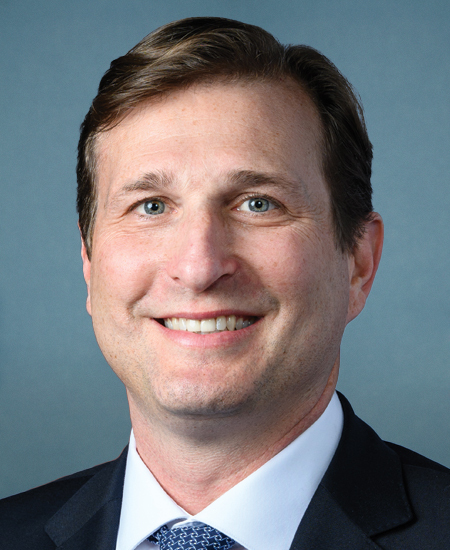
Rep. Daniel S. Goldman
Sponsored bills
Maddy summaryThis bill prohibits landlords from charging application fees, tenant screening fees, and excessive late fees on "covered" rental properties - those with federally backed mortgages (like FHA, VA, or USDA loans) or HUD assistance. It caps late fees at 3% of monthly rent after a 15-day grace period and requires landlords to disclose total monthly costs, past tenant litigation, maintenance issues, and rent history for the past decade before signing leases. The law directs regulators like HUD to define "junk fees" and ban reporting unpaid fees to credit agencies. It directly affects renters in federally supported housing by limiting unexpected costs and increasing transparency.
Maddy summaryHRES 963 is a non-binding House resolution condemning antisemitism amplified by AI platforms and urging tech companies to implement safeguards. It directly affects AI developers and social media companies by requiring them to adopt transparent safety measures, prevent algorithmic amplification of antisemitic content, and publicly report on antisemitic content prevalence and removal efforts. Key provisions include promoting "safety-by-design" standards, enabling researcher access to study antisemitic content dynamics, and supporting digital literacy programs to counter AI-generated hate. The resolution emphasizes aligning these efforts with constitutional protections while recognizing stakeholders working to combat antisemitism online.
Maddy summary# Summary of Proposed Tax Code Amendment This document is a comprehensive proposal for tax code amendments, primarily focused on extending, modifying, and creating new tax credits related to clean energy, energy efficiency, and environmental initiatives. The key components include: ## Housing and Residential Credits - **First-Time Homebuyer Tax Credit**: A refundable credit for first-time homebuyers (Section 13001) - **Renter Tax Credit**: A refundable credit for renters paying more than 30% of their adjusted gross income in rent (Section 13002) ## Clean Energy Credits (Sections 21001-21007) - Extended clean energy production credit with a new phase-out date (2032 or when greenhouse gas emissions reach 25% of 2022 levels) - Extended clean electricity investment credit for wind and solar facilities - Restored credit for wind and solar leasing arrangements - Extended clean hydrogen production credit (construction date reverted to 2033) - Extended residential clean energy credit (termination date moved to 2034) - Reinstated special rate for sustainable aviation fuel (35 cents/ gallon for certain facilities) ## Energy Efficiency Credits (Sections 22001-22004) - Restored product identification number requirement for energy-efficient home improvements - Extended new energy efficient home credit (acquisition date moved to 2032) - Repealed termination of new energy efficient commercial buildings deduction - Restored cost recovery for energy property ## Electric Vehicle and Charging Infrastructure Credits (Sections 23001-23005) - Extended previously-owned vehicle credit (acquisition date moved to 2032) - Extended clean vehicle credit (placement in service date moved to 2032) - Extended commercial clean vehicles credit (termination date moved to 2032) - Extended alternative fuel vehicle refueling property credit (termination date moved to 2032) - Created a new credit for electric bicycles (30% of cost, up to $5,000 per bicycle) ## Clean Infrastructure and Resiliency Credits (Sections 24001-24007) - Created qualifying water reuse project credit (30% of qualified investment) - Created recycling property investment credit (30% of qualified investment with phase-out) - Excluded amounts received from State-based catastrophe loss mitigation programs from gross income - Expanded exclusion for certain emergency agricultural assistance - Created credit for disaster mitigation expenditures (30% of qualifying mitigation activities) - Created qualifying electric power transmission line credit (30% of qualified investment) - Created qualifying advanced battery project credit (30% of qualified investment with $3 billion cap) The proposed amendments generally extend existing credits through 2032-2037, with some credits having phase-out schedules and others having specific termination dates. The document also includes numerous conforming amendments to other sections of the tax code to accommodate these changes.
Maddy summaryHR 6839, the Vaccine Transportation Access Act, provides federal grants to nonprofit community organizations that serve low-income or minority communities facing transportation barriers to vaccines. The grants fund projects like on-demand rides, first/last mile transportation to vaccine sites, and expanded transit coordination to reduce missed appointments. Recipients must track performance metrics and report outcomes to the Department of Health and Human Services. The bill also adds a provision ensuring 100% federal funding for nonemergency vaccine-related transportation costs under Medicaid plans.
Maddy summaryHR 6908, the Blue Envelope Awareness Act, creates a new program to help people with speech, hearing, or developmental disabilities communicate more effectively with police during traffic stops. The bill directs federal Byrne grant funds to support "blue envelope programs," which provide individuals with blue envelopes containing disability documentation to show officers and train law enforcement on interacting with these individuals. It amends existing law to define "blue envelope program" and add this funding authorization to the Omnibus Crime Control and Safe Streets Act. The bill directly affects people with disabilities who interact with police and law enforcement agencies receiving Byrne grants.
Maddy summaryThe "Peace Through Strength Against Russia Act of 2025" proposes to significantly expand and strengthen U.S. sanctions against the Russian Federation and its supporters. The bill mandates blocking property and restricting visas for Russian government officials, state-owned financial institutions, and entities supporting Russia's defense industrial base or war efforts in Ukraine, including those involved in kidnapping Ukrainian children. Key provisions prohibit U.S
Maddy summaryThe Reproductive Coercion Prevention and Protection Act of 2025 defines reproductive coercion as controlling a person's reproductive choices through force, threats, sabotage of contraception, or pressure to become pregnant or terminate a pregnancy. It creates a federal civil right of action, allowing victims to sue in court for damages if the coercion involved interstate activities - such as travel across state lines, interstate communication (e.g., email or phone), or payments. The bill does not override state laws or court jurisdictions, preserving existing state definitions of domestic violence and reproductive coercion. It specifically targets cases where abusers sabotage mail-order birth control or force victims to travel for reproductive health care, addressing gaps in current protections.
Maddy summaryHR 6859, the HOTDOG Act, requires the Federal Trade Commission (FTC) to study concession pricing at venues that received public funding (like tax credits or bonds) and host events 5+ days yearly. The study will compare food and drink prices inside these venues to nearby community prices, examine pricing practices like dynamic pricing, and assess how well venues disclose prices before purchase. The FTC must complete this study within 90 days and submit a report with findings and recommendations to Congress within one year. This bill directly affects major sports arenas and concert venues using public subsidies, focusing on transparency and affordability without setting immediate price rules.
Maddy summaryThis bill amends Section 287(g) of immigration law to restrict immigration enforcement authority exclusively to U.S. Immigration and Customs Enforcement (ICE) officers and DHS employees. It removes state and local law enforcement agencies' ability to verify immigration status, investigate, or arrest individuals for immigration violations under current 287(g) agreements. The change directly affects local police departments that previously participated in immigration enforcement through federal partnerships. The bill does not create new policies but alters existing authority to limit enforcement to federal officers only.