

Maddy summaryThe Protecting America's Meatpacking Workers Act of 2023 establishes new safety standards for meat and poultry processing facilities to protect workers from injuries and unsafe conditions. The bill prohibits "no fault attendance policies" that penalize workers for taking legally protected leave and requires employers to provide adequate toilet facilities without punishment. It mandates new ergonomic standards to prevent musculoskeletal injuries, increases OSHA inspection resources through $60 million in annual funding, and requires facilities to report infections and deaths during pandemics. The bill directly affects meat and poultry processing workers, their employers, and federal agencies overseeing workplace safety through concrete policy changes to improve working conditions.
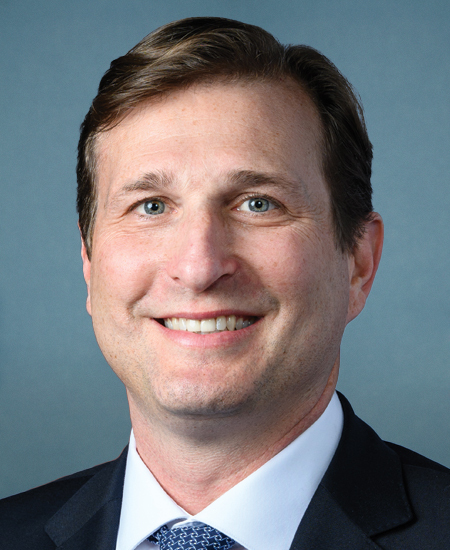
Rep. Daniel S. Goldman
Sponsored bills
Maddy summaryThis bill amends the SNAP program to allow households with children under 18 who meet specific medical criteria to deduct their recurring medical expenses when calculating food assistance benefits. It expands the existing deduction for "elderly or disabled" members to include these medically vulnerable children, referencing criteria from the Social Security Act. The change simplifies the process for families seeking to reduce their SNAP income calculation by accounting for these medical costs. The policy takes effect October 1, 2023, directly benefiting low-income families caring for children with qualifying health conditions.
Maddy summaryThis bill allows asylum seekers not in detention to obtain work authorization 30 days after filing their asylum application, provided their application isn't deemed frivolous. It directly affects individuals seeking asylum in the U.S. who are awaiting a final decision on their case. The authorization remains valid until the asylum application receives a final denial, including any administrative or court appeals. This changes the prior system where many asylum seekers faced prolonged work restrictions while their cases were processed.
Early Voting Act This bill expands early in-person voting. The bill generally requires each state to allow individuals to vote in federal elections during an early voting period of at least 15 days. This requirement does not apply to jurisdictions that send a mail-in ballot to every registered voter. Further, states and jurisdictions must ensure that polling places are accessible by public transportation, located in rural areas, and located on each branch campus of an institution of higher education. The Election Assistance Commission must issue certain voluntary standards for early voting, including the nondiscriminatory geographic placement of polling places. Finally, states and jurisdictions must begin processing and scanning ballots cast during the early voting period at least 14 days prior to election day. However, states and jurisdictions cannot tabulate ballots before the polls close on election day unless the tabulation is necessary and performed in accordance with existing state law.
Maddy summaryHR 1321, the "More Homes on the Market Act," increases the tax exclusion for gains from selling a primary residence. It doubles the exclusion amount from $250,000 to $500,000 for single filers and from $500,000 to $1,000,000 for married couples filing jointly. The bill also adds automatic annual inflation adjustments to these amounts starting in 2023, ensuring the exclusion keeps pace with rising costs. This change directly affects homeowners who sell their primary residence and meet the ownership and use requirements under current tax law. The policy modifies the Internal Revenue Code to make selling a home less financially burdensome for qualifying homeowners.
Maddy summaryThe Air Carrier Access Amendments Act of 2023 updates the 1986 Air Carrier Access Act to improve accessibility for travelers with disabilities. It creates a private right of action (allowing individuals to sue for violations), sets new standards for accessible aircraft (including boarding equipment, seating, lavatories, and communication systems), and requires airports to provide accessible facilities and digital services. The bill establishes clearer complaint procedures with the Department of Transportation, including a 120-day investigation timeline and specific civil penalties for violations like delayed assistance or damage to assistive devices. These changes directly affect air carriers, foreign air carriers, and travelers with disabilities who face barriers such as inaccessible aircraft and inadequate assistance. The legislation aims to address ongoing issues including damaged assistive devices, inaccessible aircraft features, and inappropriate treatment of service animals.
Maddy summaryThis bill establishes pay equity for federal firefighters by adjusting how their retirement benefits are calculated and setting a standard workweek. It requires retirement annuities to include overtime hours worked as part of a firefighter's regular schedule (e.g., overtime during standard shifts), rather than excluding them. The bill also mandates a maximum 60-hour regular workweek for federal firefighters, set by the Office of Personnel Management within one year of enactment. These changes directly affect federal firefighters, aiming to improve pay comparability with municipal firefighters and other federal employees while supporting recruitment and retention.
Maddy summaryThe HITS Act changes tax rules to help independent music producers by allowing them to deduct costs for creating sound recordings as immediate business expenses, rather than spreading costs over time. It specifically applies to U.S.-produced sound recordings (like albums or podcasts) by qualifying independent producers, with a $150,000 annual cap on deductible costs. The bill also enables bonus depreciation for equipment used in these productions, treating them similarly to film or theater projects for tax purposes. This aims to improve cash flow for smaller music businesses by reducing upfront tax burdens on recording costs.
Maddy summaryHR 1247 would award a Congressional Gold Medal to the Freedom Riders collectively, honoring their pivotal role in challenging segregation in interstate travel during the Civil Rights movement. The medal, to be struck by the U.S. Mint and displayed at the Smithsonian Institution, recognizes their nonviolent protests that led to the 1961 federal ban on segregation in interstate public facilities. This is a symbolic tribute with no legal effect, as the bill does not create new policies or alter existing laws.
Maddy summaryThe Federal Employees Sustainable Investment Act establishes a new investment option within the federal retirement savings system, called the Corporate Responsibility Stock Index Fund, for federal employees. This fund would invest in stocks meeting specific environmental, social, and governance criteria, including reducing greenhouse gas emissions, strong corporate governance, fair workplace practices, and human rights standards. The fund must mirror a passively managed index meeting these criteria and perform comparably to other investment choices available to federal employees.